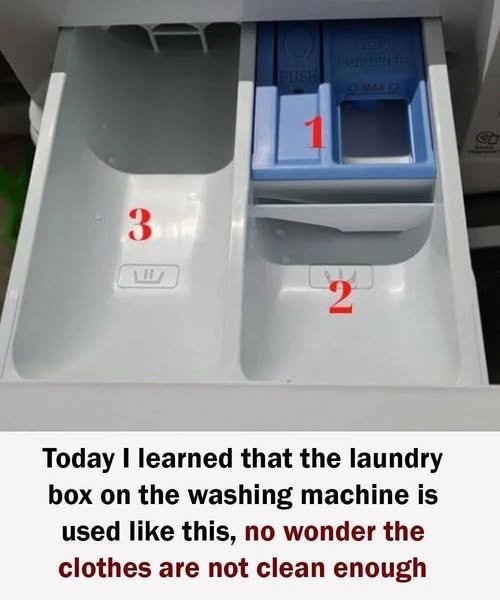
Have you ever wondered why your clothes sometimes come out of the washing machine smelling unpleasant, feeling stiff, or still covered in detergent residue? The problem may not be your detergent or washing cycle. You might simply be using the detergent drawer incorrectly.
A washing machine’s detergent drawer is designed to release detergent, fabric softener, and other laundry products at the appropriate stage of the wash. Each compartment has a specific purpose, and using the wrong one can lead to poor cleaning results, wasted detergent, and buildup inside the machine.
The good news is that learning how to use the drawer correctly is simple. Once you understand the symbols, compartments, and correct detergent amounts, you can improve your laundry results and help keep your washing machine clean.
1. Understand the Three Main Compartments
Many front-loading washing machines have three main detergent compartments. Their exact positions can vary by brand and model, so always check the symbols printed inside the drawer.
Compartment I: Prewash Detergent
The compartment marked I is generally intended for detergent used during the prewash cycle.
A prewash is an additional cleaning stage that helps loosen heavy dirt before the main wash begins. It can be useful for muddy clothes, heavily soiled workwear, or garments with substantial dirt buildup.
How to use it:
- Select a washing program that includes a prewash.
- Add the recommended amount of suitable detergent to compartment I.
- Add the main-wash detergent to compartment II.
- Start the selected cycle.
If your program does not include a prewash, you generally do not need to use compartment I.
Adding detergent to this compartment without selecting a prewash may waste detergent or produce unexpected results, depending on the machine.
Compartment II: Main-Wash Detergent
The compartment marked II is usually the most important one. It holds the detergent used during the main washing stage.
For ordinary laundry, this is the compartment you will use most often.
Suitable products may include:
- Powder detergent
- Liquid laundry detergent, if permitted by the manufacturer
- Detergent specifically designed for automatic washing machines
How to use it:
- Check the detergent packaging for the recommended dose.
- Consider the load size, soil level, and water hardness.
- Pour or measure the detergent into compartment II.
- Avoid filling beyond the marked maximum line.
Some machines have a removable insert or flap for liquid detergent. Others require liquid detergent to be placed directly in the drum using a suitable dispenser. Follow your model’s instructions rather than assuming every drawer works the same way.
Compartment With a Flower Symbol: Fabric Softener
The compartment marked with a flower, star-like symbol, or similar softener icon is generally designed for fabric softener.
Fabric softener is released during the rinse stage, helping reduce static and giving some fabrics a softer feel.
How to use it:
- Pour the recommended amount into the softener compartment.
- Stop at the maximum-fill line.
- Do not pour it directly into the detergent compartment.
- Do not use the softener compartment for ordinary detergent.
Never overfill this section. Too much softener can cause residue buildup and may interfere with proper dispensing.
Fabric softener is not suitable for every fabric. It can reduce the absorbency of towels and may affect some sportswear, microfiber materials, and flame-resistant garments. Check garment care labels before using it.
2. What Do the Symbols on the Detergent Drawer Mean?
Although symbols vary, these are the most common markings.
| Symbol or marking | Typical purpose |
|---|---|
| I | Prewash detergent |
| II | Main-wash detergent |
| Flower symbol | Fabric softener |
| MAX | Maximum permitted fill level |
Some machines have additional compartments, liquid-detergent inserts, or automatic dosing systems. If the symbols are unclear, check the manual for your exact model.
Do not identify a compartment by its position alone. Manufacturers may arrange drawers differently.
3. Powder or Liquid Detergent: Which Should You Use?
Both powder and liquid detergent can clean clothes effectively when used correctly.
Powder Detergent
Powder detergent is often a practical option for everyday laundry and may perform well on certain types of dirt. However, it needs to dissolve properly, especially in cold water or short cycles.
Use the amount recommended for your load, water hardness, and soil level. Avoid putting powder into a compartment that the manufacturer reserves for liquid detergent.
Liquid Detergent
Liquid detergent dissolves readily in water and can be convenient for many everyday loads and cooler washes.
However, some machines require a specific drawer insert for liquid detergent. Without the correct insert, liquid may enter the machine too early.
Check your washing machine’s instructions before using liquid detergent in the drawer.
What About Detergent Pods?
Laundry pods or capsules are generally placed directly into the empty drum before adding clothes, unless the product or machine instructions specify otherwise.
Do not place pods in the detergent drawer unless the manufacturer explicitly allows it. Keep pods away from children and pets, and handle them with dry hands according to the packaging instructions.
4. How Much Detergent Should You Use?
Using more detergent does not necessarily make clothes cleaner.
Excess detergent can produce too much foam, leave residue on clothes, and contribute to buildup inside the machine. Too little detergent may fail to clean heavily soiled laundry effectively.
The correct amount depends on:
- The size of the laundry load
- How dirty the clothes are
- The detergent’s concentration
- The hardness of your water
- The manufacturer’s dosing instructions
For lightly soiled clothes and soft water, a smaller dose may be sufficient. Heavily soiled loads or hard water may require a different amount.
Always follow the detergent label and your washing machine’s guidance. Do not automatically fill the drawer to the top.
5. Common Detergent Drawer Mistakes to Avoid
Putting Main-Wash Detergent in the Prewash Compartment
If you place your normal detergent in compartment I but do not select a prewash, the detergent may not be used as intended. For an ordinary wash, compartment II is generally the correct choice.
Overfilling the Fabric Softener Section
Filling above the MAX line can cause premature dispensing, leakage, or residue buildup. Measure the softener rather than pouring it in without checking the level.
Using Too Much Detergent
Excess detergent can leave clothes feeling soapy or stiff and may contribute to unpleasant odors inside the machine. Use the recommended dose for your specific load.
Ignoring the Detergent Drawer
Detergent and softener residue can collect inside the drawer and its housing. Over time, this buildup may contribute to odors, poor dispensing, or visible mold.
Using the Wrong Product for the Machine
Use detergent intended for automatic washing machines. Hand-washing detergent may create excessive foam and should not be used in a machine unless its label explicitly states that it is suitable.
6. How to Clean Your Washing Machine’s Detergent Drawer
Cleaning the drawer regularly helps maintain proper detergent flow and reduces residue buildup.
Step 1: Remove the drawer. If your machine has a removable drawer, pull it out according to the manufacturer’s instructions. Many models have a release tab, but the mechanism varies.
Step 2: Separate removable inserts. Remove any softener insert or liquid-detergent component that is designed to come out.
Step 3: Wash with warm water. Use warm water and a soft brush or cloth to remove detergent deposits. Avoid abrasive tools that can damage plastic surfaces.
Step 4: Clean the drawer housing. Wipe the accessible cavity where the drawer sits. Take care not to push debris into openings or damage internal components.
Step 5: Dry and reinstall. Rinse away any cleaning residue, dry the parts, and reinstall the drawer correctly.
Clean the drawer whenever you notice buildup or dispensing problems. Leaving it open to air-dry between washes, when practical and safe, can also help reduce moisture accumulation.
If you notice persistent mold, a strong odor, or detergent remaining in the drawer after every cycle, check the manual for further cleaning instructions and investigate possible blockages or water-supply issues.
7. Can You Put Detergent Directly Into the Drum?
Some detergents can be placed directly into the drum, but the correct method depends on the product and washing machine.
- Pods: Usually go into the empty drum before clothes.
- Powder detergent: May be suitable for the drawer or drum if the manufacturer permits it.
- Liquid detergent: May require a drawer insert or a suitable dosing device.
- Fabric softener: Generally belongs in the designated softener compartment, not directly in the drum unless the product and machine instructions specifically allow another method.
The detergent drawer is often the simplest option because it is designed to release products at the correct stage of the cycle.
Frequently Asked Questions
What happens if I put detergent in the wrong compartment?
The detergent may be released at the wrong stage or may not be used effectively. This can result in poor cleaning or residue. Check the compartment markings and repeat the wash only if necessary.
Why is water left in my detergent drawer?
A small amount of residual water may be normal in some machines. Excessive standing water can indicate a dirty drawer, blocked dispenser passages, or a water-flow issue. Clean the drawer and check the manual if the problem continues.
Why is my washing machine not taking the detergent?
Possible causes include a clogged drawer, incorrect detergent placement, a water-supply problem, or an unsuitable program. Clean the drawer and its accessible passages, check the water supply, and consult the manual if detergent continues to remain behind.
Should I leave the detergent drawer open after washing?
If the machine’s design and location make it safe, leaving the drawer slightly open can help it dry and reduce moisture buildup. Avoid leaving it open where children or pets could reach it.
Can I use vinegar instead of fabric softener?
Do not assume vinegar is safe for every washing machine. Repeated use may affect some components or seals, and it is not necessary for normal laundry care. Use a fabric-care product approved for your machine, or simply skip softener when it is not needed.
Final Thoughts
Your washing machine’s detergent drawer is simple to use once you understand what each compartment does. In most machines, I is for prewash detergent, II is for main-wash detergent, and the flower symbol is for fabric softener.
Use the correct product, measure detergent carefully, avoid overfilling, and clean the drawer regularly. These small habits can help clothes come out cleaner, reduce detergent waste, and keep your washing machine working as intended.
Because drawer layouts and dispensing systems differ between manufacturers, always follow the instructions for your specific model.
SEO Title: The Right Way to Use Your Washing Machine’s Detergent Drawer
Meta Description: Learn what washing machine detergent drawer symbols mean, where to put powder, liquid detergent, and fabric softener, and how to avoid common laundry mistakes.
Suggested URL Slug: right-way-to-use-washing-machine-detergent-drawer
Focus Keyphrase: washing machine detergent drawer
Related Keyphrases: washing machine drawer symbols, where to put laundry detergent, fabric softener compartment, washing machine detergent tips, how to clean detergent drawer