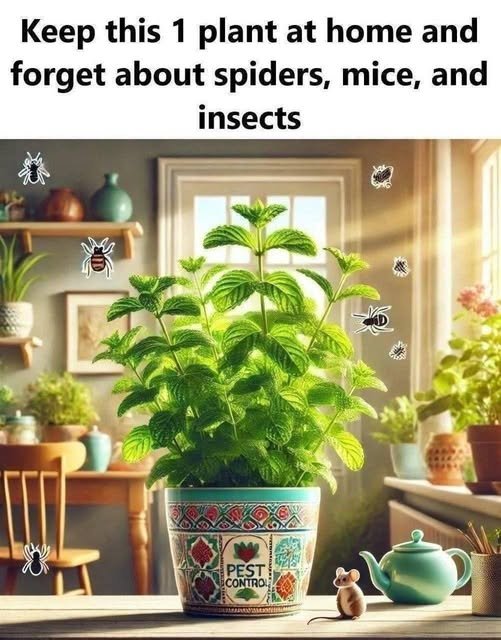
Imagine having a beautiful, refreshing plant in your home that also helps keep unwanted insects away. Sounds wonderful, doesn’t it? Certain plants contain natural aromatic compounds that can discourage some insects from entering areas where they are grown.
One plant often mentioned for this purpose is peppermint (Mentha × piperita). Its strong, refreshing fragrance comes from compounds such as menthol and menthone, which are used in various insect-repellent products.
But can one peppermint plant really keep spiders, mice, mosquitoes, and every other pest away?
The answer is more complicated. Peppermint may help discourage certain pests in limited situations, but there is no reliable scientific evidence that simply keeping one plant indoors will eliminate household insects, spiders, or mice.
Let’s explore what peppermint can actually do, how to grow it, and what other steps can help protect your home.
1. Peppermint: The Plant Known for Its Strong Fragrance
Peppermint (Mentha × piperita) is a popular aromatic herb recognized by its green leaves and refreshing smell.
It contains naturally occurring aromatic compounds, particularly menthol and menthone. These compounds give peppermint its distinctive scent and are responsible for much of the interest in its potential insect-repelling properties.
Peppermint is commonly used in:
-
Herbal teas
-
Cooking and desserts
-
Essential oil products
-
Fragrances and personal-care products
-
Certain commercial insect-repellent formulations
Growing peppermint at home is relatively easy, making it a practical choice for people who enjoy fresh herbs.
2. Can Peppermint Help Keep Spiders Away?
Spiders rely heavily on sensory information to navigate their surroundings and locate prey.
Strong-smelling substances, including certain essential oils, have been investigated for their possible effects on spider behavior.
However, evidence that a living peppermint plant can reliably repel household spiders is limited.
A plant placed near a window or doorway should not be considered a dependable spider-control method.
To reduce spiders around your home:
-
Remove webs when you find them.
-
Seal cracks around windows and doors.
-
Install or repair window screens.
-
Reduce clutter in storage areas.
-
Control other insects that spiders feed on.
These measures address the conditions that allow spiders to enter and remain inside.
3. Does Peppermint Repel Mice?
This is one of the most popular claims about peppermint, but it needs an important clarification.
Peppermint oil has a strong smell, and some people use it in an attempt to discourage mice. However, there is insufficient evidence that a peppermint plant or peppermint oil can reliably prevent mice from entering a home.
Mice are persistent animals. When they have access to food, water, warmth, and shelter, a strong fragrance is unlikely to provide lasting protection.
For better mouse prevention:
-
Store food in sealed containers.
-
Clean crumbs and food spills regularly.
-
Keep rubbish bins covered.
-
Seal openings around pipes and walls.
-
Remove clutter where rodents can hide.
-
Use appropriate traps when necessary.
Remember that mice can squeeze through surprisingly small openings. Sealing entry points is much more dependable than relying on plants.
4. Can Peppermint Discourage Ants and Other Insects?
Some research suggests that peppermint essential oil and its compounds may affect certain insect species.
However, results from laboratory experiments using concentrated oils do not necessarily apply to a living plant growing in a pot.
A peppermint plant may add fragrance to your home, but it should not replace proper pest management.
If ants are entering your kitchen, focus on removing food sources, cleaning surfaces, sealing gaps, and identifying where they are coming from.
For mosquitoes, eliminate standing water around your home and use an appropriate registered mosquito repellent when needed.
5. How to Grow Peppermint at Home
Peppermint is a relatively easy herb to grow, even if you have limited gardening experience.
What you need:
-
One small peppermint plant or healthy cutting
-
A pot with drainage holes
-
Good-quality potting soil
-
A sunny or partially sunny location
-
Water
Step 1: Choose a Suitable Pot
Select a container with drainage holes. Peppermint spreads quickly through underground stems, so growing it in a pot helps control its growth.
Step 2: Use Well-Draining Soil
Choose a soil mixture that retains some moisture without becoming waterlogged.
Step 3: Provide Adequate Light
Place the plant where it receives bright light and some direct sunlight. A location with morning sunlight can work well.
Step 4: Water Regularly
Keep the soil slightly moist. Avoid allowing the roots to sit in standing water.
Step 5: Trim the Leaves
Regularly trim the stems to encourage fuller growth and prevent the plant from becoming too leggy.
You can also harvest fresh leaves for tea, cooking, and other household uses.
6. Other Plants People Commonly Grow for Their Fragrance
Peppermint is not the only aromatic plant associated with natural pest management.
Here are a few other options:
Lavender: Known for its pleasant fragrance. Concentrated lavender oil has shown repellent activity against certain insects in some studies, but the plant itself is not a reliable household pest barrier.
Basil: A popular culinary herb whose aromatic compounds have been studied for potential insect-repellent properties.
Rosemary: A fragrant herb containing compounds such as cineole and camphor. It is often discussed in natural pest-management practices.
Lemongrass: Contains citronella-related aromatic compounds and is commonly associated with mosquito-repellent products. Growing the plant alone does not provide dependable mosquito protection.
These plants are excellent additions to a home garden, but none should be treated as a complete substitute for pest control.
7. Important Safety Tips Before Using Peppermint
Peppermint plants are generally suitable for home gardening, but concentrated peppermint essential oil requires care.
Keep these precautions in mind:
-
Never apply undiluted essential oil directly to your skin.
-
Avoid placing concentrated oils where children or pets can access them.
-
Essential oils may irritate the skin, eyes, or respiratory system.
-
Peppermint essential oil can be dangerous to pets, particularly cats, if improperly used or ingested.
-
Do not spray essential oils near food, pet bedding, or animal feeding areas.
If you have pets, check with a veterinarian before using essential oils as household repellents.
8. The Most Effective Way to Keep Household Pests Away
Plants can make your home more attractive and enjoyable, but good pest prevention requires a combination of measures.
Try these practical habits:
-
Keep kitchen counters and floors free from food crumbs.
-
Store dry foods in tightly sealed containers.
-
Repair damaged window screens.
-
Seal gaps around doors, windows, and pipes.
-
Remove standing water from indoor and outdoor areas.
-
Keep rubbish covered and dispose of it regularly.
-
Contact a qualified pest-control professional if you have a persistent infestation.
This approach, known as integrated pest management, focuses on reducing food, water, shelter, and entry points rather than relying on a single repellent.
Frequently Asked Questions
1. Does one peppermint plant really repel spiders?
There is insufficient evidence that one indoor peppermint plant can reliably repel spiders. Sealing entry points and removing webs are more dependable measures.
2. Will peppermint plants keep mice away?
No reliable evidence shows that a living peppermint plant prevents mice from entering homes. Proper sanitation, food storage, exclusion, and trapping are more effective.
3. Where should I place a peppermint plant?
You can place it near a bright window, balcony, or kitchen area where it receives sufficient light. Avoid treating its location as a guaranteed pest barrier.
4. Can I use peppermint leaves to make insect repellent?
Simply crushing peppermint leaves does not produce a proven, long-lasting insect repellent. Use an appropriately registered product when protection is needed.
5. Is peppermint safe to grow indoors?
Yes, peppermint is generally easy to grow indoors. However, keep concentrated peppermint essential oil away from children and pets, especially cats.
Final Thoughts
Peppermint is a wonderful plant to keep at home. It has attractive green leaves, a refreshing fragrance, and plenty of culinary uses. Its aromatic compounds have also attracted scientific interest for their potential effects on certain pests.
However, one plant cannot make your home completely free of spiders, mice, or insects.
For lasting protection, combine gardening with proper cleaning, sealed food storage, and effective pest prevention. Think of peppermint as a useful household herb rather than a guaranteed natural pest-control solution.
SEO Details
SEO Title: Peppermint Plant for Spiders, Mice, and Insects: Does It Work?
Meta Description: Can one peppermint plant keep spiders, mice, and insects away? Discover what science says, how to grow peppermint, and practical pest prevention tips.
Focus Keyword: Peppermint plant for pest control
Secondary Keywords: plants that repel insects, peppermint for spiders, peppermint for mice, natural pest prevention, indoor pest control, aromatic plants
URL Slug: peppermint-plant-for-spiders-mice-and-insects