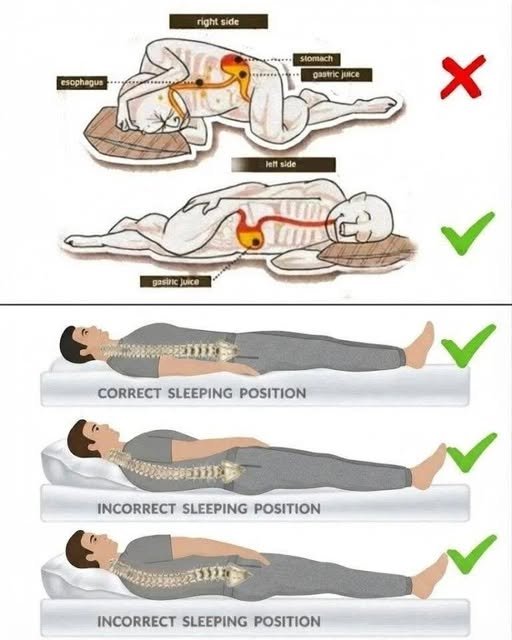
The position you sleep in may affect more than just your comfort. It can influence digestion, breathing, snoring, and certain health conditions. One sleeping position that receives considerable attention is sleeping on your left side.
You may have heard that sleeping on the left side improves digestion, protects your heart, supports kidney function, or helps the body remove toxins. But how much of this is actually supported by science?
The truth is that left-side sleeping can offer specific benefits, particularly for people who experience acid reflux or are pregnant. However, it is not automatically the healthiest position for everyone.
Understanding the advantages and limitations of different sleeping positions can help you choose one that supports better rest and overall comfort.
1. It May Help Reduce Acid Reflux and Heartburn
One of the best-known potential benefits of sleeping on your left side is reduced nighttime acid reflux.
Acid reflux happens when stomach contents move backward into the esophagus, sometimes causing a burning sensation in the chest or throat.
Sleeping on the left side may help because of the stomach’s position in the abdomen. Research suggests that left-side sleeping can reduce nighttime acid exposure in the esophagus compared with sleeping on the right side.
You may benefit from trying this position if you experience:
- Heartburn after dinner.
- A sour taste in your mouth at night.
- Acid coming back into your throat.
- Discomfort when lying down after eating.
For additional relief, avoid large meals close to bedtime and consider raising the head of your bed if recommended by your healthcare professional.
2. It Is Often Recommended During Pregnancy
Sleeping on the side is commonly recommended during pregnancy, particularly as pregnancy progresses.
Left-side sleeping has traditionally been encouraged because it may support comfortable circulation and reduce pressure on certain abdominal blood vessels.
However, current pregnancy guidance generally emphasizes going to sleep on either side rather than insisting on the left side exclusively.
As pregnancy advances, lying flat on the back for prolonged periods may cause discomfort or affect circulation in some women.
Helpful pregnancy sleeping tips:
- Try sleeping on either your left or right side.
- Place a pillow between your knees.
- Use a pregnancy pillow to support your abdomen.
- Put a small pillow behind your back if it helps you remain comfortable.
If you wake up on your back, do not panic. Simply turn onto your side and return to sleep.
Pregnant women should follow their obstetrician’s advice, especially if they have a high-risk pregnancy or specific medical concerns.
3. It May Help Some People Who Snore
Snoring often occurs when airflow becomes partially obstructed during sleep.
For some people, sleeping on their back allows the tongue and soft tissues at the back of the throat to move in a way that narrows the airway.
Side sleeping may help reduce snoring by keeping the airway more open.
However, not everyone responds in the same way, and sleeping on the left side has no proven advantage over sleeping on the right side specifically for snoring.
Important: Loud, regular snoring accompanied by breathing pauses, gasping, or excessive daytime sleepiness may indicate obstructive sleep apnea. This condition needs medical evaluation rather than relying on a change in sleeping position alone.
4. It May Support Better Comfort During Digestion
Your digestive organs have a particular arrangement inside the abdomen. Because of this, body position can influence how stomach contents move and how comfortable you feel after eating.
Left-side sleeping may be helpful for people with nighttime reflux, but there is not strong evidence that it dramatically improves digestion for everyone.
If you often experience bloating or discomfort after meals, other habits may be more useful:
- Eat smaller portions if large meals cause discomfort.
- Chew food slowly.
- Avoid lying down immediately after eating.
- Identify foods that trigger your symptoms.
- Maintain regular physical activity.
Sleeping on your left side is not a treatment for chronic digestive disorders.
5. It Does Not Automatically Protect Your Heart
You may see claims that sleeping on the left side improves blood circulation or protects the heart.
The reality is more complicated.
Sleeping position can influence how some people perceive their heartbeat or breathing. However, there is no strong evidence that left-side sleeping prevents heart disease or improves heart health in otherwise healthy people.
Some individuals with certain heart conditions may find one side more comfortable than the other. Others may experience more noticeable heartbeats when lying on their left side.
If lying down causes chest pain, significant breathlessness, or uncomfortable palpitations, seek medical advice instead of assuming the sleeping position is responsible.
6. It May Influence How Comfortable You Feel While Breathing
Side sleeping can be useful for some people who experience positional snoring or airway obstruction.
Keeping the body on its side may reduce the tendency for the tongue and soft tissues to obstruct the airway during sleep.
However, the benefit depends on the underlying cause of breathing difficulties.
People with asthma, chronic lung conditions, sleep apnea, or heart problems may have individual sleeping-position preferences. There is no universal rule that the left side is best for all breathing conditions.
If you regularly wake up gasping or struggle to breathe while lying down, speak with a healthcare professional.
7. It May Help Some People With Nighttime Reflux-Related Sleep Problems
Acid reflux can interrupt sleep by causing burning sensations, coughing, throat irritation, or repeated awakenings.
Because left-side sleeping may reduce nighttime acid exposure, some people with reflux experience fewer symptoms and more comfortable sleep in this position.
A few additional habits may help:
- Finish dinner at least two to three hours before bedtime.
- Avoid foods that consistently trigger reflux.
- Limit large or high-fat meals close to bedtime.
- Elevate the head of the bed when appropriate.
- Maintain a healthy weight if advised.
Frequent heartburn, difficulty swallowing, unexplained weight loss, or persistent symptoms should be discussed with a doctor.
8. Sleeping on Your Left Side May Cause Shoulder or Hip Discomfort
Although side sleeping has potential advantages, it can also place pressure on the shoulder, hip, and surrounding tissues.
If your mattress is too firm or your pillow does not support your neck properly, you may wake up with stiffness or pain.
To make side sleeping more comfortable:
- Choose a pillow that keeps your neck aligned with your spine.
- Place a pillow between your knees.
- Avoid putting your full body weight directly on a painful shoulder.
- Consider a mattress that provides suitable pressure relief.
- Change positions if discomfort develops.
If pain continues or is accompanied by numbness or weakness, seek medical advice.
9. Does Left-Side Sleeping Improve Kidney Function?
Some online claims suggest that sleeping on the left side helps the kidneys filter blood or remove toxins more effectively.
There is no convincing evidence that sleeping on one particular side improves kidney filtration in healthy adults.
Your kidneys continue filtering blood while you sleep, regardless of your preferred sleeping position.
For kidney health, more important factors include:
- Maintaining appropriate hydration.
- Managing blood pressure.
- Controlling diabetes when present.
- Avoiding unnecessary use of certain pain medications.
- Following medical advice for existing kidney conditions.
People with kidney disease should follow their clinician’s recommendations rather than relying on sleeping position as a treatment.
Left-Side vs. Right-Side vs. Back Sleeping
Different positions offer different advantages and disadvantages.
| Sleeping position | Potential advantages | Possible disadvantages |
|---|---|---|
| Left side | May reduce nighttime acid reflux; useful during pregnancy | Can cause shoulder or hip pressure |
| Right side | Comfortable for many people; side sleeping may reduce positional snoring | May worsen reflux in some people |
| Back | Can support neutral spinal alignment with suitable pillows | May worsen snoring or sleep apnea |
| Stomach | Some people find it comfortable | May strain the neck and back |
There is no single sleeping position that is best for everyone. Your health conditions, comfort, and sleep quality matter most.
How to Sleep Comfortably on Your Left Side
If you want to try left-side sleeping, small adjustments can make the position more comfortable.
Choose the Right Pillow
Your pillow should keep your head and neck aligned with your spine. A pillow that is too high or too low can cause neck stiffness.
Place a Pillow Between Your Knees
A pillow between your knees can help keep your hips aligned and reduce pressure on your lower back.
Support Your Upper Arm
A body pillow can give your upper arm a comfortable place to rest and prevent your shoulder from rolling forward.
Use a Suitable Mattress
A mattress should provide enough support while reducing excessive pressure on your shoulder and hip.
Change Positions When Necessary
You do not have to remain on your left side throughout the entire night. It is normal to change sleeping positions while asleep.
Frequently Asked Questions
Is sleeping on your left side healthier than your right side?
It may be better for people who experience nighttime acid reflux. However, both sides can be healthy sleeping positions, and there is no universal advantage to choosing the left side.
Which side should you sleep on if you have acid reflux?
Left-side sleeping is generally recommended for people with nighttime acid reflux because it may reduce esophageal acid exposure compared with right-side sleeping.
Is sleeping on your left side good for your heart?
There is no strong evidence that left-side sleeping prevents heart disease or improves heart function in healthy individuals. Choose the position that allows you to breathe comfortably and sleep well.
Is it safe to sleep on your left side every night?
For most people, yes. If it causes shoulder, hip, or neck pain, adjust your pillow and mattress or change positions.
Which side should pregnant women sleep on?
During later pregnancy, going to sleep on either the left or right side is generally recommended. The left side does not have to be the only acceptable position.
Does sleeping on your left side help with bloating?
Some people find certain positions more comfortable when experiencing digestive discomfort, but strong evidence that left-side sleeping treats bloating is limited. Persistent bloating should be evaluated if it is severe or ongoing.
Can sleeping on your back cause snoring?
Yes. Back sleeping can worsen snoring in some people because gravity may cause the tongue and soft tissues to narrow the airway. Side sleeping may help, but persistent loud snoring should be assessed for sleep apnea.
Final Thoughts
Sleeping on your left side may offer meaningful benefits, particularly for people who experience nighttime acid reflux and for those who are pregnant. It may also help some individuals reduce positional snoring.
However, it is not a miracle sleeping position, and claims that it automatically improves heart health, kidney function, or detoxification are not supported by strong scientific evidence.
The best sleeping position is one that allows you to breathe comfortably, protects your joints, and gives you restful sleep. If left-side sleeping feels comfortable, there is no reason to avoid it. If another position works better for your body, that can be perfectly healthy too.
SEO Details
SEO Title: Is Sleeping on Your Left Side Better for Your Health? Benefits Explained
Meta Description: Discover the potential benefits and disadvantages of sleeping on your left side, including acid reflux, pregnancy, snoring, digestion, and sleep comfort.
Focus Keyphrase: Sleeping on your left side
Suggested URL Slug: sleeping-on-your-left-side-health-benefits
Related Keyphrases: Best sleeping position for health, left-side sleeping benefits, sleeping position for acid reflux, side sleeping during pregnancy, healthy sleeping habits, left-side sleeping disadvantages.