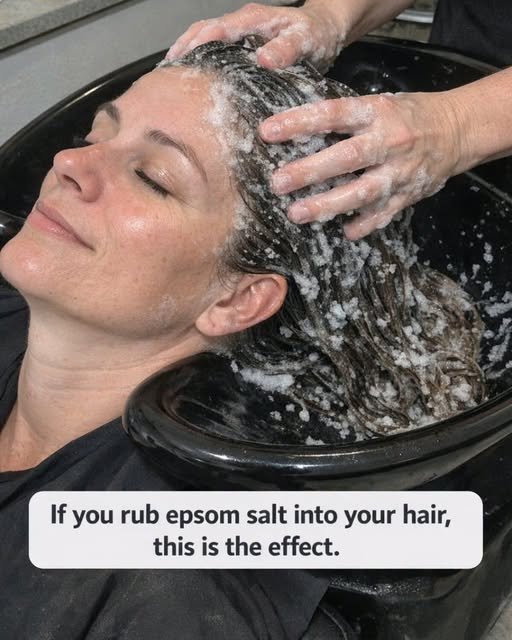
Epsom salt is a popular household product often used in baths and foot soaks to help people relax. But some people also use it as a hair-care ingredient, hoping to remove excess oil, add volume, reduce scalp buildup, or make their hair feel cleaner.
The idea sounds simple: mix Epsom salt with water or shampoo, massage it into your scalp, and rinse it away. However, is this really beneficial for your hair, and could it cause damage?
The answer depends on your scalp condition, hair type, and how you use it. Epsom salt may temporarily change how oily or textured your hair feels, but there is limited scientific evidence supporting it as a hair-growth treatment or a reliable way to improve scalp health.
Before trying this home remedy, here is what you should know about its possible effects, risks, and safer alternatives.
What Is Epsom Salt?
Epsom salt is the common name for magnesium sulfate, a mineral compound that dissolves in water.
Despite its name, it is not the same as ordinary table salt, which is sodium chloride. Epsom salt contains magnesium and sulfate rather than sodium and chloride.
It is commonly used in bath products and some personal-care preparations. However, its popularity in hair-care routines does not mean that it has been proven to improve hair growth, strengthen hair follicles, or treat scalp disorders.
1. It May Temporarily Make Oily Hair Feel Cleaner
One reason people try Epsom salt on their hair is to reduce the greasy feeling associated with excess sebum, the natural oil produced by the scalp.
A salt-containing mixture may temporarily alter the feel and texture of oily hair. However, there is little clinical evidence that rubbing Epsom salt into the scalp effectively regulates sebum production.
It does not permanently change how much oil your scalp produces.
What should you do instead?
If your hair becomes oily quickly, use a shampoo formulated for your scalp type and wash as often as needed. People with oily scalps may need to shampoo more frequently than those with dry hair.
Avoid aggressively scrubbing your scalp, as friction can irritate the skin and damage fragile strands.
2. It May Give Hair a Temporary Textured Appearance
Some people use Epsom salt in homemade hair sprays to create a texture similar to that produced by sea-salt styling products.
Salt-based styling products can make hair feel rougher and appear fuller by changing how individual strands interact. However, this effect is cosmetic rather than evidence of stronger or healthier hair.
Epsom salt is not interchangeable with every commercial sea-salt spray, and homemade mixtures may be too concentrated or unsuitable for sensitive scalps.
Who might notice a difference?
People with fine hair may notice a temporary change in texture. Others may experience stiffness, dryness, tangling, or a rough feeling.
If your hair is already dry, curly, bleached, chemically treated, or prone to breakage, salt-based products may make it feel worse.
3. It Can Make Hair Feel Dry or Rough
One of the main concerns with applying Epsom salt to hair is dryness.
Hair that feels dry is not necessarily damaged, but repeated exposure to harsh or irritating mixtures and excessive friction may contribute to tangling and breakage.
Possible signs that your hair does not tolerate a salt treatment include:
- A rough or straw-like texture.
- Increased tangling.
- Difficulty combing.
- More visible frizz.
- Breakage during brushing.
These effects are not guaranteed to occur in everyone, and the evidence specific to Epsom salt is limited. Nevertheless, there is little reason to use a potentially drying treatment when safer styling and cleansing options are available.
Tip: If your hair feels dry after using a product, stop using it and switch to a gentle shampoo and a moisturizing conditioner.
4. It May Irritate a Sensitive Scalp
The scalp is skin, and it can react to substances that are too concentrated or irritating.
Rubbing salt crystals directly into the scalp creates friction. This may be particularly uncomfortable if you already have eczema, psoriasis, scratches, inflammation, or another scalp condition.
Possible reactions include:
- Stinging or burning.
- Redness.
- Itching.
- Increased irritation.
- Discomfort around small cuts or damaged skin.
Epsom salt should not be considered a proven treatment for dandruff, scalp eczema, or psoriasis.
If you experience burning or irritation, rinse the product off thoroughly with lukewarm water and discontinue use. Seek medical advice if symptoms persist or worsen.
5. It Does Not Have a Proven Hair-Growth Benefit
One of the most common claims about Epsom salt is that it supplies magnesium to the scalp, strengthens hair follicles, or stimulates new hair growth.
However, there is no good clinical evidence that applying Epsom salt to the scalp increases hair density, reverses a receding hairline, or prevents hereditary hair loss.
Hair growth occurs within follicles beneath the skin. Simply applying magnesium sulfate to the scalp has not been shown to deliver magnesium to those follicles in a way that produces meaningful hair growth.
Hair thinning can have many causes, including:
- Hereditary pattern hair loss.
- Iron deficiency or other nutritional deficiencies.
- Thyroid disorders.
- Certain medications.
- Recent illness, stress, or significant weight loss.
- Inflammatory scalp conditions.
The most effective approach depends on the cause. Persistent or progressive hair loss deserves an assessment by a qualified healthcare professional or dermatologist.
6. It Will Not Reliably Remove Dandruff
Dandruff can result from several factors, including scalp oiliness, skin sensitivity, and the activity of a yeast called Malassezia.
Although exfoliation may remove some loose flakes, rubbing Epsom salt into the scalp does not reliably address the underlying causes of dandruff. Scrubbing can also worsen irritation and make flaking more noticeable.
What works better for dandruff?
Depending on the symptoms, an anti-dandruff shampoo containing an ingredient such as ketoconazole, selenium sulfide, or zinc pyrithione may help. Product availability and labeling vary by country.
Follow the product instructions, including how long the shampoo should remain on the scalp.
If dandruff is severe, causes significant redness, spreads beyond the scalp, or fails to improve with appropriate treatment, seek medical advice.
7. It May Leave Hair Difficult to Manage
A homemade salt treatment may leave some hair types feeling stiff or tangled, especially when the mixture is concentrated or used repeatedly.
This can make detangling more difficult and increase mechanical damage from brushing or combing.
To protect your hair:
- Use a conditioner suited to your hair type.
- Detangle gently, starting at the ends.
- Avoid forceful brushing when hair is wet and fragile.
- Reduce frequent heat styling.
- Avoid treatments that repeatedly leave your hair rough or difficult to manage.
If your goal is extra volume, a lightweight volumizing shampoo or styling mousse is generally a more predictable option than rubbing salt into the scalp.
Is It Safe to Rub Epsom Salt Directly Into Your Hair?
It is better to avoid rubbing dry Epsom salt crystals directly into your scalp. The friction can irritate sensitive skin, and there is no established benefit that justifies the risk.
If you are considering a product containing magnesium sulfate, choose one specifically formulated for hair or scalp use and follow its directions.
Do not apply it to broken skin, and stop immediately if you experience burning, redness, or itching.
There is also no need to ingest Epsom salt for hair benefits. Oral magnesium sulfate can cause serious problems when used incorrectly and should only be taken for an appropriate purpose according to medical or product guidance.
Safer Alternatives for Healthier Hair
You do not need an unusual home remedy to maintain a healthy scalp. A simple routine is often more effective.
Use a suitable shampoo
Choose a shampoo based on your scalp condition. Oily scalps may require more frequent washing, while dry or sensitive scalps may benefit from gentle, fragrance-free formulations.
Condition your hair
Apply conditioner mainly to the lengths and ends if your scalp tends to become oily. Conditioning helps reduce friction and makes hair easier to detangle.
Eat a balanced diet
Hair needs adequate protein and nutrients for normal growth. Include suitable sources of protein, iron, zinc, and other essential nutrients.
Taking supplements without a confirmed need is not always helpful. Excessive intake of certain nutrients can actually contribute to hair loss.
Avoid damaging styling habits
Limit excessive heat, tight hairstyles, harsh chemical treatments, and rough towel drying. These practices can contribute to breakage even when the follicles themselves are healthy.
Investigate persistent hair loss
A dermatologist can assess whether thinning is caused by hereditary hair loss, a scalp condition, nutritional issues, or another medical factor. Treatments such as minoxidil may be appropriate for certain diagnoses, but the best option depends on the individual.
Frequently Asked Questions
Can Epsom salt make hair thicker?
There is no reliable evidence that Epsom salt increases the number or thickness of hair follicles. It may temporarily change hair texture, making some hairstyles appear fuller.
Can Epsom salt stop hair fall?
No. Epsom salt has not been proven to prevent hair loss or reverse a receding hairline. Hair loss requires treatment based on its underlying cause.
Can I mix Epsom salt with shampoo?
There is insufficient evidence that adding Epsom salt to ordinary shampoo improves scalp health. Mixing products may alter their formulation or increase irritation, so it is better to use products as directed.
Is Epsom salt good for dandruff?
It is not an established dandruff treatment. Medicated anti-dandruff shampoos are generally more appropriate when dandruff is persistent.
How often should I use Epsom salt on my hair?
There is no scientifically established safe or effective schedule for applying homemade Epsom salt mixtures to the scalp. Since the benefits are unproven and irritation is possible, routine use is not recommended.
Can Epsom salt help a receding hairline?
No good clinical evidence shows that Epsom salt restores a receding hairline. A dermatologist can help identify the cause and discuss treatments with evidence of benefit.
Final Thoughts
Rubbing Epsom salt into your hair may temporarily change its texture, but it is not a proven solution for oily hair, dandruff, weak follicles, or hair loss. Directly scrubbing salt crystals into the scalp may also cause irritation, especially if your skin is sensitive or already inflamed.
For healthier-looking hair, focus on gentle cleansing, appropriate conditioning, reduced styling damage, balanced nutrition, and treatment for any underlying scalp or hair condition.
The most important lesson is simple: a popular home remedy is not automatically an effective one. Choose hair-care methods that protect your scalp rather than relying on unsupported promises of dramatic results.
SEO Details
SEO Title: What Happens When You Rub Epsom Salt Into Your Hair?
Focus Keyphrase: Epsom salt for hair
URL Slug: epsom-salt-for-hair-effects-and-risks
Meta Description: Discover what happens when you rub Epsom salt into your hair, including possible texture changes, scalp irritation, dryness, and safer hair-care alternatives.
Suggested Tags: Epsom Salt for Hair, Hair Care Tips, Scalp Health, Hair Loss, Dandruff, Dry Hair, Natural Hair Remedies, Healthy Hair, Hair Growth, Home Remedies