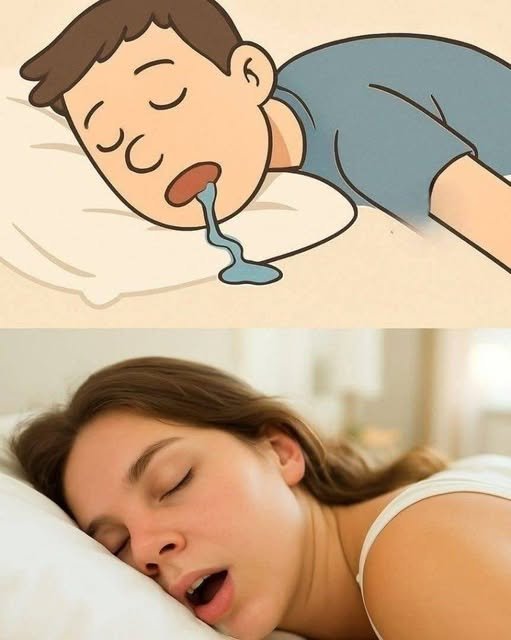
Waking up with a wet pillow or noticing saliva around your mouth after sleeping can be surprising, especially if it happens regularly. Although occasional drooling during sleep is common and usually harmless, frequent or newly developed drooling may sometimes be associated with nasal congestion, sleeping position, medication effects, or difficulties swallowing.
The important thing to remember is that drooling during sleep does not automatically mean you have a health problem. Understanding why it happens, what other symptoms to watch for, and when to seek medical advice can help you decide whether it needs attention.
1. Sleeping With Your Mouth Open
One of the most common reasons for drooling during sleep is sleeping with your mouth open. When the lips remain open, saliva can escape onto your pillow instead of staying inside your mouth.
Mouth breathing may occur because of sleeping position, nasal congestion, or individual differences in airway structure.
You might also notice a dry mouth when you wake up, bad breath, or a sore throat.
What may help: Try sleeping on your side with your head comfortably supported, and address any persistent nasal congestion with appropriate medical advice. Avoid taping your mouth shut, particularly if you have nasal obstruction or possible sleep apnea.
2. Nasal Congestion or Allergies
When your nose is blocked, breathing through your mouth may become more likely. This can make saliva more noticeable around your lips and on your pillow.
Common causes of nasal congestion include colds, allergies, sinus inflammation, and structural problems inside the nose.
Other symptoms may include sneezing, a runny nose, facial pressure, or difficulty breathing comfortably through your nostrils.
What may help: Drinking enough fluids and using a saline nasal spray may help relieve uncomplicated congestion. If blockage is persistent, severe, or frequently disrupts your sleep, consult a healthcare professional.
3. Your Sleeping Position
Sleeping on your side or stomach can make it easier for saliva to escape from your mouth because gravity pulls it toward the pillow.
This is especially noticeable if you naturally sleep with your lips slightly open.
If you otherwise feel well and drooling occurs only occasionally, your sleeping position may be a simple explanation.
You do not necessarily need to change a comfortable sleeping position just because you occasionally drool. Instead, consider whether mouth breathing, congestion, or other symptoms are also present.
4. Acid Reflux During the Night
Acid reflux occurs when stomach contents move back into the esophagus. In some people, reflux triggers increased saliva production, sometimes called water brash.
Possible symptoms include heartburn, a sour taste in the mouth, throat irritation, coughing, or discomfort after lying down.
However, drooling alone is not enough to diagnose acid reflux.
What may help: Avoid large meals close to bedtime, identify foods that trigger your symptoms, and consider elevating the head of your bed if nighttime reflux is a problem. Persistent symptoms deserve medical evaluation.
5. Certain Medicines
Some medicines can increase saliva production or affect the muscles and reflexes involved in swallowing. Depending on the medication, this may contribute to drooling during sleep or while awake.
If drooling began after starting a new medicine or changing a dose, discuss the timing with your doctor or pharmacist.
Do not stop a prescribed medication or change its dose without medical advice.
6. Dental or Oral Health Problems
Dental issues, oral inflammation, and some problems affecting the way the mouth closes can sometimes contribute to changes in saliva management.
Possible accompanying signs include toothache, gum swelling, mouth sores, unpleasant breath, or difficulty keeping your lips closed comfortably.
Maintaining good oral hygiene and arranging a dental examination when symptoms persist can help identify potential causes.
7. Sleep Apnea or Other Sleep-Related Breathing Problems
Obstructive sleep apnea occurs when the upper airway repeatedly becomes partially or completely blocked during sleep. Some people with this condition sleep with their mouths open and may drool.
Warning signs can include:
- Loud, frequent snoring
- Repeated pauses in breathing noticed by another person
- Gasping or choking during sleep
- Morning headaches
- Excessive daytime sleepiness
- Waking up feeling unrefreshed
Drooling by itself does not establish that someone has sleep apnea. However, if you experience these symptoms together, speak with a healthcare professional about whether a sleep assessment is appropriate.
8. Difficulty Swallowing or Neurological Conditions
Less commonly, drooling can occur because saliva is not being swallowed or controlled normally. This may be associated with conditions that affect the muscles, nerves, or coordination involved in swallowing.
Seek medical assessment if persistent drooling occurs alongside difficulty swallowing, repeated choking, changes in speech, facial weakness, or new problems with coordination.
Important: Sudden facial drooping, weakness or numbness on one side of the body, difficulty speaking, or sudden trouble swallowing can indicate a stroke. Call emergency services immediately, even if the symptoms improve.
When Should You Worry About Drooling During Sleep?
Occasional drooling without other symptoms is usually not a reason for concern. Arrange a medical appointment if the problem is new and persistent, becoming more frequent, or accompanied by symptoms such as ongoing nasal blockage, reflux, painful swallowing, or excessive daytime sleepiness.
Seek urgent medical care for new or worsening swallowing difficulties. If you suddenly cannot swallow your saliva, are choking, or have difficulty breathing, seek emergency assistance immediately.
How to Reduce Drooling While Sleeping
The best approach depends on the cause. These practical steps may help:
- Address nasal congestion: Consider saline nasal spray and seek advice for persistent blockage.
- Review your sleeping position: Notice whether drooling occurs more often in certain positions.
- Manage nighttime reflux: Avoid lying down immediately after a large meal and identify personal food triggers.
- Review medications: Ask a healthcare professional whether a medicine could be contributing.
- Maintain oral hygiene: Brush and floss regularly and address ongoing dental symptoms.
- Pay attention to sleep quality: Discuss loud snoring, gasping, or excessive daytime sleepiness with a clinician.
Avoid using mouth tape or taking medicines intended to reduce saliva without professional guidance. These approaches may be inappropriate when the underlying problem involves breathing or swallowing.
Frequently Asked Questions
Is drooling while sleeping normal?
Yes. Many healthy adults occasionally drool while sleeping, especially when their mouths are open or they sleep on their sides. Persistent or suddenly increased drooling deserves closer attention.
Does drooling mean I have a vitamin deficiency?
Not necessarily. Drooling during sleep is not a reliable sign of a specific vitamin deficiency. It is more commonly related to mouth breathing, sleeping position, nasal congestion, or saliva control.
Can stress cause drooling during sleep?
Stress can affect sleep quality and may contribute indirectly to habits such as mouth breathing or teeth grinding. However, drooling alone is not a reliable indicator of stress or anxiety.
Is drooling a sign of a serious disease?
Usually not when it happens occasionally and there are no other symptoms. Persistent drooling accompanied by swallowing problems, neurological changes, or sleep-related breathing symptoms should be evaluated.
Should I consult a doctor if I drool every night?
If you drool every night and the problem is persistent, worsening, or accompanied by other symptoms, arranging a medical assessment is sensible. A doctor can help identify whether nasal obstruction, reflux, medication effects, sleep apnea, or another issue is contributing.
Final Thoughts
Drooling during sleep is common and often harmless. Sleeping with your mouth open, nasal congestion, sleeping position, and nighttime reflux are among the possible explanations.
However, frequent or newly developed drooling should not automatically be dismissed, particularly when it occurs with swallowing difficulties, breathing problems, or neurological symptoms.
The most useful step is to look at the full picture rather than assuming drooling points to one particular disease. If it persists or affects your sleep, a healthcare professional can help determine the cause and recommend appropriate treatment.
SEO Title: If You Drool While You Sleep, What Could It Mean?
Meta Description: Discover common causes of drooling during sleep, including mouth breathing, nasal congestion, reflux, and sleep apnea, plus warning signs that need medical attention.
Suggested URL Slug: drooling-while-sleeping-causes-and-warning-signs
Focus Keyphrase: drooling while sleeping
Related Keyphrases: causes of drooling during sleep, excessive drooling at night, sleeping with mouth open, sleep apnea symptoms, nighttime saliva