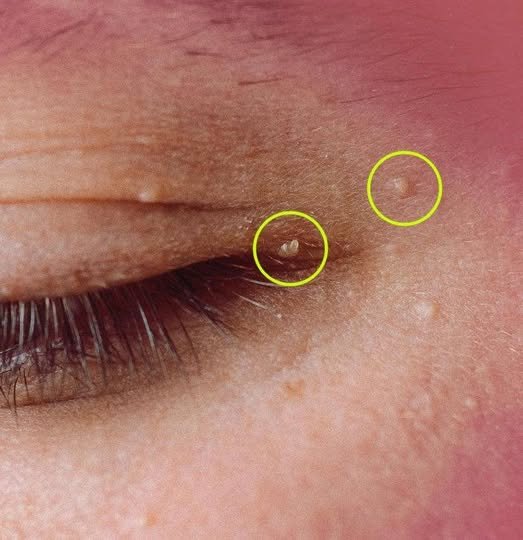
Those tiny white bumps around the eyes, cheeks, nose, or forehead can be surprisingly stubborn. They may look like small pimples or clogged pores, but milia are different. These small, firm, pearly-white bumps form when keratin—a protein naturally found in your skin—gets trapped beneath the skin’s surface.
Milia are sometimes called “fat cysts,” but they aren’t caused by trapped fat. They are tiny keratin-filled cysts and are usually harmless.
The good news is that milia often disappear on their own. When they persist, there are safe ways to encourage clearer-looking skin without damaging the delicate skin around them.
What Exactly Are Milia?
Milia are tiny, usually white or skin-colored bumps that commonly appear around the eyes, cheeks, nose, and forehead.
Unlike ordinary whiteheads, milia generally:
- Don’t have an obvious opening or pore
- Feel firm rather than soft
- Don’t usually become red or inflamed
- Don’t respond well to squeezing
- Can remain in the same spot for weeks or months
They can occur in babies and adults and are especially common around the delicate eye area.
What Causes Milia?
Milia develop when dead skin cells and keratin become trapped underneath the surface of the skin.
Several factors can contribute to their appearance, including:
1. Skin Damage or Irritation
Milia can sometimes develop after skin has been irritated or injured. Burns, rashes, certain procedures, or other forms of skin damage may contribute to what is known as secondary milia.
2. Heavy Skin Products
Some people notice milia after using particularly rich creams or products around the eyes. This doesn’t mean moisturizers directly cause all milia, but heavy products may contribute to congestion in susceptible skin.
3. Sun Exposure
Long-term sun exposure can affect the skin’s ability to shed dead cells normally and may contribute to certain types of milia.
4. Sometimes There Is No Clear Cause
Primary milia can appear without an obvious trigger. Having them doesn’t necessarily mean your skin is dirty or that your skincare routine is poor.
Can You Get Rid of Milia at Home?
Don’t try to pop, squeeze, or pierce milia yourself.
Because milia are trapped beneath the skin rather than ordinary surface pimples, squeezing them can cause irritation, bleeding, infection, or scarring—especially around the eyes.
Instead, focus on gentle skincare and patience.
1. Keep Your Skincare Routine Gentle
Wash your face with a mild cleanser and lukewarm water. Avoid aggressive scrubbing, rough washcloths, or harsh exfoliating products.
Over-exfoliating won’t necessarily remove milia faster and can leave your skin irritated.
2. Consider Gentle Chemical Exfoliation
Products containing ingredients such as salicylic acid or alpha-hydroxy acids (AHAs) can help remove dead skin cells and improve skin texture.
However, the skin around the eyes is particularly delicate. Avoid applying strong acids directly to the eyelids or too close to the eyes unless a healthcare professional recommends it.
Start slowly and stop if your skin becomes irritated.
3. Use Sunscreen
Daily broad-spectrum sunscreen can help protect your skin from UV damage and support overall skin health.
Choose a sunscreen that feels comfortable on your skin and apply it consistently when you’re exposed to daylight.
4. Don’t Pick at the Bumps
This is one of the most important rules.
Milia can look like they should be easy to remove, but picking at them can create an injury without actually removing the cyst. It can also increase the risk of discoloration and scarring.
5. Be Careful With Thick Eye Creams
If you repeatedly develop milia around your eyes, review the products you’re applying to that area.
You don’t necessarily need to stop moisturizing, but you may prefer a lighter formulation if rich products seem to coincide with recurring bumps.
Professional Treatments for Persistent Milia
If milia don’t disappear or you simply want them removed, a dermatologist can usually diagnose them by examining your skin.
Depending on the type and location, a professional may remove individual milia using a sterile technique. Other treatments may sometimes be considered for multiple or persistent lesions.
Professional removal is particularly important around the eyes because the area is delicate.
What About Retinoids?
Topical retinoids can increase skin-cell turnover and may be recommended by a dermatologist for certain persistent or recurrent cases.
However, retinoids aren’t appropriate for everyone and can cause dryness and irritation. Some retinoids also have important pregnancy-related precautions.
If you’re considering a retinoid specifically for milia, it’s better to discuss the appropriate product and strength with a dermatologist.
Home Remedies: What Should You Avoid?
Social media often recommends using household ingredients to “burn away” or dissolve milia. Be cautious.
Avoid putting irritating substances such as:
- Lemon juice
- Undiluted vinegar
- Baking soda
- Toothpaste
- Strong essential oils
- Abrasive scrubs
on your face in an attempt to remove milia.
These substances can irritate or damage the skin without reliably removing the underlying cyst.
How Long Do Milia Take to Go Away?
There isn’t one exact timeline.
Some milia disappear naturally within weeks or months, while others can remain longer. Persistent milia may require professional removal.
If a bump continues to grow, changes appearance, becomes painful, bleeds, becomes inflamed, or you’re unsure whether it is actually milia, have it evaluated.
Milia Around the Eyes
Milia frequently occur around the eyes, but this is also the area where DIY removal is most likely to cause problems.
Never attempt to puncture a bump near your eye with a needle or other sharp object.
A dermatologist or qualified healthcare professional can remove it using an appropriate sterile technique.
Are Milia Contagious?
No. Milia are not an infection and aren’t spread from person to person through normal contact.
They also aren’t a sign that your face is dirty.
Can You Prevent Milia?
Not every case can be prevented, but good skincare habits may help reduce the likelihood of developing them.
Try to:
- Cleanse gently
- Avoid excessive exfoliation
- Protect your skin from the sun
- Avoid picking or scratching your skin
- Choose skincare products appropriate for your skin type
- Be cautious with very heavy products if you’re prone to milia
- Follow appropriate aftercare after cosmetic or dermatological procedures
When Should You See a Dermatologist?
Consider professional evaluation if:
- The bumps aren’t going away
- You have many milia
- They repeatedly return
- They are spreading
- The bumps become red, painful, or swollen
- You aren’t sure they’re actually milia
- They’re located very close to the eyes
- You want them removed quickly and safely
A dermatologist can distinguish milia from other small white or flesh-colored bumps that can look similar.
Final Thoughts
Milia may be small, but they can certainly be annoying—especially when they appear around the eyes.
The most important thing to remember is that milia aren’t ordinary pimples and aren’t “fat trapped under the skin.” They are tiny keratin-filled cysts, and trying to squeeze them away can do more harm than good.
Gentle skincare, sun protection, and patience may be enough for some cases. If a stubborn bump doesn’t disappear, professional removal is a safer option than trying to puncture it yourself.
SEO Details
SEO Title: How to Get Rid of Milia: Safe Ways to Remove Tiny White Bumps
Focus Keyword: how to get rid of milia
Meta Description: Learn what causes milia, why you shouldn’t squeeze them, safe skincare tips, home-care options, and when professional treatment may be needed.
Suggested URL Slug: how-to-get-rid-of-milia
Keywords: milia, how to get rid of milia, milia removal, tiny white bumps on face, milia around eyes, milia treatment, keratin cysts, skin care for milia