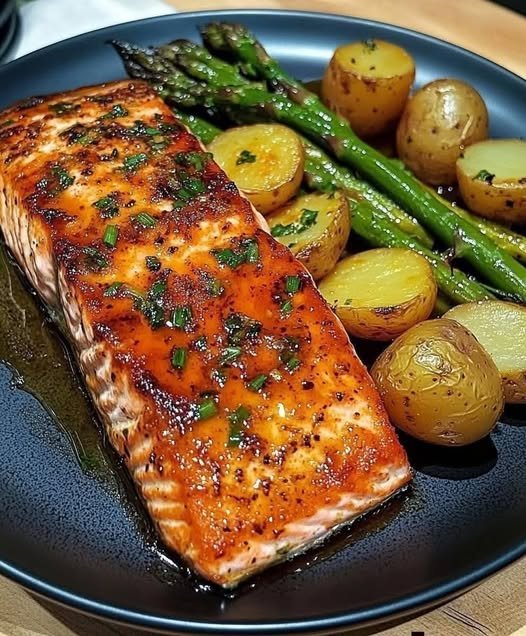
If you’re looking for a dinner that feels elegant enough for a special occasion but is simple enough for a busy weeknight, this Honey Garlic Glazed Salmon with Baby Potatoes and Asparagus is the perfect recipe to try. Tender salmon fillets are coated in a sweet and savory honey garlic glaze, while golden baby potatoes and fresh asparagus roast alongside them for a delicious, well-balanced meal.
The glaze combines honey, fresh garlic, soy sauce, and lemon juice to create a glossy coating that complements the salmon’s naturally rich flavor. Meanwhile, the baby potatoes become beautifully golden on the outside and fluffy inside, while the asparagus adds a fresh, slightly crisp texture.
Best of all, this recipe uses one sheet pan for most of the cooking, which means less cleanup and more time to enjoy your meal. Whether you’re preparing dinner for your family, hosting guests, or simply trying to add more fish and vegetables to your weekly menu, this honey garlic salmon recipe delivers flavor, convenience, and a beautiful presentation.
Why You’ll Love This Honey Garlic Salmon Recipe
- Easy one-pan preparation: Roast the potatoes, asparagus, and salmon on the same baking sheet, adding each ingredient at the right time.
- Sweet and savory flavor: Honey balances the garlic, soy sauce, and lemon juice for a delicious glaze.
- Tender, flaky salmon: The glaze helps coat the fish with flavor while it cooks.
- Colorful and satisfying: Salmon, potatoes, and asparagus make a complete meal with protein, carbohydrates, and vegetables.
- Perfect for busy evenings: The preparation is straightforward, and the oven handles most of the cooking.
- Easy to customize: Adjust the sweetness, garlic, herbs, or lemon according to your taste.
Recipe Information
- Preparation time: 15 minutes
- Cooking time: 25–35 minutes
- Total time: Approximately 40–50 minutes
- Servings: 4
- Difficulty: Easy
- Cooking method: Oven-roasted
- Best for: Family dinners, meal preparation, and special occasions
Ingredients
For the Salmon
- 4 salmon fillets, approximately 5–6 ounces each
- 2 tablespoons honey
- 3 garlic cloves, finely minced
- 2 tablespoons low-sodium soy sauce
- 1 tablespoon fresh lemon juice
- 1 tablespoon olive oil
- ½ teaspoon paprika
- ¼ teaspoon ground black pepper
- ¼ teaspoon salt, or to taste
For the Baby Potatoes
- 1½ pounds baby potatoes, halved
- 1½ tablespoons olive oil
- ½ teaspoon garlic powder
- ½ teaspoon paprika
- ½ teaspoon dried Italian herbs
- Salt and black pepper to taste
For the Asparagus
- 1 pound fresh asparagus, woody ends trimmed
- 1 tablespoon olive oil
- 1 tablespoon lemon juice
- ¼ teaspoon garlic powder
- Salt and black pepper to taste
Optional Garnishes
- Fresh chopped parsley
- Lemon wedges
- A sprinkle of sesame seeds
- A little extra honey garlic glaze
How to Make Honey Garlic Glazed Salmon with Baby Potatoes and Asparagus
Step 1: Preheat the Oven
Preheat your oven to 400°F (200°C). Line a large rimmed baking sheet with parchment paper or lightly grease it with cooking oil.
If your baking sheet is not large enough to arrange everything without overcrowding, use two sheets. Proper spacing helps the potatoes roast rather than steam.
Step 2: Prepare the Baby Potatoes
Wash the baby potatoes thoroughly and pat them dry. Cut them in half, keeping smaller potatoes whole only if they are very small.
Place the potatoes in a large bowl and toss them with olive oil, garlic powder, paprika, Italian herbs, salt, and black pepper.
Spread them cut-side down on the prepared baking sheet. Roast for approximately 15–20 minutes before adding the other ingredients.
Starting the potatoes first gives them time to become tender and golden because they generally require longer to cook than salmon and asparagus.
Step 3: Make the Honey Garlic Glaze
While the potatoes roast, prepare the glaze.
In a small bowl, whisk together the honey, minced garlic, soy sauce, lemon juice, olive oil, paprika, and black pepper.
Taste the mixture. If you prefer a sweeter glaze, add a little more honey. For a sharper flavor, add a few extra drops of lemon juice.
Set aside some of the glaze in a separate clean bowl if you would like extra sauce for serving. Never use a brush or spoon that has touched raw salmon to apply finishing sauce unless the sauce is cooked again.
Step 4: Prepare the Salmon
Pat the salmon fillets dry with paper towels. This helps the glaze adhere and allows the fish to roast more evenly.
Check the fillets for any remaining pin bones and remove them with clean tweezers if necessary.
Place the salmon on the baking sheet beside the partially roasted potatoes, leaving space between each fillet.
Brush the tops and sides of the salmon generously with the honey garlic mixture. Reserve a little glaze for the final minutes of cooking if desired.
Step 5: Add the Asparagus
Wash the asparagus and trim off the tough, woody ends.
Place the asparagus in a bowl and toss with olive oil, lemon juice, garlic powder, salt, and black pepper.
Arrange it on the baking sheet around the salmon and potatoes. Keep the asparagus in a reasonably even layer so it cooks consistently.
If your asparagus spears are very thin, add them a few minutes later to prevent them from becoming too soft.
Step 6: Roast Everything Together
Return the baking sheet to the oven and roast for approximately 10–15 minutes, depending on the thickness of the salmon fillets and the size of the asparagus spears.
The salmon may need slightly longer if the fillets are thick. Check that the baby potatoes are tender when pierced with a fork and that the asparagus is cooked to your preferred texture.
For food safety, the thickest part of the salmon should reach an internal temperature of 145°F (63°C), measured with a food thermometer.
If the salmon finishes before the potatoes, remove the cooked fish and continue roasting the potatoes until tender.
Step 7: Apply the Final Glaze
During the final 2–3 minutes of cooking, brush the salmon with a little of the reserved glaze, provided it has not come into contact with raw fish.
Watch carefully because honey can brown quickly under high heat. Avoid broiling for too long, as the glaze may burn before the fish is ready.
Step 8: Garnish and Serve
Remove the baking sheet from the oven and let the salmon rest for a couple of minutes.
Sprinkle chopped parsley over the salmon and vegetables, and serve with fresh lemon wedges.
Arrange one salmon fillet on each plate with a generous portion of roasted baby potatoes and asparagus. Spoon any properly cooked pan juices over the vegetables for extra flavor.
Tips for Perfect Honey Garlic Glazed Salmon
Choose Salmon Fillets of Similar Thickness
Fillets of similar thickness are more likely to finish cooking at the same time. If one piece is considerably thinner than the others, check it earlier and remove it once it reaches a safe internal temperature.
Dry the Salmon Before Adding the Glaze
Excess moisture can dilute the glaze. Patting the fish dry helps the honey garlic mixture cling to the surface.
Cut the Potatoes Evenly
Halve larger baby potatoes into similarly sized pieces. Uniform pieces cook more evenly and are less likely to leave you with some potatoes hard in the center and others overcooked.
Give the Vegetables Enough Space
Overcrowding traps moisture and can prevent the potatoes from becoming golden. Use a second baking sheet if necessary.
Avoid Burning the Garlic and Honey
Both garlic and honey can darken quickly. Roast at the recommended temperature and monitor the final few minutes, especially if the glaze starts to caramelize.
Do Not Overcook the Salmon
Salmon can become dry and lose its delicate texture when cooked too long. Check the thickest portion with a food thermometer and remove the fish once it reaches 145°F (63°C).
Adjust the Glaze to Your Taste
For a less sweet version, reduce the honey slightly. For more tang, add lemon juice. If you enjoy heat, include a pinch of red pepper flakes.
Delicious Variations to Try
Spicy Honey Garlic Salmon
Add ¼–½ teaspoon of red pepper flakes or a little chili sauce to the glaze. The gentle heat complements the sweetness of the honey.
Lemon Butter Honey Salmon
Replace part of the olive oil in the glaze with melted butter and add extra lemon zest. This variation creates a richer, buttery flavor.
Honey Garlic Salmon with Broccoli
Replace the asparagus with broccoli florets. Toss them with olive oil, garlic powder, salt, and pepper before roasting. Larger florets may need a little extra cooking time.
Ginger Honey Garlic Salmon
Add one teaspoon of freshly grated ginger to the glaze. Ginger brings a warm, aromatic flavor that pairs especially well with salmon and soy sauce.
Low-Sodium Honey Garlic Salmon
Use reduced-sodium soy sauce and avoid adding extra salt to the fish. Season the potatoes and asparagus lightly, then taste before serving.
Honey Garlic Salmon with Green Beans
Fresh green beans make a good alternative to asparagus. Toss them with olive oil and seasonings, then roast until tender-crisp.
Air Fryer Honey Garlic Salmon
Cook the salmon separately in a preheated air fryer, following the appliance’s instructions and checking the thickest portion for doneness. Honey can burn quickly, so apply some glaze near the end of cooking. Roast the potatoes and vegetables separately, as they may require different cooking times.
What to Serve with Honey Garlic Salmon
This recipe already includes potatoes and asparagus, but you can add other side dishes depending on the occasion.
- Steamed rice: Works especially well if you enjoy extra honey garlic sauce.
- Fresh garden salad: Adds a crisp, refreshing contrast to the warm roasted ingredients.
- Garlic bread: Makes the meal feel more substantial.
- Roasted carrots: Their natural sweetness complements the honey glaze.
- Quinoa: Provides a nutty grain option and additional fiber.
- Lemon herb couscous: Offers a light, fluffy accompaniment.
- Creamy cucumber salad: Brings a cool, refreshing element to the plate.
For an everyday family dinner, the salmon, baby potatoes, and asparagus are usually sufficient on their own.
Is Honey Garlic Salmon Healthy?
Salmon is a nutrient-rich fish that can be part of a balanced eating pattern. The potatoes and asparagus provide complementary nutrients, making this recipe a convenient way to combine several food groups in one meal.
Salmon provides protein and omega-3 fats. It supplies high-quality protein and long-chain omega-3 fatty acids, including EPA and DHA, which are important components of a healthy diet.
Baby potatoes provide carbohydrates and potassium. Potatoes supply energy and contain useful nutrients, including potassium and vitamin C. Leaving the skin on adds texture and contributes fiber.
Asparagus provides fiber and vitamins. This vegetable contributes folate, vitamin K, and other nutrients while adding color and freshness to the plate.
Honey adds sweetness. Although honey has a distinctive flavor, it is still an added sugar. Using a moderate amount helps balance the glaze without making the dish excessively sweet.
Olive oil provides unsaturated fat. Measuring the oil rather than pouring freely can help keep portions consistent.
The overall nutritional value depends on the portion size, the amount of glaze used, and individual dietary needs. People who need to limit sodium can choose reduced-sodium soy sauce and use less added salt.
Storage and Reheating
How to Store Leftovers
Allow the cooked salmon and vegetables to cool briefly, then transfer them to airtight containers and refrigerate within two hours of cooking. Keep the refrigerator at 40°F (4°C) or below and use the leftovers within three to four days.
How to Reheat Salmon
For the best texture, place the salmon in an oven-safe dish, cover loosely with foil, and warm at 300°F (150°C) until heated through. Add a small amount of water or lemon juice if the fish seems dry.
You can also use a microwave at reduced power in short intervals, checking frequently to avoid overcooking.
How to Reheat Potatoes and Asparagus
Reheat the potatoes and asparagus in a skillet or oven until hot. An air fryer can help restore some crispness to the potatoes.
Can You Freeze the Leftovers?
Cooked salmon and roasted vegetables can be frozen in suitable airtight containers, although asparagus and potatoes may soften after thawing. For the best quality, use frozen portions within about two to three months.
Thaw frozen leftovers in the refrigerator and reheat thoroughly. Avoid repeatedly reheating the same portion.
Frequently Asked Questions
Can I use frozen salmon?
Yes. Thaw the salmon in the refrigerator before cooking and pat it dry thoroughly. Frozen fillets can release excess moisture, which may affect the glaze and cooking time.
Can I use skin-on salmon?
Absolutely. Skin-on salmon works well in this recipe. Place the fillets skin-side down on the baking sheet. The skin may not become as crisp as it would in a skillet, but it can help protect the fish from drying out.
Can I make this recipe without soy sauce?
Yes. You can use a suitable alternative such as coconut aminos, adjusting the quantity to taste. The flavor and sodium content will vary by product.
How do I know when the salmon is done?
The fish should be opaque and separate into flakes easily. For a reliable food-safety check, use a thermometer and confirm that the thickest part reaches 145°F (63°C).
Why did my honey garlic glaze burn?
Honey contains sugars that brown quickly at high temperatures. Applying a final layer too early, placing the tray too close to the broiler, or using excessive heat can cause burning. Add the finishing glaze near the end and watch carefully.
Can I prepare the ingredients ahead of time?
Yes. Wash and trim the asparagus, halve the potatoes, and mix the glaze in advance. Refrigerate the prepared ingredients separately and assemble the baking sheet shortly before cooking.
Can I use regular potatoes instead of baby potatoes?
Yes. Cut regular potatoes into small, evenly sized cubes. Depending on their size and variety, they may need additional roasting time before the salmon and asparagus are added.
Is this recipe suitable for meal preparation?
Yes. Divide the cooked salmon, potatoes, and asparagus into individual containers for convenient lunches or dinners. Refrigerate promptly and reheat only the portion you intend to eat.
Approximate Nutrition Information
The following values are estimates per serving, assuming the recipe makes four servings and includes one salmon fillet, a portion of baby potatoes, asparagus, and the honey garlic glaze.
- Calories: 480–600
- Protein: 32–40 grams
- Carbohydrates: 35–45 grams
- Fat: 20–30 grams
- Fiber: 5–8 grams
- Sugar: 8–14 grams
- Sodium: 400–800 milligrams
Actual values will vary depending on the salmon’s size, the amount of oil used, the type of soy sauce, and how much glaze remains on the fish and vegetables.
Final Thoughts
Honey Garlic Glazed Salmon with Baby Potatoes and Asparagus is a delicious way to bring a restaurant-inspired dinner to your own kitchen. The sweet and savory glaze complements the rich salmon, while golden potatoes and fresh asparagus complete the meal with satisfying textures and flavors.
With a little preparation and the right cooking sequence, you can create a beautiful one-pan dinner without complicated techniques or a sink full of dishes. Start the potatoes first, add the salmon and asparagus at the right time, and monitor the salmon carefully to keep it tender.
Serve with fresh lemon wedges and parsley for a bright finishing touch. Whether you’re preparing a quick weeknight meal or a dinner for guests, this easy honey garlic salmon recipe is one you can return to again and again.
SEO Details
SEO Title: Honey Garlic Glazed Salmon with Baby Potatoes & Asparagus
Focus Keyphrase: Honey Garlic Glazed Salmon
URL Slug: honey-garlic-glazed-salmon-baby-potatoes-asparagus
Meta Description: Make honey garlic glazed salmon with golden baby potatoes and roasted asparagus for an easy, flavorful one-pan dinner the whole family will love.
Suggested Tags: Honey Garlic Salmon, Baked Salmon Recipe, One-Pan Dinner, Salmon with Asparagus, Roasted Baby Potatoes, Easy Seafood Recipes, Healthy Dinner Ideas, Garlic Honey Glaze