Seeing more hair than usual on your pillow, in the shower, or on your hairbrush can be worrying. While hair shedding is normal to some extent, persistent or increased hair loss can have many different causes.
Your diet is one piece of the puzzle.
Hair follicles need adequate protein, iron, zinc, vitamins, and other nutrients to function normally. Research suggests that deficiencies in certain nutrients—particularly iron, vitamin D, zinc, and some B vitamins—may be associated with certain types of hair loss. However, eating a particular food cannot guarantee that hair loss will stop, especially when the underlying cause is genetic, hormonal, inflammatory, or medical.
The good news is that a balanced diet can provide many of the nutrients your hair needs.
Here are some foods worth including regularly.
1. Eggs
Eggs are an easy source of high-quality protein and contain several nutrients involved in normal body functions.
Hair is primarily made from a protein called keratin, so consistently getting enough protein is important for healthy hair production. Severe protein deficiency can contribute to hair changes and shedding.
Try eggs:
- Boiled with whole-grain toast
- Scrambled with vegetables
- Added to a breakfast bowl
- Served with avocado and tomatoes
There is no need to consume raw eggs for hair benefits. Cooked eggs are a safer and practical choice.
2. Spinach and Other Leafy Greens
Leafy greens such as spinach, kale, and Swiss chard provide folate, vitamin C, carotenoids, and other nutrients.
Spinach also contributes iron to the diet. Iron deficiency is one of the nutritional issues that can be associated with hair loss, particularly in people who are susceptible to iron deficiency.
For better iron absorption from plant foods, combine them with a source of vitamin C.
For example:
Spinach + tomatoes + lemon juice makes a simple nutrient-rich combination.
3. Fatty Fish
Salmon, sardines, mackerel, and trout provide protein and omega-3 fatty acids.
Fatty fish can be part of an overall nutritious diet that supports skin and general health. They also provide vitamin D in varying amounts, depending on the fish.
Vitamin D has been studied extensively in relation to hair disorders, although having adequate vitamin D does not mean that supplementation or eating vitamin-D-containing foods will automatically reverse hair loss.
Aim to include fish regularly as part of a balanced diet if you eat seafood.
4. Lentils and Beans
Lentils, chickpeas, kidney beans, black beans, and other legumes provide a combination of:
- Plant protein
- Iron
- Zinc
- Folate
- Fiber
They’re particularly useful for people who eat little or no meat.
Try adding lentils to soups and curries or using chickpeas in salads and hummus.
Pairing legumes with vitamin-C-rich foods such as tomatoes, bell peppers, citrus, or lemon can help your body absorb plant-based iron more efficiently.
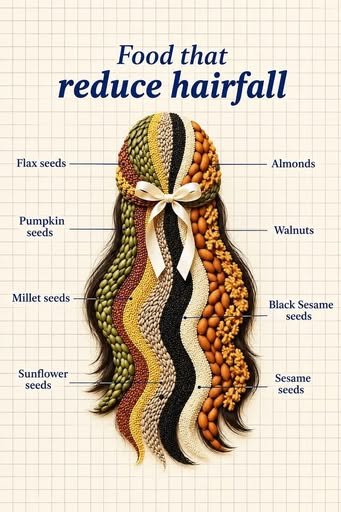
5. Nuts and Seeds
Nuts and seeds are convenient sources of healthy fats, protein, minerals, and other nutrients.
Good choices include:
- Walnuts
- Almonds
- Pumpkin seeds
- Chia seeds
- Flaxseeds
- Sunflower seeds
Pumpkin seeds are particularly useful as a source of zinc and other nutrients.
However, more is not necessarily better. A small handful is generally enough because nuts and seeds are calorie-dense.
6. Greek Yogurt
Greek yogurt provides protein and several micronutrients.
If your diet is low in protein, regularly including foods such as Greek yogurt can help you meet your overall protein needs.
Choose plain or lightly sweetened yogurt and add fruit, nuts, or seeds for a balanced snack.
7. Lean Meat
Chicken, turkey, and lean beef provide protein, while beef can also be an important source of highly absorbable iron and zinc.
Iron deficiency can be associated with certain forms of hair loss, so maintaining adequate iron intake is important for people at risk of deficiency.
If you eat meat, rotating lean meat with fish, eggs, legumes, and other protein sources can create a more varied diet.
8. Berries and Citrus Fruits
Strawberries, oranges, grapefruit, kiwi, and other vitamin-C-rich fruits can complement an overall hair-supportive diet.
Vitamin C is particularly useful because it helps the body absorb iron from plant foods.
For example, try:
Lentils + spinach + tomatoes + lemon
This combination provides several nutrients associated with healthy hair while also improving the meal’s overall nutritional value.
9. Avocados
Avocados provide healthy unsaturated fats along with fiber and several micronutrients.
They can be an easy addition to breakfast or lunch.
Try avocado with:
- Eggs
- Whole-grain toast
- Tomatoes
- Chickpeas
- Tuna or salmon
Remember that avocado isn’t a hair-loss treatment. It’s simply one nutritious food that can contribute to a balanced eating pattern.
10. Sweet Potatoes and Orange-Colored Vegetables
Sweet potatoes, carrots, pumpkin, and other orange-colored vegetables contain beta-carotene, which the body can convert into vitamin A.
Vitamin A is important for normal cell growth, including the skin.
But this is one area where more is definitely not better. Excessive intake of preformed vitamin A from supplements can actually contribute to hair loss.
Getting nutrients from ordinary foods is generally preferable to taking high-dose supplements without a documented need.
What About Biotin?
Biotin is frequently marketed as a “hair growth vitamin,” but there’s an important distinction.
Biotin deficiency can cause hair loss, but true deficiency is relatively uncommon, and there is limited evidence that taking extra biotin improves hair growth in people who aren’t deficient.
Foods containing biotin include eggs, nuts, seeds, legumes, and some meats.
Instead of automatically taking a high-dose biotin supplement, it’s better to discuss persistent hair loss with a healthcare professional.
Foods and Habits to Limit
There isn’t a single food that everyone with hair loss must completely avoid.
However, a diet that is extremely restrictive or consistently too low in calories or protein can work against healthy hair. The American Academy of Dermatology specifically notes that inadequate iron or protein and eating too few calories can contribute to hair loss.
It’s also sensible to limit a diet dominated by:
- Highly processed foods
- Sugary drinks
- Excessive alcohol
- Very restrictive crash diets
- Extremely low-calorie eating patterns
A recent systematic review found associations between higher intake of sugary beverages and hair loss, although associations do not prove that these drinks directly cause hair loss.
Can Food Actually Stop Hair Fall?
Not always.
This is one of the most important points to understand.
Hair loss can result from many conditions, including hereditary pattern hair loss, hormonal changes, thyroid problems, certain medications, nutritional deficiencies, autoimmune conditions, scalp disorders, and temporary shedding after illness or major physical stress.
If a nutritional deficiency is contributing to the problem, correcting that deficiency may help. But if the cause is unrelated to nutrition, simply changing your diet may not be enough.
A Simple One-Day Hair-Friendly Eating Plan
You don’t need an expensive diet or a collection of “hair growth” supplements.
Breakfast
Two eggs with whole-grain toast, spinach, and tomatoes.
Mid-Morning Snack
Greek yogurt with berries and a small handful of walnuts.
Lunch
Lentil or chickpea salad with spinach, tomatoes, cucumber, lemon, and olive oil.
Afternoon Snack
An orange or kiwi with a few pumpkin seeds.
Dinner
Grilled salmon or chicken with sweet potato and steamed broccoli.
Drinks
Water throughout the day, with unsweetened tea or coffee if desired.
The goal is not a magical combination of foods. It’s consistently providing your body with enough calories, protein, vitamins, and minerals.
Don’t Overdo Hair Supplements
If you’re experiencing hair loss, it can be tempting to buy several supplements at once.
That isn’t necessarily helpful.
The American Academy of Dermatology recommends determining whether you’re actually deficient before taking supplements such as iron, zinc, or biotin. Excessive amounts of certain nutrients can be harmful, and some supplements can actually worsen hair loss.
For example, excessive vitamin A and selenium have been associated with hair loss.
If hair shedding is persistent, a healthcare professional can determine whether testing for nutritional or other medical causes is appropriate.
When Should You See a Doctor?
Consider getting evaluated if you notice:
- Sudden or severe hair shedding
- Bald patches
- Rapidly receding hairline
- Significant thinning over a short period
- Scalp redness, scaling, pain, or itching
- Hair loss accompanied by other unexplained symptoms
- Hair loss that continues despite improving your diet
A dermatologist can help determine the type and cause of hair loss rather than simply treating the symptom.
Final Thoughts
There is no single “miracle food” that can stop hair loss overnight.
But a nutritious diet can give your hair follicles the building blocks they need to function properly. Focus on adequate protein, iron-rich foods, vegetables, fruits, healthy fats, legumes, nuts, seeds, and a variety of whole foods.
The most important step is identifying why the hair is falling out. If a deficiency is involved, correcting it can be meaningful; if the cause is hormonal, genetic, medical, or related to the scalp, dietary changes alone may not solve the problem.
SEO Details
SEO Title: Foods That May Help Reduce Hair Fall and Support Hair Growth
Meta Description: Discover nutritious foods that provide protein, iron, zinc, vitamin D, and other nutrients that support healthy hair and may help when nutritional deficiencies contribute to hair loss.
Focus Keyword: foods that reduce hair fall
Slug: foods-that-reduce-hair-fall
Category: Health & Wellness
Tags: hair fall, hair loss, healthy hair, foods for hair growth, hair health, protein, iron, zinc, vitamin D, nutrition