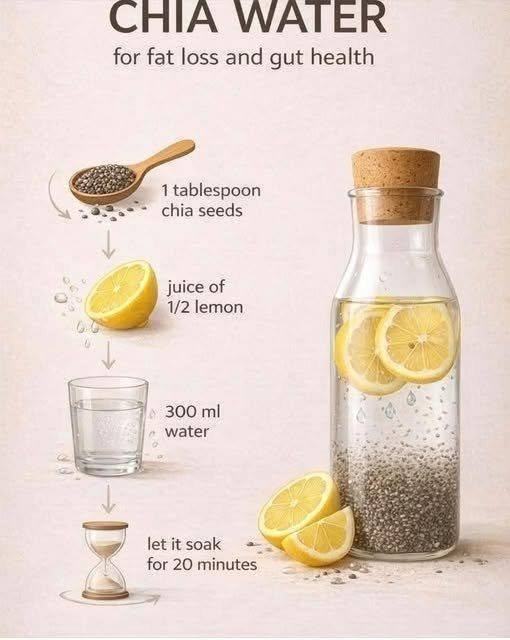
Chia water has become a popular wellness drink among people looking to manage their weight, improve digestion, and support a healthier daily routine. Made by soaking chia seeds in water, this simple drink provides fiber, plant-based omega-3 fatty acids, and several essential minerals.
But can chia water really help you lose fat? Does it improve gut health, and what is the best way to drink it?
The answer is encouraging, with a few important qualifications. Chia water can support a balanced weight-management plan and help increase your fiber intake, but it does not directly burn body fat or replace a healthy diet. Its benefits depend on how you prepare it, how much you consume, and your overall lifestyle.
In this guide, you will learn how to make chia water, its potential benefits, the best time to drink it, and the precautions to keep in mind.
What Is Chia Water?
Chia water is a simple drink prepared by soaking chia seeds in water until they absorb liquid and develop a soft, gel-like coating.
Chia seeds come from the plant Salvia hispanica. They contain soluble fiber, insoluble fiber, alpha-linolenic acid (ALA), a plant-based omega-3 fatty acid, protein, and minerals such as calcium, magnesium, and phosphorus.
When chia seeds are soaked, their outer layers absorb water and form a gel. This texture is one reason they are often added to drinks, puddings, smoothies, and breakfast recipes.
Chia water is naturally free of added sugar when prepared with only chia seeds and water.
How to Make Chia Water for Fat Loss and Gut Health
<text> </text>
Ingredients
- 1 tablespoon chia seeds
- 1 cup water (8 ounces or approximately 240 milliliters)
- 1–2 teaspoons fresh lemon juice, optional
- A small amount of honey, optional
For a lower-calorie drink, leave out the honey. Lemon juice adds flavor but does not make the drink a fat-burning remedy.
Instructions
Step 1: Measure the chia seeds.
Place one tablespoon of chia seeds in a clean glass or jar.
Step 2: Add water.
Pour in one cup of water and stir thoroughly to distribute the seeds.
Step 3: Let the seeds soak.
Allow the mixture to stand for approximately 15–30 minutes, stirring again after a few minutes to prevent clumping. The seeds should become hydrated and develop a gel-like consistency.
Step 4: Add flavor if desired.
Mix in fresh lemon juice. You can also add a few mint leaves for a refreshing taste.
Step 5: Drink slowly.
Enjoy the drink once the seeds are fully hydrated. If you are new to eating chia seeds, start with a smaller amount and increase gradually according to your tolerance.
Important: Never swallow a spoonful of dry chia seeds and then drink water to wash them down. Chia seeds expand as they absorb liquid and can cause a dangerous blockage in the esophagus, particularly in people with swallowing difficulties.
7 Potential Benefits of Chia Water
1. It May Help You Feel Fuller for Longer
One of the main reasons chia water attracts attention from people trying to lose weight is its fiber content.
Chia seeds absorb liquid and contain a mixture of soluble and insoluble fiber. Fiber can contribute to fullness and help make meals more satisfying.
If drinking chia water helps you feel satisfied between meals, you may find it easier to reduce unnecessary snacking.
However, individual responses vary. Chia water does not guarantee reduced hunger, and the seeds still contribute calories to your daily intake.
Practical tip: Use chia water as part of a balanced breakfast or snack rather than drinking it in addition to an already excessive calorie intake.
2. It Supports Healthy Digestion
Chia seeds contain dietary fiber, which helps support normal bowel function.
Fiber can increase stool bulk, while soluble fiber absorbs water and forms a gel. Together, these properties may help support regular bowel movements when your overall diet contains sufficient fiber and you drink enough fluids.
People who eat very little fiber may benefit from gradually adding chia seeds to their diet.
However, consuming too much fiber too quickly can cause gas, bloating, abdominal discomfort, or constipation, especially when fluid intake is insufficient.
Start with a small portion and increase gradually.
3. It May Help Relieve Occasional Constipation
Adequate dietary fiber and fluid intake are important for preventing and managing many cases of constipation.
Chia seeds can contribute to your daily fiber intake, but chia water is not a guaranteed treatment for constipation. The amount of fiber in the drink depends on how many seeds you use and whether you consume the seeds rather than discarding them.
For better results, combine fiber-rich foods with adequate hydration, regular movement, and a consistent bathroom routine.
If constipation is persistent, severe, or accompanied by blood in the stool, unexplained weight loss, vomiting, or significant abdominal pain, seek medical advice.
4. It Provides Plant-Based Omega-3 Fatty Acids
Chia seeds contain alpha-linolenic acid (ALA), an essential plant-based omega-3 fatty acid.
Your body needs ALA from food because it cannot produce it in sufficient quantities on its own. Omega-3 fatty acids play roles in normal cell function and overall health.
The body converts only a limited amount of ALA into the longer-chain omega-3 fatty acids EPA and DHA.
Chia water can contribute ALA to your diet, but it should not be viewed as a substitute for prescribed treatment or as a cure for inflammation.
5. It Can Contribute to Blood Sugar Management
The fiber in chia seeds may help influence how quickly carbohydrates are digested and absorbed when chia seeds are included in a mixed meal.
Some research on chia seeds suggests potential benefits for certain metabolic markers, but the evidence is not strong enough to conclude that chia water alone reliably controls blood sugar or prevents diabetes.
If you have diabetes, continue following your prescribed treatment plan. Monitor your glucose as recommended by your healthcare professional rather than relying on chia water to control it.
6. It Provides Minerals That Support Normal Body Functions
Chia seeds contain minerals, including calcium, magnesium, phosphorus, and manganese.
These nutrients contribute to normal functions such as bone maintenance, muscle activity, energy metabolism, and other physiological processes.
The exact amount you receive depends on the portion size and whether you consume the seeds. A tablespoon can contribute to nutrient intake, but it does not replace a varied, balanced diet.
7. It Can Be a Healthier Alternative to Sugary Drinks
Plain chia water contains no added sugar and can be a useful alternative to sweetened beverages.
Replacing a high-calorie soda, sweetened tea, or sugary juice with water-based drinks may help reduce your overall calorie intake.
This benefit comes primarily from the replacement of sugary drinks, not from a special fat-burning effect of chia seeds.
If you add generous amounts of honey, syrup, or sugar, the calorie advantage may be reduced.
Does Chia Water Actually Burn Belly Fat?
This is one of the most common questions about chia water.
Chia water does not directly burn belly fat. No drink can selectively remove fat from your abdomen.
Body fat generally decreases when you consistently consume fewer calories than your body uses. Chia seeds may help some people manage hunger because they provide fiber, but their effect on body weight is not guaranteed.
Research on chia seeds and weight loss has produced mixed results. Some studies have examined changes in weight, waist circumference, or metabolic health, but the findings do not establish chia water as a reliable standalone weight-loss treatment.
For sustainable fat loss, focus on:
- Eating balanced meals with vegetables, fruit, protein, and fiber-rich foods.
- Choosing portion sizes that match your energy needs.
- Including protein sources such as eggs, beans, lentils, yogurt, fish, or lean meat.
- Reducing frequent sugary drinks and highly processed snacks.
- Walking regularly and doing strength-building exercise when appropriate.
- Getting adequate sleep and maintaining consistent habits.
Chia water can fit into this routine, but the overall pattern matters much more than any single drink.
What Is the Best Time to Drink Chia Water?
There is no scientifically established best time to drink chia water for fat loss or gut health. The best time is one that fits your routine and helps you maintain a balanced diet.
In the Morning
Some people enjoy chia water in the morning because it is easy to prepare and helps them start the day with fluids and fiber.
It may be useful alongside a nutritious breakfast, but there is no evidence that drinking it on an empty stomach causes extra fat loss.
Before a Meal
Drinking chia water before a meal may help some people feel fuller because of the liquid and fiber it contains.
However, the effect varies, and it is not necessary to drink it before every meal.
As an Afternoon Snack
Chia water can be an alternative to a sugary drink during the afternoon. Pairing it with a source of protein, such as plain yogurt, may provide a more satisfying snack if you are hungry.
Before Bed
There is no strong evidence that drinking chia water at night burns more fat. If it causes bloating, reflux, or nighttime urination, choose an earlier time.
The bottom line: Consistency, portion size, and your overall diet matter more than timing.
How Much Chia Water Should You Drink Daily?
There is no official daily requirement for chia water specifically.
For many healthy adults, starting with one teaspoon to one tablespoon of chia seeds per day is a reasonable way to assess tolerance. If you digest it comfortably, you may gradually increase the amount according to your diet and individual needs.
A tablespoon of chia seeds contains approximately 4–5 grams of fiber, although the exact amount varies by product and serving size.
Consider the fiber you already obtain from other foods. You do not need to consume large amounts of chia seeds to receive nutritional benefits.
Drink sufficient fluids throughout the day, especially when increasing your fiber intake. People with prescribed fluid restrictions should follow their healthcare professional’s advice.
Common Mistakes to Avoid When Drinking Chia Water
Using Too Many Seeds at Once
A large serving may cause bloating, gas, or abdominal discomfort, especially if your usual diet is low in fiber.
Begin with a small amount and increase gradually.
Drinking the Seeds Before They Are Hydrated
Dry chia seeds expand after absorbing liquid. Always allow them to hydrate fully before drinking.
People with swallowing difficulties or a history of esophageal narrowing should consult a healthcare professional before consuming chia seeds.
Adding Too Much Sugar
Honey, syrups, and sugar can increase the drink’s calorie content. If your goal is weight management, try lemon, mint, or cucumber for flavor instead.
Expecting Rapid Weight Loss
Chia water will not compensate for a consistently unbalanced diet or inactivity. Sustainable weight management takes time and depends on multiple habits.
Ignoring Digestive Discomfort
If you experience persistent bloating, pain, diarrhea, or worsening constipation after consuming chia seeds, reduce the amount or stop using them and seek medical advice if symptoms continue.
Who Should Be Careful With Chia Water?
Chia seeds are safe for many people when properly prepared and eaten in reasonable portions, but they are not suitable for everyone in every circumstance.
Be particularly cautious if you:
- Have difficulty swallowing or a known narrowing of the esophagus.
- Have a history of intestinal obstruction or a medical condition requiring specific dietary restrictions.
- Experience significant digestive symptoms when eating high-fiber foods.
- Have a known allergy to chia seeds.
- Take medication for diabetes or blood pressure and are considering substantial dietary changes.
Chia seeds may affect fullness and contribute to changes in blood glucose or blood pressure, but the clinical significance varies. If you use medication for these conditions, ask your healthcare professional if you have concerns.
If you experience difficulty breathing, swelling of the lips or throat, or another sign of a severe allergic reaction after eating chia seeds, seek emergency care.
Frequently Asked Questions
Can chia water help reduce belly fat?
Chia water does not directly burn belly fat. Its fiber may help with fullness, and replacing sugary beverages with it may reduce calorie intake. Overall diet, physical activity, and sustained energy balance determine fat loss.
How long does it take to see results?
There is no guaranteed timeline. Digestive changes may occur as your fiber intake changes, while weight loss depends on your overall eating pattern and activity. Avoid expecting visible fat loss from chia water alone.
Should I drink chia water every day?
Many healthy adults can include properly prepared chia seeds in their daily diet. Start with a small serving, increase gradually if tolerated, and make sure your total fiber and fluid intake are appropriate.
Can I drink chia water on an empty stomach?
Yes, if you tolerate it well. However, drinking it on an empty stomach has not been shown to provide special fat-loss benefits compared with drinking it at another time.
Can chia water help with constipation?
Its fiber can contribute to regular bowel movements, particularly when consumed with adequate fluid. Increase fiber gradually because suddenly consuming too much can worsen bloating or discomfort.
Can I prepare chia water the night before?
Yes. Mix the seeds with water, cover the container, and refrigerate it. Use a clean, covered container and consume the mixture within a few days, preferably within 24–48 hours for freshness. Discard it if its smell, appearance, or texture becomes unusual.
Is lemon chia water better than plain chia water?
Lemon adds flavor and a small amount of vitamin C, but it does not turn chia water into a fat-burning drink. Plain chia water provides the same basic fiber benefits from the seeds.
Final Thoughts
Chia water is a simple, affordable drink that can contribute fiber, plant-based omega-3 fatty acids, and minerals to your diet. When properly prepared, it may support digestive regularity, help some people feel fuller, and provide a useful alternative to sugary beverages.
But it is important to keep expectations realistic. Chia water does not melt belly fat, detoxify the body, or cure digestive disorders. Its benefits are best understood as part of a balanced diet and healthy lifestyle.
Start with a small serving, allow the seeds to hydrate fully, drink enough fluids, and pay attention to how your body responds.
A healthy routine does not depend on a miracle drink. Small, consistent habits—including nutritious meals, regular activity, and adequate sleep—make the biggest difference over time.
SEO Details
SEO Title: Chia Water for Fat Loss and Gut Health: Benefits and Recipe
Focus Keyphrase: chia water for fat loss
URL Slug: chia-water-fat-loss-gut-health
Meta Description: Discover how chia water may support fullness and digestive health, how to prepare it safely, the best time to drink it, and what to know about weight loss.
Suggested Tags: Chia Water, Chia Seeds, Weight Management, Gut Health, Healthy Drinks, Dietary Fiber, Digestive Health, Healthy Lifestyle, Nutrition Tips, Natural Wellness