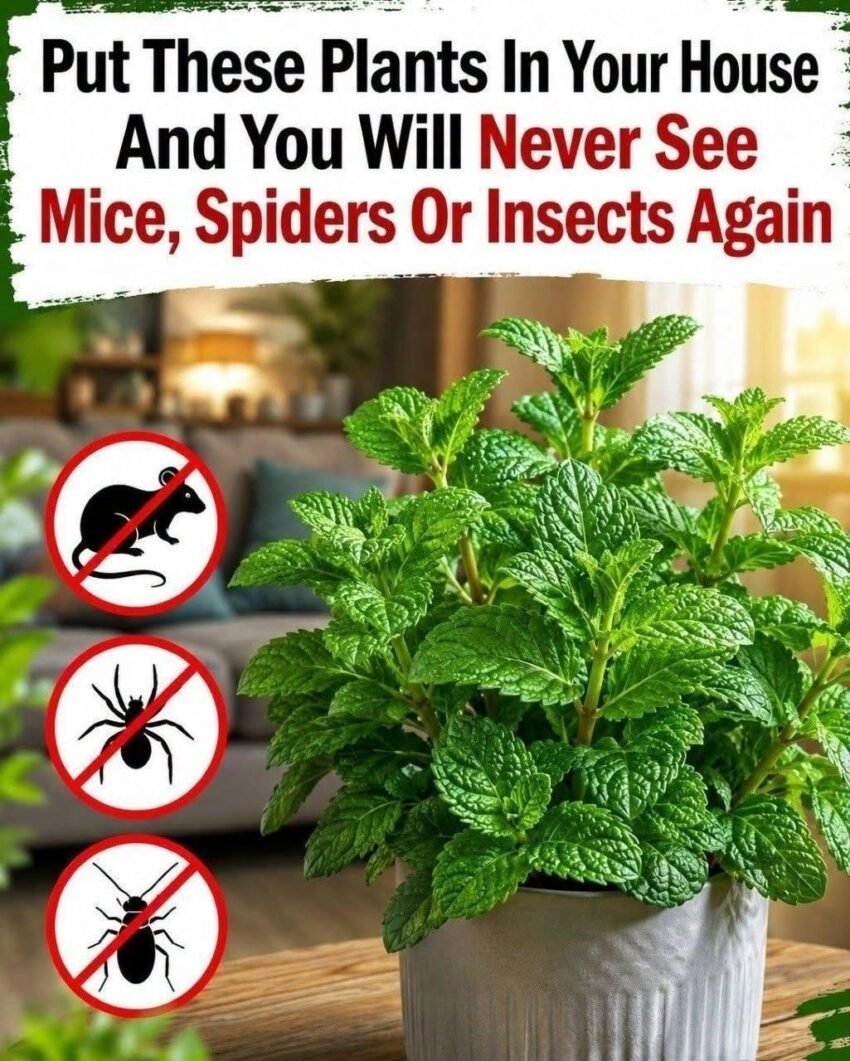
If you’re looking for a more natural way to make your home and garden less attractive to unwanted pests, certain strongly scented plants are worth considering. Their aromas and essential oils may discourage some insects and other pests from lingering nearby.
However, plants are not a guaranteed replacement for pest control. Mice, spiders, ants, mosquitoes, and other pests are influenced by food, shelter, moisture, and entry points, so combining plants with good home maintenance usually works better.
1. Peppermint
Peppermint has a powerful menthol scent that many people find pleasant, but certain insects and pests may avoid strong mint aromas.
Grow peppermint in containers near doors, patios, or windows. Keep it contained because it can spread aggressively in garden beds.
2. Lavender
Lavender is valued for its beautiful flowers and distinctive fragrance. Its aromatic oils may help discourage certain flying insects, while also attracting pollinators such as bees and butterflies.
Place lavender near sunny entrances, windows, patios, or outdoor seating areas.
3. Rosemary
Rosemary’s strong, woody aroma comes from its natural aromatic compounds. It can be grown outdoors in sunny locations and is particularly useful because you can also harvest it for cooking.
Plant it around patios and garden pathways where you spend time outdoors.
4. Basil
Basil is another fragrant herb that can make a useful addition to a sunny windowsill, balcony, or garden.
While it shouldn’t be considered a guaranteed insect repellent, its strong aroma may help discourage some insects around the area where it is grown.
5. Marigolds
Marigolds are popular companion plants because of their strong scent and bright flowers. They can be planted around vegetable gardens, pathways, and outdoor sitting areas.
They may help with certain garden pests, although their effectiveness varies depending on the pest and growing conditions.
6. Mint
Different varieties of mint have strong fragrances that may discourage some insects. Like peppermint, mint grows quickly and can become difficult to control when planted directly in the ground.
Growing it in pots is often the easiest option.
7. Catnip
Catnip contains nepetalactone, a compound that has demonstrated insect-repelling properties in research, particularly against certain mosquitoes.
One important warning: catnip can attract cats, so it may not be the best choice if you don’t want neighborhood cats spending more time around your garden.
8. Lemongrass
Lemongrass has a fresh citrus-like fragrance and is often grown in warm climates. Its aromatic compounds are associated with insect-repellent properties, although simply having a lemongrass plant nearby is not equivalent to using a concentrated repellent.
It works well in containers around patios and outdoor living areas.
What About Mice?
Plants are sometimes promoted online as a way to keep mice away, particularly peppermint and other strongly scented plants. However, planting these around your home is unlikely to solve an established mouse infestation.
For mice, the most effective approach is to:
- Seal cracks and gaps around the building
- Keep food in tightly sealed containers
- Clean up crumbs and food spills
- Reduce clutter where mice can hide
- Keep garbage securely covered
- Address water leaks and moisture
- Use appropriate traps or professional pest control when necessary
Final Thoughts
Peppermint, lavender, rosemary, basil, marigolds, mint, catnip, and lemongrass can all be useful additions to a garden, especially because many have pleasant aromas and culinary or ornamental value. Some may help discourage particular insects, but no plant reliably repels every pest.
For the best results, combine fragrant plants with good sanitation, sealed entry points, and appropriate pest-control measures.