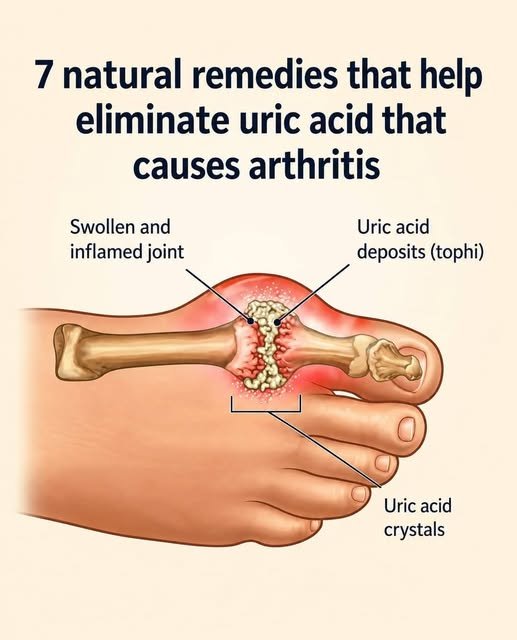
Gout can seem to appear out of nowhere. One day you may feel perfectly fine, and the next, a joint can become intensely painful, swollen, red, and tender. Gout occurs when excess uric acid leads to crystals forming in and around a joint.
The good news is that everyday habits can play an important role in reducing gout triggers and supporting healthier uric acid levels. However, there is an important distinction between supporting gout management naturally and actually treating the underlying disease.
No drink, herb, or kitchen remedy can reliably “flush out” gout in a few hours or dissolve established crystals overnight. People with recurrent gout may need medication that lowers uric acid, alongside lifestyle changes.
Here are seven practical approaches that can support better gout management.
1. Drink Enough Water
Staying adequately hydrated is one of the simplest habits that can support normal kidney function and help reduce dehydration, which can trigger gout attacks.
Water should be your primary beverage. Instead of waiting until you’re extremely thirsty, drink fluids regularly throughout the day.
The amount you need varies depending on your body, activity level, climate, and medical conditions. People with kidney or heart problems, or those taking certain medications, should ask their healthcare professional how much fluid is appropriate.
Easy hydration ideas
- Keep a water bottle nearby.
- Drink water with meals.
- Choose water instead of sugary soft drinks.
- Add lemon or lime for flavor if desired.
- Drink extra fluids during hot weather or physical activity.
Hydration isn’t a cure for gout, but avoiding dehydration is an important part of managing it.
2. Eat More Cherries and Other Whole Fruits
Cherries have received considerable attention in gout research because of their potential relationship with uric acid and inflammation.
Some evidence suggests that cherries or tart cherry products may help reduce the risk of gout attacks, although the evidence isn’t strong enough to consider cherries a treatment on their own.
Fresh cherries can be enjoyed as part of an overall balanced diet.
Other whole fruits can also fit into a healthy eating pattern. However, it’s generally better to choose whole fruit rather than large amounts of fruit juice because juices can deliver substantial amounts of sugar without the same fiber.
3. Reduce Sugary Drinks
One of the most useful dietary changes is cutting back on sugar-sweetened beverages.
Regular soft drinks, sweetened fruit drinks, energy drinks, and other beverages containing substantial amounts of added sugar can contribute to health problems and are associated with gout.
Try replacing them with:
- Water
- Sparkling water without added sugar
- Unsweetened tea
- Unsweetened coffee
- Water flavored with lemon, lime, or cucumber
Reducing added sugar is also helpful for maintaining a healthy weight and overall metabolic health.
4. Limit High-Purine Foods Without Eliminating All Protein
Purines are compounds that the body breaks down into uric acid.
Certain foods contain particularly high amounts of purines and can contribute to higher uric acid levels or gout risk in susceptible people.
Foods commonly recommended for limitation include:
- Organ meats such as liver and kidney
- Large amounts of red meat
- Certain seafood
- Anchovies
- Sardines
- Mussels
- Scallops
- Some other oily fish
The goal isn’t necessarily to eliminate every source of protein. Poultry, eggs, dairy products, legumes, nuts, and other foods can be incorporated into a balanced eating pattern according to individual needs.
5. Maintain a Healthy Weight — Without Crash Dieting
If you’re overweight, gradual weight loss may help reduce gout risk and improve overall health.
However, extreme dieting and rapid weight loss can sometimes make gout management more difficult.
Instead, focus on sustainable habits:
- Eat balanced meals.
- Increase vegetables and whole foods.
- Reduce highly processed foods.
- Limit sugary drinks.
- Control portions.
- Stay physically active.
- Aim for gradual, sustainable weight changes.
A healthy eating pattern emphasizes vegetables, fruits, appropriate protein sources, whole grains, healthy fats, and foods with little added sugar.
6. Keep Alcohol Intake Low
Alcohol can contribute to gout attacks, and excessive alcohol consumption can make gout management more difficult.
Beer and spirits are particularly important to limit, but alcohol in general can be a trigger for some people.
If you regularly experience gout attacks, reducing or avoiding alcohol may be worth discussing with your healthcare professional.
Replacing alcoholic drinks with water or unsweetened beverages also helps support hydration.
7. Consider Vitamin C Through Food
Vitamin C has been studied in relation to uric acid. Some evidence suggests that higher vitamin C intake may modestly reduce uric acid levels, although it shouldn’t be considered a standalone treatment for gout.
Good food sources include:
- Oranges
- Kiwi
- Strawberries
- Bell peppers
- Broccoli
- Tomatoes
- Citrus fruits
If you’re considering a vitamin C supplement, speak with a healthcare professional first, particularly if you have kidney problems or take regular medications.
What About Lemon Water?
Lemon water is a refreshing way to increase fluid intake, but it shouldn’t be described as a powerful uric-acid “flush.”
Its main practical benefit for gout management is that it can make water more appealing and help some people drink enough fluids.
You don’t need a special detox drink to manage uric acid.
What About Apple Cider Vinegar?
Apple cider vinegar is frequently promoted online as a gout remedy, but there isn’t strong clinical evidence showing that drinking it can dissolve uric-acid crystals or treat gout.
It can also irritate the digestive tract when consumed in concentrated amounts.
There is no need to rely on vinegar as a gout treatment.
What About Baking Soda?
Baking soda should not be used as a DIY treatment to “flush” uric acid.
Although sodium bicarbonate has legitimate medical uses in specific circumstances, taking it unnecessarily can add a significant amount of sodium and may be inappropriate for people with certain heart, blood-pressure, or kidney conditions.
A home remedy that changes urine chemistry isn’t automatically safe.
Natural Remedies vs. Gout Treatment
Lifestyle changes are valuable, but they aren’t always enough.
If gout attacks keep returning or your uric acid remains elevated, a doctor may recommend medication specifically designed to lower uric acid.
For example, allopurinol reduces the amount of uric acid produced by the body and is commonly used for long-term gout prevention. It should be taken exactly as prescribed and shouldn’t be stopped without medical advice.
The important point is that natural lifestyle measures and medical treatment don’t have to be competing approaches. Depending on the person, both may be part of effective long-term gout management.
What to Do During a Gout Attack
If you already have a diagnosed gout flare:
- Rest the affected joint.
- Elevate the limb when practical.
- Keep the joint cool with a wrapped ice pack for short periods.
- Drink adequate fluids unless you’ve been told to restrict them.
- Take prescribed gout medication according to your healthcare professional’s instructions.
- Avoid alcohol and known dietary triggers.
Gout attacks can last days or even weeks without treatment.
When You Should See a Doctor
Don’t assume every painful, swollen joint is gout.
Medical evaluation is particularly important if:
- This is your first suspected gout attack.
- The pain is severe or worsening.
- The joint is extremely red, hot, or swollen.
- You have a fever or chills.
- Your usual treatment isn’t helping.
- Attacks are becoming more frequent.
- You have kidney disease or kidney stones.
- You have persistently elevated uric acid.
A hot, swollen joint accompanied by fever can sometimes indicate an infection, which requires urgent medical attention.
A Simple Gout-Friendly Daily Routine
A practical day might look like this:
Morning:
Water, followed by a balanced breakfast such as eggs, unsweetened yogurt, whole-grain toast, and fruit.
Lunch:
Vegetables, a moderate portion of lean protein, and a whole-grain or other balanced carbohydrate source.
Afternoon:
Water and a piece of whole fruit instead of a sugary drink.
Dinner:
Vegetables with an appropriate protein source and a moderate portion of rice, potatoes, or whole grains.
Throughout the day:
Stay hydrated, stay active within your abilities, and avoid excessive alcohol and sugary beverages.
Final Thoughts
There is no single natural remedy that can instantly flush uric acid from the body or cure gout.
However, several everyday habits can support long-term management: staying hydrated, limiting sugary drinks and excessive alcohol, choosing a balanced diet, moderating high-purine foods, maintaining a healthy weight, eating vitamin-C-rich foods, and considering cherries as part of an overall healthy diet.
If gout keeps returning, don’t rely exclusively on home remedies. Persistent gout can damage joints and may require medication to control uric acid over the long term.
SEO Details
SEO Title: 7 Natural Ways to Help Lower Uric Acid and Manage Gout
Meta Description: Discover 7 natural lifestyle strategies that may help manage uric acid and gout, including hydration, cherries, diet, weight management, and limiting sugary drinks.
Focus Keyphrase: Natural Remedies for Uric Acid and Gout
Slug: natural-remedies-lower-uric-acid-gout
Suggested Tags: Gout Remedies, Uric Acid, Gout Diet, Natural Gout Management, Healthy Eating, Joint Health, Low Purine Diet