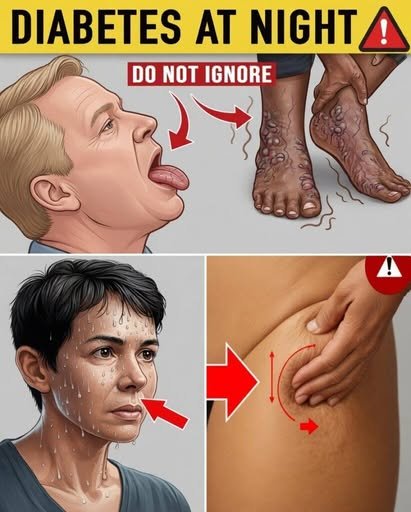
Some health symptoms become especially noticeable after sunset or during sleep. Waking several times to urinate, feeling unusually thirsty, experiencing night sweats, or waking with tingling feet can be concerning—but these symptoms don’t automatically mean you have diabetes.
Diabetes can cause changes in blood glucose that affect the body’s fluid balance, nerves, vision, energy levels, and sleep. At the same time, many nighttime symptoms have other common explanations.
Knowing what to watch for can help you recognize when it may be worth talking with a healthcare professional and getting your blood glucose checked.
1. Waking Up Frequently to Urinate
One of the most recognizable symptoms associated with high blood glucose is increased urination.
When blood glucose becomes too high, the kidneys work to remove excess glucose through urine. This can increase urination and contribute to increased thirst.
If you repeatedly wake during the night to urinate, particularly if this is a new change accompanied by increased thirst, it may be worth discussing with a healthcare professional.
However, nighttime urination can also result from drinking large amounts of fluid before bed, caffeine, certain medications, urinary problems, sleep disorders, or other medical conditions.
2. Unusual Thirst During the Night
Another possible sign is feeling unusually thirsty, including waking during the night needing water.
Increased thirst commonly occurs alongside increased urination when blood glucose is elevated.
Occasional nighttime thirst isn’t necessarily concerning. A dry room, salty meal, exercise, fever, or simply not drinking enough during the day can also make you thirsty.
The concern is greater when persistent thirst occurs together with other symptoms such as frequent urination, unexplained weight loss, fatigue, or blurred vision.
3. Night Sweats or Waking With Damp Clothes
Night sweating has many possible causes, but in someone taking insulin or certain diabetes medicines, sweating during sleep can sometimes be a sign of low blood glucose (hypoglycemia).
NIDDK notes that nighttime hypoglycemia may cause sweating that makes pajamas or bedding damp. A person may also wake feeling tired, irritable, confused, hungry, shaky, or with a headache.
Low blood glucose can become dangerous if it becomes severe.
If you regularly experience suspected nighttime lows, especially if you use insulin or other glucose-lowering medication, discuss the pattern with your healthcare team rather than changing medication doses on your own.
4. Burning, Tingling, or Numb Feet
A burning, tingling, numb, or painful sensation in the feet can sometimes be related to diabetic peripheral neuropathy.
Diabetes-related nerve damage commonly affects the feet and legs, and NIDDK notes that neuropathy symptoms are often worse at night.
Some people describe the sensation as:
- Pins and needles
- Burning
- Electric or shooting pain
- Numbness
- Extreme sensitivity to touch
Not every case of nighttime foot tingling is caused by diabetes. Nerve compression, vitamin deficiencies, alcohol use, certain medications, and other neurological conditions can also cause similar symptoms.
Persistent symptoms deserve medical evaluation.
5. Blurry Vision That Becomes Noticeable at Night
Changes in blood glucose can be associated with blurred vision. Diabetes itself can also eventually contribute to eye complications that affect vision.
You might notice that your vision seems less clear when looking at a phone, reading, or moving between bright and dark environments.
However, nighttime vision problems can have many other causes, including refractive errors, dry eyes, cataracts, medications, or other eye conditions.
Sudden vision loss or a sudden major change in vision requires urgent medical attention.
6. Feeling Extremely Tired After a Full Night’s Sleep
Persistent fatigue is another recognized symptom of diabetes.
If blood glucose remains too high, people may experience tiredness, thirst, frequent urination, or blurred vision.
Nighttime symptoms themselves can also interfere with sleep. For example, repeatedly getting up to urinate or experiencing episodes of low blood glucose can leave you exhausted the next morning.
Fatigue is extremely nonspecific, however. Poor sleep, anemia, thyroid problems, stress, infections, medications, and many other conditions can produce the same feeling.
7. Waking Shaky, Hungry, Confused, or With a Racing Heart
These symptoms can be particularly important for people who already have diabetes and use insulin or certain medications.
Low blood glucose can cause:
- Shakiness
- Hunger
- Sweating
- Dizziness
- Irritability
- Confusion
- Headache
- A rapid or irregular heartbeat
NIDDK explains that blood glucose can fall during sleep and remain low for several hours. Some people may wake with symptoms, while others may not notice the low glucose at all.
Severe hypoglycemia can cause loss of consciousness or seizures and requires immediate treatment.
Does Having These Symptoms Mean You Have Diabetes?
No.
Nighttime symptoms can provide a reason to investigate your health, but they cannot diagnose diabetes by themselves.
In fact, many people with type 2 diabetes have few or no obvious symptoms, particularly during the early stages.
The only way to determine whether you have diabetes is through appropriate blood testing and evaluation by a healthcare professional.
Common diagnostic tests may include:
- A1C
- Fasting blood glucose
- Oral glucose tolerance testing
- Random blood glucose testing in appropriate circumstances
Your healthcare professional can determine which test is appropriate.
When Should You Get Checked?
Consider speaking with a healthcare professional if you have several persistent symptoms, particularly combinations such as:
Frequent nighttime urination + unusual thirst
Unexplained weight loss + increased hunger
Fatigue + blurred vision
Persistent tingling or burning in the feet
Repeated suspected episodes of low blood glucose
Diabetes symptoms can develop gradually, and early evaluation can help identify elevated blood glucose before complications become more serious.
What About People Who Already Have Diabetes?
If you already have diabetes and frequently experience nighttime symptoms, don’t simply assume they’re harmless.
Repeated nighttime highs or lows may indicate that your diabetes management needs to be reviewed.
Your healthcare team may look at:
- Blood glucose patterns
- Meals and snacks
- Physical activity
- Medication timing
- Insulin doses
- Sleep patterns
- Other medications
- Kidney and other health conditions
Some people may benefit from a continuous glucose monitor, particularly when nighttime hypoglycemia is a concern.
Don’t Ignore Foot Symptoms
People with diabetes should pay particular attention to their feet.
Nerve damage can reduce the ability to feel injuries, blisters, burns, or pressure. Diabetes can also make foot wounds harder to heal and increase the risk of infection.
Check your feet regularly and seek medical attention for wounds that don’t heal, signs of infection, significant swelling, or sudden changes in sensation.
When Is It an Emergency?
Some diabetes-related situations require urgent medical care.
Seek emergency help for symptoms such as:
- Loss of consciousness
- Seizures
- Severe confusion
- Difficulty breathing
- Fainting
- Fruity-smelling breath accompanied by severe illness
- Severe or rapidly worsening symptoms
Very high blood glucose can sometimes lead to diabetic ketoacidosis, a medical emergency. NIDDK lists symptoms such as extreme tiredness, difficulty breathing, fruity-smelling breath, fainting, abdominal pain, nausea, and vomiting.
Simple Steps to Protect Your Health
If you’re concerned about diabetes, don’t rely on one symptom or an internet remedy.
Instead:
- Ask about blood glucose testing if symptoms persist.
- Keep track of recurring symptoms, including when they occur.
- Maintain regular physical activity appropriate for your health.
- Choose a balanced eating pattern with vegetables, fruits, whole grains, lean proteins, and other nutrient-rich foods.
- Take prescribed medications as directed.
- Monitor blood glucose if your healthcare professional has recommended it.
- Don’t change diabetes medication doses without professional guidance.
Managing blood glucose, blood pressure, and cholesterol can help reduce the risk of diabetes-related complications.
Frequently Asked Questions
Is waking up to urinate every night a sign of diabetes?
It can be associated with diabetes, particularly when accompanied by excessive thirst and other symptoms, but there are many other causes of nighttime urination.
Can diabetes cause night sweats?
Low blood glucose during sleep can cause sweating, particularly in people using insulin or certain glucose-lowering medications.
Why do my feet burn more at night?
Diabetic peripheral neuropathy can cause burning, tingling, numbness, and pain that may become worse at night. However, other nerve conditions can cause similar symptoms.
Can diabetes make you tired even after sleeping?
Yes. Fatigue is a recognized symptom of diabetes, and nighttime symptoms that disrupt sleep can make tiredness worse.
Can I tell if I have diabetes from symptoms alone?
No. Symptoms can raise suspicion, but diabetes requires appropriate blood testing for diagnosis.
Final Thoughts
Nighttime symptoms such as frequent urination, unusual thirst, sweating, burning feet, blurred vision, persistent fatigue, and waking shaky or confused can sometimes be associated with diabetes or changes in blood glucose.
But these symptoms are not specific to diabetes, and experiencing one of them does not mean you have the condition.
If several symptoms persist or appear together, getting your blood glucose checked is a much more reliable approach than trying to diagnose yourself from symptoms alone. Early evaluation can help identify diabetes and provide an opportunity to manage blood glucose and reduce the risk of complications.
SEO Title: 7 Nighttime Symptoms That May Be Linked to Diabetes
Meta Description: Learn about 7 common nighttime symptoms that may be associated with diabetes, including frequent urination, thirst, night sweats, tingling feet, and fatigue.
Focus Keyword: nighttime symptoms of diabetes
Secondary Keywords: diabetes symptoms at night, signs of diabetes at night, nighttime diabetes symptoms, high blood sugar symptoms at night
Category: Health & Wellness, Diabetes