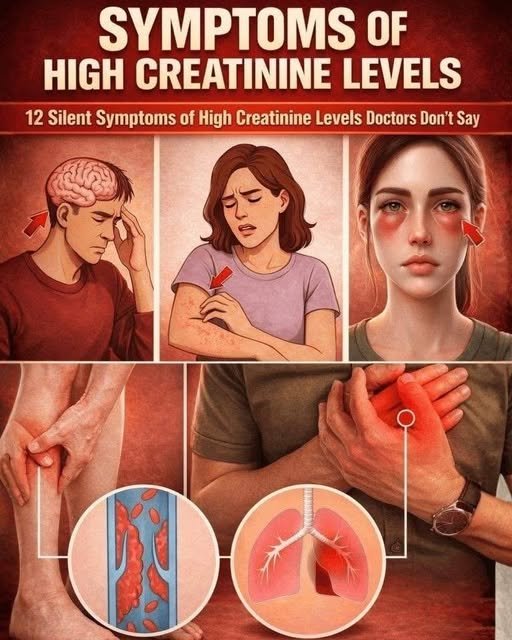
Your kidneys work continuously to filter waste products from your blood, regulate fluid levels, balance important minerals, and help maintain healthy blood pressure. One waste product doctors measure to assess kidney function is creatinine. When creatinine levels rise above the expected range, it may indicate that the kidneys are not filtering blood as efficiently as they should.
The challenge is that kidney problems can develop quietly. Many people experience few or no noticeable symptoms during the early stages of chronic kidney disease. When symptoms do appear, they can be subtle and easy to mistake for stress, dehydration, poor sleep, or ordinary fatigue.
Recognizing possible warning signs is useful, but there is one important fact to remember: symptoms alone cannot tell you whether your creatinine is high or whether you have kidney disease. Blood and urine tests are needed to assess kidney health accurately. <Cite refs={[“turn940014search1″,”turn940014search3”]}/>
Here are 12 subtle signs that may be associated with reduced kidney function, what they could mean, and when you should seek medical advice.
What Does High Creatinine Mean?
Creatinine is a waste product formed during normal muscle activity. Healthy kidneys remove much of it from the blood and pass it into the urine.
A higher-than-expected blood creatinine result can occur when kidney filtration decreases. However, kidney disease is not the only possible explanation. Dehydration, recent intense exercise, a large cooked-meat meal, certain medicines, and greater muscle mass can also affect the result.
Doctors generally interpret creatinine alongside the estimated glomerular filtration rate (eGFR), urine albumin testing, medical history, and previous laboratory results.
A single elevated result does not automatically mean chronic kidney disease. A sudden increase, however, can sometimes indicate acute kidney injury and requires timely assessment. <Cite refs={[“turn940014search3″,”turn940014search9”]}/>
1. Feeling Tired Even After a Full Night’s Sleep
Persistent fatigue can be one of the less obvious symptoms associated with kidney disease.
When kidney function declines significantly, waste products may accumulate in the blood. Kidney disease can also contribute to anemia, a condition in which the body has fewer healthy red blood cells available to carry oxygen.
You might notice that ordinary activities feel more exhausting than usual, or that you struggle to maintain your usual energy throughout the day.
However, fatigue has many other possible causes, including iron deficiency, thyroid problems, sleep disorders, and stress. If tiredness persists without a clear explanation, arrange a medical evaluation rather than assuming it is caused by your kidneys.
2. Swelling Around the Feet and Ankles
The kidneys help regulate the amount of salt and water in the body. When their function is impaired, excess fluid may accumulate in tissues.
Possible signs include:
- Puffy ankles after sitting for long periods
- Swelling around the feet
- Shoes feeling tighter than usual
- Swelling that leaves a temporary indentation after pressing the skin
Kidney-related swelling may become more noticeable later in the day, although the pattern varies.
Swollen legs are not specific to kidney disease. Heart conditions, vein problems, some medicines, and other illnesses can cause similar symptoms.
Seek urgent medical attention if swelling occurs with new or severe shortness of breath, chest pain, or difficulty breathing. <Cite refs={[“turn940014search4″,”turn940014search6”]}/>
3. Puffiness Around the Eyes in the Morning
Waking up with puffy eyelids can occasionally be associated with kidney problems, particularly when the kidneys allow too much protein to escape into the urine.
Protein helps maintain fluid balance in the bloodstream. When substantial amounts are lost through the urine, fluid can collect in tissues, including the area around the eyes.
You may notice that your eyelids look swollen when you wake up and improve as the day progresses.
Nevertheless, morning puffiness can also result from allergies, poor sleep, sinus problems, or normal fluid shifts. Persistent puffiness, especially alongside leg swelling or foamy urine, is a reason to discuss kidney testing with a healthcare professional.
4. Urine That Looks Foamy More Often Than Usual
Occasional bubbles in the toilet are normal. They can form because of the force of the urine stream or the presence of cleaning products in the toilet.
However, urine that repeatedly appears unusually foamy or produces a persistent layer of bubbles may sometimes indicate protein in the urine.
Healthy kidneys usually retain most proteins in the bloodstream. Damage to the kidney’s filtering structures can allow albumin and other proteins to pass into the urine.
Foamy urine does not prove that you have kidney disease. A urine albumin-to-creatinine ratio (uACR) can help determine whether excess albumin is present.
If the change persists, particularly if you also notice swelling, arrange a urine test. <Cite refs={[“turn940014search3″,”turn940014search8”]}/>
5. Urinating More Frequently at Night
Needing to get up repeatedly during the night to urinate is known as nocturia.
Some people with kidney disease experience changes in their ability to concentrate urine. This may cause more frequent urination, including during the night.
However, nocturia is common and can have many explanations, such as:
- Drinking large amounts of fluid before bed
- Consuming caffeine late in the day
- Diabetes or elevated blood sugar
- An overactive bladder
- An enlarged prostate in men
- Certain medications
Pay attention to persistent changes in your usual pattern, especially if you also have diabetes, high blood pressure, or other kidney disease risk factors.
Frequent urination by itself is not a reliable indicator of high creatinine.
6. Urinating Less Than Usual
A noticeable reduction in urine output can be more concerning, particularly when it develops suddenly.
Possible causes include dehydration, urinary obstruction, certain medications, and acute kidney injury. In some cases, the kidneys may be unable to remove waste products and excess fluid efficiently.
You might notice that you pass much less urine than usual despite following your normal routine.
Do not wait for additional symptoms if your urine output drops markedly or you are unable to urinate. Seek prompt medical assessment, especially if you also have vomiting, swelling, fever, or significant weakness.
A sudden reduction in urine output can require urgent evaluation.
7. Dry, Itchy Skin Without an Obvious Cause
Persistent itching can occur in more advanced kidney disease. Changes in mineral balance, the buildup of waste products, and other processes associated with reduced kidney function may contribute.
The skin may feel unusually dry, itchy, or uncomfortable even when there is no obvious rash.
However, dry skin and itching are much more commonly caused by conditions such as eczema, allergies, dry weather, or reactions to personal-care products.
If itching continues for weeks without a clear explanation, particularly when accompanied by other symptoms or known kidney disease, ask a healthcare professional whether kidney function should be checked. <Cite refs={[“turn940014search1″,”turn940014search4”]}/>
8. Reduced Appetite or Feeling Nauseated
As kidney disease advances, waste products and changes in the body’s internal chemistry can contribute to digestive symptoms.
Possible changes include:
- Feeling nauseated, particularly in the morning
- Losing interest in meals
- Feeling full unusually quickly
- Experiencing an unpleasant or altered taste
- Losing weight without trying
These symptoms can affect nutritional intake and overall well-being.
Nausea and poor appetite are not specific to kidney problems. Digestive disorders, infections, medication side effects, and many other conditions can cause them.
Persistent vomiting, inability to keep fluids down, or significant unexplained weight loss should be medically assessed.
9. Muscle Cramps, Especially at Night
Some people with more advanced kidney disease experience muscle cramps, often in the legs.
Kidneys help regulate minerals and electrolytes, including potassium, calcium, and phosphorus. Changes in these levels, along with fluid imbalance and other factors, may contribute to muscle discomfort or cramping.
Cramps can also result from dehydration, prolonged exercise, certain medications, or other health conditions.
Do not assume that every cramp means your creatinine is high. If cramps are frequent or accompanied by weakness, palpitations, or a marked change in urine output, seek medical advice.
Avoid taking potassium, magnesium, or other mineral supplements without guidance if kidney problems are possible, because excessive amounts can be harmful.
10. Difficulty Concentrating or Feeling Mentally Foggy
Occasional forgetfulness or difficulty concentrating is common and can result from poor sleep, stress, anxiety, or dehydration.
In more advanced kidney disease, however, the accumulation of waste products and associated metabolic changes may affect concentration and mental clarity.
You might find it harder to focus on everyday tasks, remember information, or stay mentally alert.
Persistent mental fog deserves evaluation, especially if it occurs alongside other unexplained symptoms.
Sudden confusion, unusual drowsiness, or a major change in alertness requires urgent medical attention. These symptoms can have serious causes that should not be attributed to kidney disease without assessment.
11. Sleep Problems That Keep Returning
Kidney disease may be associated with difficulty sleeping, restless legs, nighttime itching, muscle cramps, and sleep apnea.
You may struggle to fall asleep, wake up repeatedly, or feel unrefreshed the following morning.
Poor sleep is extremely common and does not, by itself, indicate kidney damage. Stress, caffeine, irregular sleep schedules, and many other conditions can contribute.
If sleep problems persist alongside fatigue, changes in urination, swelling, or known kidney disease risk factors, discuss them with your healthcare professional.
Improving sleep habits can help general well-being, but persistent symptoms should not be managed through lifestyle changes alone without considering possible medical causes.
12. High Blood Pressure That Is Difficult to Control
High blood pressure is important because it can both damage the kidneys and develop as a consequence of kidney disease.
When the kidneys cannot regulate salt and fluid balance effectively, blood pressure may rise. Over time, uncontrolled high blood pressure can damage the small blood vessels responsible for filtering blood.
Many people with high blood pressure feel completely normal, which is why measuring it regularly is important.
If your readings are repeatedly elevated despite treatment, contact your healthcare professional to review your treatment plan and assess possible contributing factors, including kidney function.
Do not stop or change prescribed blood pressure medication without medical advice. <Cite refs={[“turn940014search4″,”turn940014search11”]}/>
Can You Have High Creatinine Without Symptoms?
Yes. Many people with early chronic kidney disease have no noticeable symptoms.
A person can feel healthy while laboratory tests show reduced kidney filtration or excess albumin in the urine. Conversely, someone experiencing fatigue, swelling, or frequent urination may have a condition unrelated to kidney disease.
This is why testing is more reliable than trying to identify high creatinine from physical symptoms alone. <Cite refs={[“turn940014search1″,”turn940014search3”]}/>
Which Tests Check Creatinine and Kidney Function?
If you have risk factors or symptoms that concern you, a healthcare professional may recommend the following tests.
1. Blood Creatinine Test
This measures the concentration of creatinine in your blood. Results are interpreted according to the laboratory’s reference range and your individual circumstances.
2. Estimated Glomerular Filtration Rate (eGFR)
The eGFR estimates how effectively your kidneys filter blood. It is calculated using blood creatinine and other relevant factors.
A lower eGFR can indicate reduced kidney function. A single result should be interpreted in context, and repeat testing may be necessary.
3. Urine Albumin-to-Creatinine Ratio (uACR)
This urine test measures albumin, a protein that may leak into urine when kidney filtering structures are damaged.
An elevated uACR can be a sign of kidney damage even when creatinine is not markedly elevated.
4. Urinalysis
A urine test can look for blood, protein, and other abnormalities that may help identify kidney or urinary tract problems.
5. Blood Pressure and Additional Blood Tests
Your clinician may check blood pressure, electrolytes, blood sugar, and other measurements depending on your medical history and initial results.
Chronic kidney disease is generally diagnosed when kidney damage or reduced kidney function persists for at least three months, although acute kidney injury can develop over a much shorter period. <Cite refs={[“turn940014search3″,”turn940014search9”]}/>
What Can You Do to Protect Your Kidney Health?
You cannot reliably lower creatinine simply by drinking a special beverage or following a so-called kidney cleanse. The appropriate approach depends on why the level is elevated.
Consider these practical steps:
- Control blood pressure: Follow your prescribed treatment plan and check your readings as recommended.
- Manage blood sugar: If you have diabetes, work with your healthcare professional to keep glucose levels within your individualized target range.
- Stay appropriately hydrated: Drink according to your needs and any medical advice. People with significant kidney or heart disease may need fluid restrictions.
- Be careful with pain medicines: Frequent use of nonsteroidal anti-inflammatory drugs (NSAIDs), such as ibuprofen or naproxen, can harm kidney function in some circumstances. Ask a clinician or pharmacist what is safe for you.
- Avoid unverified supplements: Herbal products and high-dose supplements can contain substances that affect kidney function or interact with medicines.
- Eat a balanced diet: Choose a varied diet with appropriate portions of vegetables, fruit, whole grains, and protein. Advanced kidney disease may require individualized adjustments to sodium, potassium, phosphorus, protein, or fluids.
- Keep follow-up appointments: Repeat blood and urine tests can show whether kidney function is stable or changing.
Do not drastically reduce protein, potassium, or fluids without professional advice. Dietary needs differ according to kidney function, medications, and other medical conditions.
When Should You Seek Medical Attention?
Arrange a medical appointment if you have persistent swelling, repeated foamy urine, unexplained fatigue, changes in urination, or risk factors such as diabetes, high blood pressure, or a family history of kidney disease.
Seek urgent medical attention for a sudden major reduction in urine output, inability to urinate, rapidly increasing swelling, persistent vomiting, or a known sudden rise in creatinine.
Call emergency services for severe shortness of breath, chest pain, or sudden confusion.
Early assessment can help identify treatable causes and reduce the risk of further complications.
Frequently Asked Questions
Does high creatinine always mean kidney disease?
No. Dehydration, intense exercise, muscle mass, recent meat intake, and some medications can affect creatinine. A clinician interprets the result alongside eGFR, urine tests, and other clinical information.
What is a normal creatinine level?
Reference ranges vary by laboratory and can depend on factors such as age, sex, and muscle mass. Your laboratory report should include its own reference range. A result should not be interpreted in isolation.
Can drinking more water lower creatinine?
If dehydration is contributing to an elevated result, correcting it may help. However, drinking excessive water does not repair damaged kidneys and can be dangerous for some people. Follow individualized medical advice, particularly if you have swelling or known kidney disease.
Can high creatinine cause back pain?
High creatinine itself does not typically cause back pain. Pain in the side or back can have many causes, including muscle problems, kidney stones, and urinary infections. Severe pain, fever, vomiting, or blood in the urine requires medical assessment.
Can kidney disease be present if I urinate normally?
Yes. Normal urine output does not rule out kidney disease. Early kidney disease may cause no symptoms, and blood and urine testing may be the only way to detect it.
Which foods should I avoid if my creatinine is high?
There is no single list that is appropriate for everyone. Dietary advice depends on the cause of the elevated creatinine, kidney function, potassium and phosphorus levels, and other medical conditions. A clinician or renal dietitian can recommend suitable changes.
Final Thoughts
High creatinine can be an important clue about kidney function, but it is not a diagnosis on its own. Subtle changes such as persistent fatigue, swelling, foamy urine, nighttime urination, itching, and difficulty concentrating may occur in people with kidney disease, particularly when the condition becomes more advanced.
However, these symptoms can also have many other explanations, and early kidney disease often produces no symptoms at all.
The most reliable way to assess your kidney health is through appropriate blood and urine testing, including creatinine, eGFR, and urine albumin measurements. If you notice persistent changes or have diabetes or high blood pressure, speak with a healthcare professional rather than relying on symptoms or home remedies.
SEO Details
SEO Title: 12 Subtle Signs of High Creatinine and Kidney Problems
Focus Keyphrase: signs of high creatinine
URL Slug: subtle-signs-high-creatinine-kidney-problems
Meta Description: Discover 12 subtle signs that may be linked to high creatinine and kidney problems, plus essential kidney tests, risk factors, and when to seek medical care.
Suggested Tags: High Creatinine, Kidney Health, Kidney Disease Symptoms, Kidney Function, Creatinine Test, eGFR, Foamy Urine, Kidney Disease Prevention