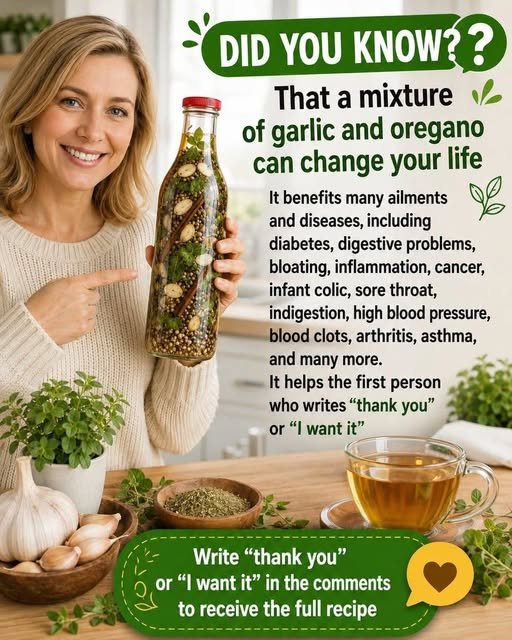
Garlic and oregano have been used in kitchens and traditional remedies for generations. Today, they are often promoted online as powerful natural alternatives to medicines, with claims that they can fight infections, lower cholesterol, control blood pressure, and even “detox” the body.
There is some genuine science behind the interest in these two foods—but the reality is more nuanced.
Garlic and oregano contain biologically active plant compounds that researchers have studied for their potential health effects. However, eating them as part of a normal diet is not the same thing as taking a concentrated extract, and neither herb should be considered a replacement for medical treatment.
So why don’t doctors talk about them more?
The answer is actually quite simple: medicine is based on evidence about specific doses, specific conditions, benefits, risks, and outcomes. A food can be nutritious and biologically interesting without being proven to treat a particular disease.
What Makes Garlic Interesting?
Garlic contains sulfur-containing compounds. When garlic is chopped or crushed, one of the best-known compounds, allicin, can form.
These compounds have been investigated for antimicrobial, antioxidant, cardiovascular, and other biological effects.
That doesn’t mean garlic is a cure-all. But it does explain why researchers continue to study it.
Garlic and Heart Health
Garlic has received considerable attention for cardiovascular health.
Some research suggests that certain garlic preparations may have modest effects on blood pressure or cholesterol in some people. However, the results depend on the type of preparation, dose, duration, and individual circumstances.
Eating garlic in normal culinary amounts is best viewed as part of a heart-healthy diet rather than as a substitute for cholesterol or blood-pressure medication.
If a doctor has prescribed medication for high blood pressure or cholesterol, don’t stop taking it because you’ve started eating more garlic.
Garlic and Immunity
You may have heard that garlic “boosts the immune system.”
That’s an oversimplification.
Garlic contains compounds with interesting biological activity, but this doesn’t mean eating garlic prevents every infection or cures an illness.
Adding garlic to meals can certainly be part of a nutritious diet, but infections that require medical treatment should be treated appropriately.
What About Oregano?
Oregano is another herb that attracts considerable attention because it contains compounds such as carvacrol and thymol.
These compounds have demonstrated antimicrobial and antioxidant activity in laboratory studies.
That’s interesting—but laboratory activity does not automatically mean that eating oregano will kill an infection inside the human body.
This distinction is especially important when discussing oregano oil, which is much more concentrated than the small amount of dried or fresh oregano used in cooking.
Why Oregano Oil Gets So Much Attention
Oregano essential oil contains concentrated plant compounds and is therefore very different from seasoning your food with oregano.
Laboratory studies have found antimicrobial effects from oregano compounds, which has contributed to its popularity as a “natural antibiotic.”
But an essential oil is not equivalent to an antibiotic prescribed for a bacterial infection.
Using oregano oil instead of appropriate medical treatment could allow an infection to worsen.
Concentrated products can also cause irritation or other adverse effects and may interact with medications.
Why Doctors Don’t Usually Recommend Garlic or Oregano as Medicines
It’s not necessarily because doctors don’t know about them.
Doctors routinely consider nutrition and lifestyle when managing health. The problem is that “this food contains a potentially beneficial compound” is a very different statement from “this food treats your disease.”
For a treatment to become part of standard medical care, researchers generally need evidence about:
- Whether it actually works
- How much should be taken
- Which patients benefit
- How long it should be used
- What side effects can occur
- Which medications it can interact with
- Whether the benefits outweigh the risks
Food studies don’t always provide answers to all of these questions.
Food vs. Supplements: An Important Difference
There is a major difference between putting garlic and oregano into your dinner and taking concentrated supplements or essential oils.
Culinary amounts
Using garlic in cooking or sprinkling oregano over vegetables is generally an easy way to add flavor and plant compounds to your diet.
Concentrated products
Garlic supplements, oregano extracts, and oregano essential oils can provide substantially higher concentrations of certain compounds.
More concentrated does not automatically mean more beneficial.
Concentrated supplements can also have different safety considerations and potential medication interactions.
A Simple Way to Use Both
You don’t need an elaborate “garlic and oregano cure.”
Try combining them in everyday meals.
Garlic-Oregano Dressing
Ingredients:
- 2 tablespoons olive oil
- 1 small garlic clove, finely minced
- 1 teaspoon dried oregano
- 1 tablespoon lemon juice
- A pinch of black pepper
- A small amount of salt, optional
Whisk everything together and use it over salads, roasted vegetables, grilled chicken, fish, or beans.
This gives you the flavor of both ingredients without turning them into a supposed miracle treatment.
What Garlic and Oregano Cannot Do
Be cautious when you see claims that these herbs can:
- Cure infections
- Replace antibiotics
- Dissolve blocked arteries
- Cure cancer
- Eliminate diabetes
- Permanently lower cholesterol
- “Detox” the liver
- Replace prescribed medications
These claims are much stronger than the available evidence supports.
When You Should Be Especially Careful
Garlic supplements may affect blood clotting and can interact with certain medications.
Concentrated oregano products may also cause irritation or interact with medications.
If you take prescription medication, have a medical condition, are preparing for surgery, or are pregnant or breastfeeding, discuss concentrated herbal products with a healthcare professional before using them.
And never delay medical care for a serious infection because an herbal remedy is being promoted online.
The Real Lesson
The most useful thing to understand about garlic and oregano isn’t that they’re secret medicines.
It’s that ordinary foods can contain biologically active compounds worth studying without automatically becoming treatments for disease.
Garlic can add flavor and valuable plant compounds to meals. Oregano can do the same while making food more aromatic and enjoyable.
Neither needs exaggerated claims to be worthwhile.
Final Thoughts
Garlic and oregano deserve their reputation as flavorful, interesting herbs with compounds that scientists continue to study. But their greatest practical value may simply be how easily they fit into a varied, nutritious diet.
Doctors may not routinely prescribe garlic or oregano because prescribing a food is not the same as prescribing a proven treatment. When a medical condition requires treatment, evidence-based medicine still matters.
Enjoy garlic and oregano in your meals—but think of them as nutritious culinary ingredients, not secret cures.