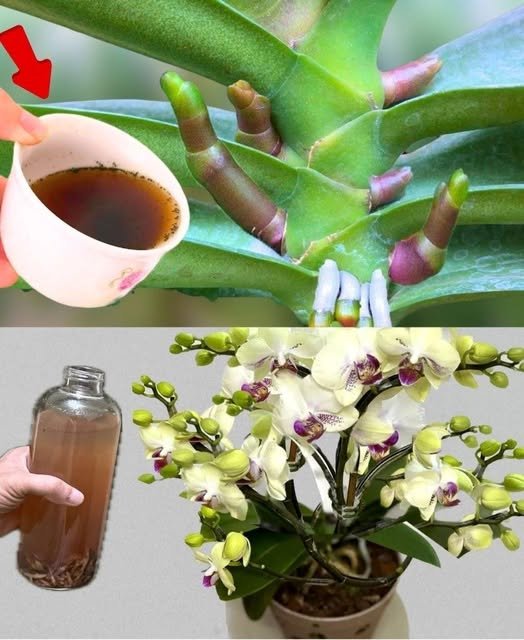
If your orchid has plenty of leaves but isn’t producing the beautiful flowers you were hoping for, you may be wondering whether there’s a special liquid that can transform it overnight.
The truth is that there is no magic homemade mixture that can make an orchid 10 times more beautiful. Orchids respond best to the basics: appropriate light, proper watering, good drainage, suitable humidity, and balanced nutrition.
One simple approach that can help is using diluted orchid fertilizer according to the product’s instructions. When an orchid actually needs nutrients, regular but gentle feeding can support healthy leaves, roots, and flowering.
The Simple Watering Method
The most important thing is not a secret ingredient—it’s how you water the orchid.
Use room-temperature water and thoroughly moisten the growing medium. Allow excess water to drain completely through the holes in the pot.
Never allow the orchid pot to sit in a container of stagnant water.
Orchids, particularly common Phalaenopsis orchids, are susceptible to root problems when their roots remain excessively wet for prolonged periods.
Want to Feed Your Orchid?
If your orchid is actively growing, you can use a balanced, water-soluble orchid fertilizer diluted according to the manufacturer’s directions.
A common approach is to fertilize lightly on a regular schedule during active growth rather than applying a very concentrated fertilizer all at once.
Always follow the specific fertilizer label because formulations and recommended concentrations vary.
Avoid Over-Fertilizing
More fertilizer does not mean more flowers.
Excess fertilizer can cause salt buildup around the roots and potentially damage them. If you’re unsure, it’s safer to follow the product’s recommended dilution rather than making a stronger solution.
What About Rice Water, Banana Water, or Other DIY Mixtures?
You may see recipes online recommending rice water, banana peels, milk, sugar, coffee, or other kitchen ingredients for orchids.
Some of these mixtures are popular among gardeners, but they aren’t guaranteed orchid fertilizers and can create problems if they encourage microbial growth, leave residues, or provide nutrients in unpredictable amounts.
If your goal is reliable nutrition, a properly formulated orchid fertilizer is generally easier to control.
Give Your Orchid the Right Light
Healthy leaves are important, but flowering also depends heavily on adequate light.
Place the orchid somewhere bright with indirect light. Harsh direct midday sunlight can scorch the leaves, while very low light may contribute to poor flowering.
A healthy orchid generally benefits from plenty of bright filtered light.
Check the Roots
Healthy orchid roots are an important clue about watering.
If the plant is in a transparent pot, you may be able to inspect the roots without disturbing the plant.
Depending on moisture level, healthy Phalaenopsis roots can appear green when wet and become silvery or grayish as they dry.
Mushy, brown, or black roots can indicate root damage and may require attention.
Humidity Matters Too
Orchids generally appreciate moderate humidity, but increasing humidity doesn’t mean keeping the plant constantly wet.
Good air circulation is important, particularly in humid environments.
If your home is already humid, avoid creating a stagnant, overly wet environment around the plant.
A Simple Orchid Care Routine
For consistently healthy growth:
- Give the orchid bright, indirect light.
- Water thoroughly when the growing medium has appropriately dried.
- Let excess water drain completely.
- Use a suitable orchid-growing medium.
- Feed with a balanced orchid fertilizer according to the label.
- Avoid excessive fertilizer.
- Maintain reasonable humidity and airflow.
- Remove dead or severely damaged plant material when appropriate.
- Check the roots periodically for signs of rot.
Final Thoughts
There isn’t a secret liquid that can make an orchid 10 times more beautiful overnight. However, giving your plant the right combination of water, light, drainage, nutrition, and care can make a remarkable difference over time.
If your orchid already has lots of healthy leaves, that’s a good foundation. Focus on maintaining healthy roots and providing enough light rather than constantly adding homemade fertilizers.
With consistent care and a little patience, your leafy orchid may reward you with strong growth and beautiful blooms.