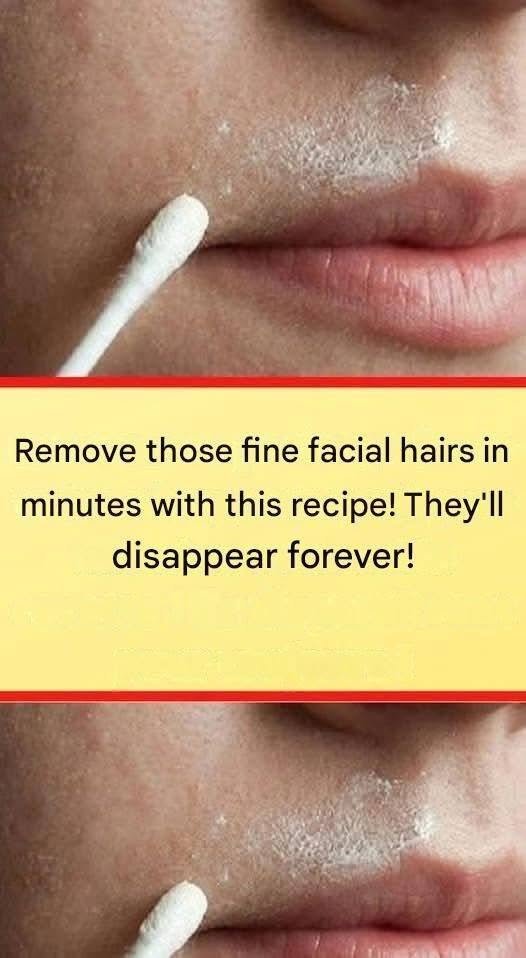
Unwanted facial hair is completely normal, but for many women, noticeable hair on the upper lip, chin, cheeks, or jawline can be frustrating. While professional treatments and hair-removal methods can provide longer-lasting results, many people also enjoy trying gentle at-home skincare routines.
You may have seen recipes claiming that ingredients such as turmeric, yogurt, lemon, or honey can permanently remove facial hair. However, there is no good evidence that a homemade natural mixture can permanently destroy hair follicles.
What a gentle DIY mask may do is temporarily exfoliate the skin, remove surface buildup, and make facial hair appear less noticeable. The hair itself will still grow back because the follicle remains intact.
Here’s a simple recipe you can try as a skincare treatment—not as a permanent hair-removal method.
Natural Turmeric and Yogurt Facial Mask
Ingredients
- 1 tablespoon plain yogurt
- ½ teaspoon turmeric powder
- 1 teaspoon honey
- 1 tablespoon finely ground oat flour or very finely ground oats
Why These Ingredients Are Used
Yogurt:
Plain yogurt contains lactic acid, an alpha-hydroxy acid that can gently exfoliate the skin. Because facial skin can be sensitive, use a small amount and avoid aggressive rubbing.
Turmeric:
Turmeric has traditionally been used in skincare preparations. It may give the skin a temporary brighter appearance, although it should not be considered a proven hair-removal treatment.
Honey:
Honey helps give the mask a smooth consistency and can make the skin feel softer.
Oats:
Finely ground oats provide gentle physical exfoliation. They are preferable to harsh scrubs that can irritate facial skin.
How to Make the Mask
- Add the yogurt to a small clean bowl.
- Mix in the turmeric and honey.
- Add the finely ground oats.
- Stir until you have a smooth, spreadable paste.
- If the mixture is too thick, add a few drops of water.
Don’t make the mixture excessively gritty. Rough particles can irritate delicate facial skin.
How to Apply It
- Wash your face with a gentle cleanser.
- Pat your skin dry.
- Apply a thin layer of the mixture to areas where you want to improve the appearance of the skin.
- Leave it on for about 5–10 minutes.
- Wet your fingertips with lukewarm water.
- Gently rinse the mask away.
- Pat your face dry rather than rubbing it.
- Apply a simple fragrance-free moisturizer.
Do not aggressively scrub the mask into the skin.
The goal is gentle skincare, not physically pulling hair from the follicle.
Will This Permanently Remove Facial Hair?
No.
This is one of the most important things to understand about DIY facial-hair recipes.
Hair grows from follicles located beneath the surface of the skin. A mixture applied to the skin generally cannot permanently destroy those follicles.
If a recipe claims that turmeric, lemon, baking soda, toothpaste, or another kitchen ingredient will permanently eliminate facial hair, be skeptical.
A home mask may temporarily make the skin feel smoother, but that is different from permanent hair removal.
What Actually Provides Longer-Lasting Hair Reduction?
If you want to reduce facial hair for longer periods, there are established hair-removal options.
Threading
Threading removes individual hairs from the root and can be useful for the eyebrows, upper lip, chin, and other small areas.
Results aren’t permanent because the hair eventually grows again.
Waxing
Waxing removes hair from the root and generally provides longer-lasting smoothness than shaving.
However, it can irritate sensitive facial skin and may cause temporary redness.
Tweezing
Tweezers can be useful when only a few individual hairs need to be removed.
It’s particularly convenient for isolated chin hairs.
Shaving or Facial Razors
Facial shaving cuts the hair at the skin’s surface.
Contrary to a common myth, shaving does not make hair grow back thicker. The hair may initially feel stubbly because it has been cut bluntly.
Laser Hair Removal
Laser hair removal can provide long-term hair reduction by targeting hair follicles.
It usually requires multiple sessions, and results vary depending on factors such as hair color, skin tone, hair thickness, and the type of laser used.
It is not necessarily permanent removal, and maintenance treatments may sometimes be needed.
Electrolysis
Electrolysis uses electrical energy to damage individual hair follicles and is considered a method of permanent hair removal when performed appropriately.
Because facial skin is sensitive, it should be performed by a qualified professional.
When Facial Hair Suddenly Becomes More Noticeable
A few facial hairs are completely normal.
However, if you suddenly develop significantly more coarse hair on the chin, upper lip, chest, abdomen, or other areas, it can sometimes be associated with hormonal changes.
This is especially worth discussing with a healthcare professional if increased facial hair occurs alongside:
- Irregular menstrual periods
- Significant acne
- Scalp hair thinning
- Unexplained weight changes
- A deeper voice
- Increased muscle development
- Rapidly increasing coarse hair
Conditions such as polycystic ovary syndrome (PCOS) can cause increased androgen activity and excess facial or body hair in some women.
This doesn’t mean that facial hair automatically indicates PCOS. There are many possible explanations, including genetics and normal hormonal variation.
Be Careful With Lemon on Your Face
Many DIY facial-hair recipes recommend lemon juice.
It’s better to avoid applying concentrated lemon juice directly to facial skin.
Citrus compounds can irritate the skin, and exposure to sunlight after certain citrus contact can cause a skin reaction known as phytophotodermatitis.
A beauty recipe doesn’t become safer simply because the ingredient comes from the kitchen.
Always Perform a Patch Test
Before applying any homemade skincare mixture to your face:
- Apply a small amount to an inconspicuous area of skin.
- Leave it according to the intended application time.
- Rinse thoroughly.
- Monitor the area for redness, itching, burning, or irritation.
If irritation occurs, don’t use the mixture on your face.
Avoid applying DIY masks to broken, sunburned, irritated, or freshly waxed skin.
How Often Can You Use It?
If your skin tolerates the ingredients well, you can use this type of gentle mask once or twice a week.
More frequent application isn’t necessarily better.
Over-exfoliating can cause:
- Dryness
- Redness
- Burning
- Increased sensitivity
- Irritation
If your skin is sensitive or you already use exfoliating acids, retinoids, or other active skincare products, be particularly cautious about adding another exfoliating treatment.
A Better Approach to Facial Hair
If your primary goal is removing the hair, choose a method designed specifically for hair removal.
If your goal is smoother-looking skin, a gentle skincare mask can complement your routine.
Keeping these goals separate helps prevent disappointment and reduces the temptation to use harsh ingredients in an attempt to permanently destroy hair follicles.
Frequently Asked Questions
Can turmeric permanently stop facial hair growth?
There isn’t reliable evidence that applying turmeric to the skin permanently stops facial hair growth.
Does yogurt remove facial hair?
Yogurt can provide gentle exfoliation because it contains lactic acid, but it does not permanently remove facial hair.
Can honey remove facial hair?
Honey may make a DIY mask smoother and can leave skin feeling soft, but it isn’t a proven permanent hair-removal treatment.
Does shaving make facial hair grow back thicker?
No. Shaving cuts hair at the surface and doesn’t change the follicle or the biological thickness of the hair.
What is the longest-lasting way to remove facial hair?
Laser hair removal can provide long-term hair reduction, while electrolysis is designed to permanently destroy individual hair follicles. Results and suitability vary between individuals.
Is facial hair normal for women?
Yes. Fine facial hair is normal, and some women naturally have more visible or darker facial hair than others.
When should I talk to a doctor about facial hair?
Consider speaking with a healthcare professional if facial hair becomes noticeably heavier or develops rapidly, particularly if it occurs alongside irregular periods, significant acne, scalp hair thinning, or other hormonal changes.
Final Thoughts
Natural skincare can be enjoyable, but it’s important to separate traditional beauty remedies from proven hair-removal methods.
A simple yogurt, turmeric, honey, and oat mask may help exfoliate and soften the skin, but it cannot be honestly described as a permanent facial-hair removal treatment.
If you want temporary hair removal, options such as threading, shaving, waxing, or tweezing may be appropriate. For longer-term reduction, professional treatments such as laser hair removal or electrolysis can be considered.
And if facial hair suddenly becomes much heavier than usual, don’t simply treat it as a cosmetic problem. Discussing the change with a healthcare professional can help identify whether an underlying hormonal issue may be involved.
Important: Always patch-test homemade skincare products before facial use. Stop immediately if you experience burning, swelling, itching, or significant irritation.
SEO Details
SEO Title: Natural Facial Hair Removal Recipe: What Actually Works?
Meta Description: Try this gentle turmeric and yogurt facial mask for smoother-looking skin and learn what really works for unwanted facial hair.
Focus Keyword: natural facial hair removal
Slug: natural-facial-hair-removal-recipe
Category: Beauty & Skincare
Tags: facial hair removal, unwanted facial hair, natural skincare, turmeric face mask, DIY skincare, women’s skincare, facial hair, beauty tips