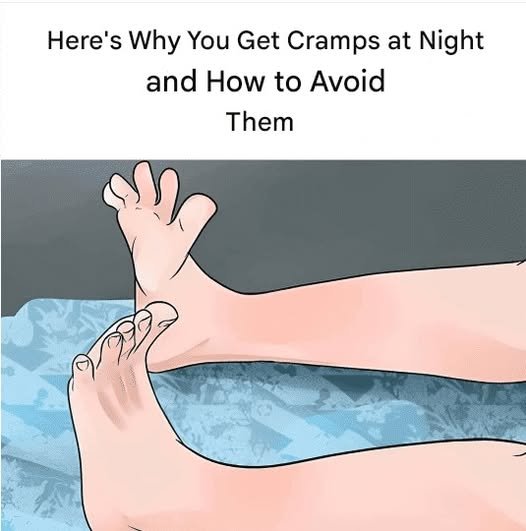
This Is Why We Get Cramps at Night
Nighttime muscle cramps are sudden, painful muscle contractions that commonly affect the calves, feet, or thighs. They can happen while you’re sleeping or may wake you up unexpectedly.
Why Do Nighttime Cramps Happen?
There isn’t always one specific cause, but several factors can make nighttime cramps more likely.
1. Muscle Fatigue and Overuse
Standing, walking, exercising, or doing more physical activity than usual can leave muscles tired and more prone to cramping later in the day.
2. Dehydration
Not drinking enough fluids can contribute to muscle cramps, especially after sweating heavily or exercising. Staying adequately hydrated throughout the day may help reduce the risk.
3. Prolonged Sitting or Standing
Spending long periods in one position may contribute to muscle stiffness and discomfort. Gentle movement and stretching during the day can help keep muscles flexible.
4. Muscle Position During Sleep
Keeping your feet pointed downward for long periods while sleeping may shorten the calf muscles and potentially trigger a cramp.
5. Certain Medications or Health Conditions
Some medications and medical conditions can be associated with muscle cramps. If cramps are frequent, severe, or suddenly begin without an obvious reason, it is worth discussing them with a healthcare professional.
What to Do When a Cramp Happens
When a nighttime cramp starts:
- Gently stretch the affected muscle.
- For a calf cramp, straighten your leg and slowly pull your toes toward your face.
- Massage the cramped muscle gently.
- Stand up and walk slowly if you can do so safely.
- Apply a warm compress to help relax the muscle.
How to Help Prevent Nighttime Cramps
Try these simple habits:
- Drink enough fluids throughout the day.
- Stretch your calves and legs gently before bed.
- Stay physically active without suddenly increasing exercise intensity.
- Avoid sitting or standing in one position for very long periods.
- Make sure your diet provides adequate nutrients through a balanced variety of foods.
When to Seek Medical Advice
Talk with a healthcare professional if cramps are frequent, very painful, persistent, disturbing your sleep regularly, or accompanied by swelling, weakness, numbness, skin changes, or other unusual symptoms.
Avoid taking high-dose mineral supplements such as magnesium or potassium specifically for cramps without medical advice, because supplements are not appropriate for everyone and excessive amounts can be harmful.
Meta Description
Learn why nighttime muscle cramps happen, common triggers, what to do when a cramp strikes, and simple ways to help prevent painful leg cramps while sleeping.