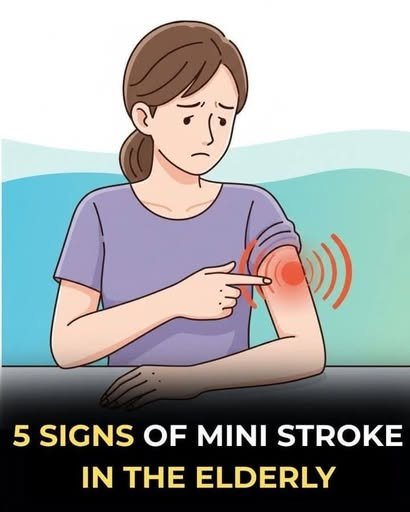
A mini stroke, medically known as a transient ischemic attack (TIA), can be easy to overlook because its symptoms may disappear within minutes or hours. But a TIA should never be treated as harmless.
A TIA happens when blood flow to part of the brain is temporarily interrupted. Unlike a major stroke, the symptoms may resolve without permanent brain damage. However, a TIA can be an important warning that a more serious stroke could occur.
For older adults, family members and caregivers should know the warning signs and seek emergency medical attention immediately if they appear.
1. Sudden Weakness or Numbness
One of the most important warning signs is sudden weakness or numbness, particularly on one side of the body.
It may affect:
- The face
- One arm
- One leg
- The entire side of the body
An older adult might suddenly have difficulty lifting one arm, walking normally, or maintaining balance.
Sometimes the weakness is subtle. They may simply say that one hand feels strange or that a leg suddenly feels heavy.
Do not wait for the symptom to disappear. Sudden one-sided weakness or numbness requires urgent medical evaluation.
2. Sudden Trouble Speaking or Understanding
A TIA can temporarily affect the areas of the brain responsible for language.
Someone who normally communicates clearly may suddenly:
- Slur their speech
- Have trouble finding words
- Say confusing or inappropriate words
- Have difficulty understanding what others are saying
- Struggle to repeat a simple sentence
Family members may notice the change before the person does.
If speech suddenly becomes unclear or unusual, consider it an emergency—even if normal speech returns a few minutes later.
3. Sudden Vision Problems
Temporary vision changes can also occur during a TIA.
A person may suddenly experience:
- Blurred vision
- Double vision
- Partial loss of vision
- Vision loss in one eye
- Difficulty seeing on one side
Some people describe it as a curtain or shadow coming over part of their vision.
Because sudden vision loss can have several serious causes, it should be assessed urgently rather than assumed to be an ordinary age-related vision problem.
4. Sudden Dizziness, Loss of Balance, or Difficulty Walking
A sudden problem with coordination can sometimes be a warning sign of a TIA or stroke.
An older adult may suddenly:
- Become very unsteady
- Have difficulty walking
- Stumble without an obvious reason
- Feel unusually dizzy
- Lose coordination
- Have difficulty standing
This can be especially easy to dismiss in elderly people because balance problems are common with aging. The key concern is a sudden change from their normal condition.
If severe dizziness or loss of balance occurs suddenly—especially together with weakness, vision changes, speech difficulties, or confusion—seek emergency care immediately.
5. Sudden Confusion or Difficulty Understanding
A sudden change in mental function can also be a warning sign.
The person may suddenly:
- Become confused
- Have trouble following a conversation
- Seem unable to understand simple instructions
- Forget where they are
- Have difficulty answering basic questions
- Behave unusually
Sudden confusion should not automatically be attributed to aging or dementia.
Although infections, low blood sugar, medication effects, dehydration, and other conditions can also cause confusion, sudden neurological changes require prompt medical assessment.
Remember FAST
A useful way to recognize common stroke warning signs is FAST:
F — Face:
Ask the person to smile. Does one side of the face droop?
A — Arms:
Ask them to raise both arms. Does one arm drift downward?
S — Speech:
Ask them to repeat a simple sentence. Is their speech slurred or unusual?
T — Time:
If any of these symptoms appear suddenly, call emergency medical services immediately.
Do not wait to see whether the symptoms improve.
TIA Symptoms Can Disappear—and Still Be an Emergency
One of the most dangerous misconceptions about a mini stroke is that disappearing symptoms mean the problem is over.
A TIA may cause symptoms that resolve completely. That does not mean the event should be ignored.
A TIA can indicate an underlying problem involving blood vessels, blood pressure, heart rhythm, or blood clotting. Medical professionals may need to determine why it happened and whether treatment is needed to reduce the risk of a future stroke.
What Should You Do If an Older Adult Has These Symptoms?
If an elderly person suddenly develops possible stroke or TIA symptoms:
- Call your local emergency medical service immediately.
- Note the exact time the symptoms started, or the last time the person was known to be normal.
- Keep the person safe and comfortable while waiting for medical help.
- Do not give food, drink, or medication unless instructed by a medical professional.
- Do not drive the person yourself if emergency medical transport is available.
- Even if symptoms disappear, seek urgent medical evaluation.
Knowing when the symptoms started is particularly important because some stroke treatments are time-sensitive.
Who May Have a Higher Risk?
The risk of TIA and stroke generally increases with age, but older adults may also have additional risk factors such as:
- High blood pressure
- Diabetes
- High cholesterol
- Smoking
- Atrial fibrillation or other heart conditions
- Previous stroke or TIA
- Physical inactivity
- Obesity
- Certain blood vessel conditions
Having risk factors does not mean someone will definitely experience a stroke, but controlling them can be an important part of stroke prevention.
Don’t Confuse a TIA With Ordinary Aging
Occasional forgetfulness, slower movement, or mild balance changes can occur with aging. However, stroke and TIA symptoms typically begin suddenly.
A new, sudden neurological change deserves attention.
For example, if an older adult has been walking normally all morning and suddenly cannot control one leg, or if their speech suddenly becomes difficult to understand, this should not simply be blamed on getting older.
Final Thoughts
A mini stroke or TIA can be a serious warning sign even when symptoms disappear. Sudden weakness or numbness, speech problems, vision changes, loss of balance, and sudden confusion are among the symptoms that should never be ignored.
If you suspect a TIA or stroke, don’t wait for the symptoms to resolve. Get emergency medical help immediately. Fast assessment can help doctors identify the cause and determine how to reduce the risk of a potentially disabling stroke.
Important: This article is for general education and is not a substitute for professional medical advice or emergency care. If someone is experiencing sudden symptoms that could indicate a stroke or TIA, seek emergency medical attention immediately.
SEO Details
SEO Title: 5 Signs of a Mini Stroke in the Elderly You Should Never Ignore
Focus Keyword: signs of a mini stroke in the elderly
Secondary Keywords: mini stroke symptoms in elderly, TIA symptoms, signs of TIA, elderly stroke warning signs, stroke symptoms in older adults, transient ischemic attack
Suggested URL Slug: 5-signs-mini-stroke-elderly
Excerpt: Learn five important warning signs of a mini stroke or TIA in older adults, why symptoms can disappear, and why urgent medical evaluation is still necessary.