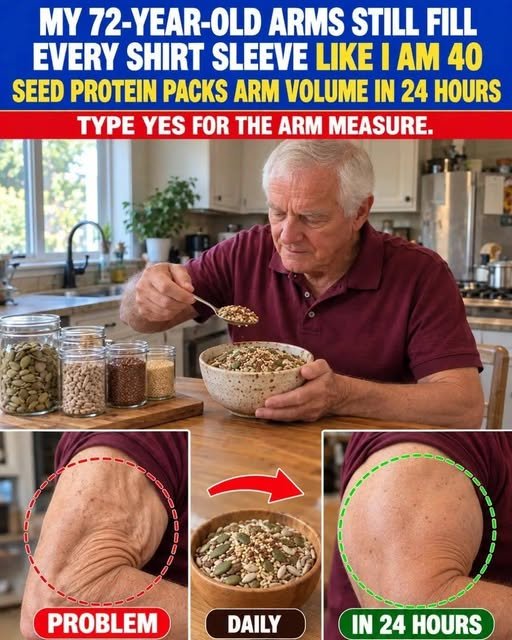
As we get older, changes in the arms can become increasingly noticeable. The upper arms may appear thinner, softer, or less firm, and sleeves that once fit comfortably may seem loose around the arms.
This isn’t simply a cosmetic issue. Aging is associated with a gradual loss of muscle mass and strength, known as sarcopenia. Poor nutrition and insufficient physical activity can increase the risk.
That is why protein-rich foods and regular strength-building exercise become particularly important as we age.
But there is one part of the viral claim that needs correcting: no seed, protein food, or drink can fill out thin arms overnight. Building or rebuilding muscle takes consistent nutrition and resistance exercise over time.
Why Do Arms Become Thinner With Age?
Muscle mass naturally changes as we grow older. Muscle strength and performance can also decline, particularly later in life.
Several factors can contribute, including:
- Reduced physical activity
- Inadequate protein intake
- Illness or prolonged inactivity
- Age-related changes in muscle metabolism
- Unintentional weight loss
- Chronic health conditions
When muscle is lost from the upper arms, the skin and remaining tissue may appear looser, creating the familiar “sagging arms” appearance.
Protein Is Important for Maintaining Muscle
Protein provides amino acids that the body uses to build and repair tissues.
For older adults, getting enough protein from a variety of foods is particularly important because protein intake can become inadequate with age. U.S. dietary guidance specifically highlights protein as a nutrient that deserves attention in older adults.
Good protein sources include:
- Eggs
- Fish
- Chicken
- Lean meat
- Milk
- Greek yogurt
- Cottage cheese
- Beans
- Lentils
- Soy foods
- Nuts
- Seeds
Seeds can certainly contribute protein, but they aren’t a magic muscle-building food.
Which Seeds Contain Protein?
Several seeds can be useful additions to a balanced diet.
Pumpkin Seeds
Pumpkin seeds provide protein along with healthy fats, minerals, and other nutrients.
Try adding them to:
- Oatmeal
- Yogurt
- Salads
- Smoothies
- Homemade granola
Hemp Seeds
Hemp seeds are an easy way to add plant protein to meals.
They can be sprinkled over yogurt, cereal, salads, or blended into smoothies.
Chia Seeds
Chia seeds provide protein, fiber, and healthy fats. Because they absorb liquid and become gel-like, they’re particularly useful in overnight oats and puddings.
Sunflower Seeds
Sunflower seeds provide protein, unsaturated fats, and several micronutrients.
Choose unsalted varieties when possible if you’re trying to keep sodium intake lower.
Sesame Seeds
Sesame seeds can contribute protein and healthy fats while adding flavor to vegetables, rice, salads, and other dishes.
But Protein Alone Isn’t Enough
This is one of the most important points.
Eating more protein without challenging the muscles does not automatically make thin arms muscular.
Resistance exercise provides the stimulus that tells muscles they need to adapt and become stronger.
The National Institute on Aging notes that strength training can help counter age-related declines in muscle mass, strength, and physical function.
A combination of adequate protein + resistance exercise is therefore much more meaningful than relying on a particular seed.
Simple Arm Exercises for Older Adults
If a healthcare professional has cleared you for exercise, strength training can be adapted to your fitness level.
1. Biceps Curls
Hold light dumbbells or another suitable weight.
Keep your elbows close to your sides and slowly bend your elbows to bring the weights upward.
Lower them under control.
Start with a weight that allows you to maintain good form.
2. Triceps Extensions
Use a light weight and perform controlled overhead extensions if your shoulders allow the movement.
Alternatively, resistance bands can provide a gentler option.
3. Wall Push-Ups
Stand facing a wall with your hands against it.
Bend your elbows to bring your chest toward the wall, then push yourself back.
This is an easier alternative to floor push-ups.
4. Resistance-Band Rows
Secure a resistance band appropriately and pull the handles or band toward your body while squeezing your shoulder blades gently.
This works several upper-body muscles rather than focusing only on the arms.
5. Chair-Based Strength Exercises
For people with limited mobility, some exercises can be performed while seated.
The important principle is to choose movements that challenge the muscles safely and gradually.
How Often Should Older Adults Strength Train?
General U.S. physical-activity guidance recommends muscle-strengthening activities at least two days per week for older adults, alongside aerobic and balance activities.
You don’t necessarily need a gym.
Resistance can come from:
- Light dumbbells
- Resistance bands
- Bodyweight exercises
- Household objects that can be safely handled
Start gradually and increase resistance or repetitions as your strength improves.
What Should You Eat With Your Protein?
Protein works best as part of an overall nutritious diet.
A balanced meal might include:
Breakfast:
Greek yogurt + berries + pumpkin seeds
Lunch:
Grilled chicken + vegetables + whole grains
Snack:
Cottage cheese + fruit
Dinner:
Fish or beans + vegetables + rice or another whole grain
This approach provides protein along with carbohydrates, healthy fats, vitamins, minerals, and fiber.
Can Protein Make Arms Look Fuller?
Over time, adequate nutrition combined with resistance training can support muscle maintenance and potentially improve muscle size and strength.
However, the amount of visible change varies from person to person.
Age, genetics, starting muscle mass, physical activity, health conditions, calorie intake, and consistency all matter.
The goal should be gradual improvement in strength and function, rather than expecting an overnight transformation.
What About Protein Powder?
Protein powder can be convenient when someone struggles to get enough protein from food.
However, it isn’t automatically better than whole-food protein.
Older adults can obtain protein from foods such as dairy, eggs, seafood, meat, beans, nuts, seeds, and soy products.
If someone has kidney disease or another medical condition that affects dietary protein needs, they should discuss appropriate protein intake with their healthcare professional rather than dramatically increasing protein on their own.
Don’t Ignore Unexplained Muscle Loss
Not every case of thin or weakening arms is simply normal aging.
Rapid or unexplained weight loss, significant weakness, difficulty getting out of a chair, trouble climbing stairs, or a noticeable decline in physical ability deserves medical attention.
Sarcopenia can be associated with weakness and mobility problems, and other medical conditions can also contribute to muscle loss.
A healthcare professional can assess strength, nutrition, medications, activity levels, and possible underlying conditions.
A Simple Weekly Routine
For someone who has been cleared for exercise, a beginner-friendly routine might look like:
Monday:
Light strength training
Tuesday:
Walking or another comfortable aerobic activity
Wednesday:
Rest or gentle movement
Thursday:
Light strength training
Friday:
Walking and balance exercises
Saturday:
Gentle activity
Sunday:
Rest and recovery
The exact routine should be adjusted according to fitness level and medical needs.
What About Sagging Skin?
Building muscle may improve the overall appearance and function of the arms, but exercise cannot completely eliminate loose skin.
Skin elasticity changes with age, and factors such as genetics, sun exposure, weight changes, and collagen loss contribute to its appearance.
The realistic goal is healthier, stronger arms—not a guaranteed overnight disappearance of loose skin.
Common Mistakes to Avoid
Eating Only One “Miracle” Food
No seed can replace an adequate overall diet.
Taking Excessive Protein
More protein isn’t necessarily better. Protein needs vary depending on health, body size, activity, and medical conditions.
Exercising Too Hard Too Quickly
Older adults can benefit from strength training, but sudden intense workouts can increase the risk of injury.
Ignoring Balance and Walking
Strength isn’t the only important component of healthy aging. A combination of aerobic, strength, and balance activities is recommended.
Expecting Overnight Results
Muscle tissue doesn’t rebuild visibly overnight. Consistency matters much more than a single food or supplement.
Final Thoughts
Thin or sagging arms can become more noticeable after 70, but getting older doesn’t mean you have to stop working on muscle strength.
Protein-rich foods—including seeds, beans, dairy, eggs, fish, and lean meats—can help provide the building blocks your body needs. Combined with appropriately challenging resistance exercise, adequate protein can support muscle maintenance and physical function as you age.
The most important takeaway is simple: there is no seed that can fill out thin arms overnight. A consistent combination of nutritious food, sufficient protein, resistance training, physical activity, and recovery is a much more realistic approach to maintaining strength and independence later in life.
SEO Details
SEO Title: Thin Sagging Arms After 70? Protein and Exercises That May Help
Meta Description: Learn why arms become thinner with age and how protein-rich foods, seeds, and strength exercises can support muscle and healthy aging.
Focus Keyword: protein for thin arms after 70
Slug: protein-for-thin-arms-after-70
Category: Healthy Aging
Tags: healthy aging, protein for seniors, muscle loss, sarcopenia, strength training, seeds and protein, older adults nutrition, arm exercises