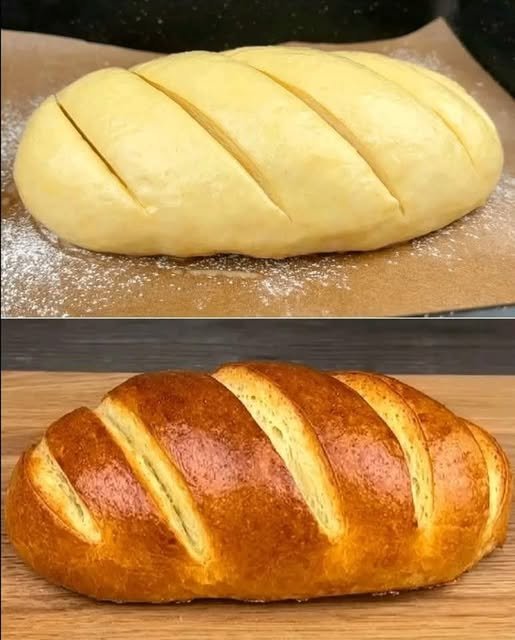
Nothing beats the smell of freshly baked homemade bread. This Soft and Fluffy Bread has a tender, pillowy texture on the inside with a beautifully golden crust on the outside. It’s simple enough for beginners and delicious enough to become a regular homemade favorite.
The secret to soft bread is giving the dough enough moisture, kneading it properly, and allowing it enough time to rise. Once you master those few steps, you can make bakery-style bread right in your own kitchen.
Ingredients
- 3 1/2 cups all-purpose flour
- 2 1/4 teaspoons active dry yeast
- 2 tablespoons granulated sugar
- 1 teaspoon salt
- 1 cup warm milk
- 1/4 cup warm water
- 3 tablespoons unsalted butter, melted
- 1 large egg
For the Top
- 1 tablespoon melted butter
Instructions
1. Activate the Yeast
Pour the warm milk and warm water into a small bowl. The liquid should feel warm but not hot.
Add the sugar and yeast. Stir gently and let it sit for about 5–10 minutes, until the surface becomes foamy.
If the yeast does not foam, it may be inactive, and it’s better to start again with fresh yeast.
2. Make the Dough
In a large mixing bowl, combine the flour and salt.
Add the yeast mixture, melted butter, and egg.
Mix until a soft, slightly sticky dough forms.
If the dough seems extremely sticky, add flour one tablespoon at a time. Avoid adding too much flour because a stiff dough can produce dense bread.
3. Knead the Dough
Transfer the dough to a lightly floured surface.
Knead for about 8–10 minutes, until the dough becomes smooth, elastic, and soft.
You can also use a stand mixer fitted with a dough hook and knead on low to medium speed until the dough is smooth and elastic.
4. Let the Dough Rise
Place the dough in a lightly greased bowl and turn it once so the surface is lightly coated.
Cover the bowl with a clean kitchen towel or plastic wrap.
Place it somewhere warm and allow it to rise for about 1–1 1/2 hours, or until it has approximately doubled in size.
5. Shape the Bread
Gently press the dough down to release excess air.
Shape it into a loaf and place it into a greased 9 × 5-inch loaf pan.
Cover again and allow it to rise for another 30–45 minutes, or until the dough has risen noticeably above the rim of the pan.
6. Bake
Preheat your oven to 350°F (175°C).
Bake the bread for approximately 25–30 minutes, or until the top is golden brown and the loaf sounds hollow when gently tapped.
If the top begins browning too quickly, loosely cover it with foil during the final part of baking.
7. Brush With Butter
Remove the bread from the oven and immediately brush the top with melted butter.
Allow it to cool in the pan for about 10 minutes, then transfer it to a wire rack.
Let the bread cool before slicing for the best texture.
Tips for Extra Soft Bread
Don’t add too much flour. This is one of the most common reasons homemade bread turns out dense. The dough should feel soft and slightly tacky rather than dry.
Use warm—not hot—liquid. Very hot milk or water can damage the yeast and prevent the dough from rising properly.
Knead thoroughly. Proper kneading develops gluten, which helps the bread hold its shape while creating a light and fluffy texture.
Give the dough enough time to rise. Rising time depends on room temperature, so use the dough’s appearance rather than the clock as your main guide.
Don’t slice immediately. Cutting bread while it’s piping hot can compress the soft interior. Let it cool first.
How to Keep Homemade Bread Soft
Once completely cooled, store the bread in an airtight container or sealed bread bag at room temperature.
Avoid refrigerating homemade bread unless necessary, as refrigeration can make bread stale more quickly.
For longer storage, slice the cooled loaf and freeze it in a freezer-safe bag. Individual slices can be thawed as needed.
Ways to Enjoy Soft Homemade Bread
This bread is delicious sliced and served with butter, jam, honey, or peanut butter. It also makes excellent:
- Breakfast toast
- Sandwiches
- French toast
- Grilled cheese
- Bread pudding
- Garlic toast
Final Thoughts
Making your own Soft and Fluffy Bread is easier than it may seem. With a handful of basic ingredients, proper kneading, and enough rising time, you can create a loaf that’s tender, flavorful, and wonderfully fresh.
Once you taste homemade bread straight from the oven, you may never look at store-bought bread quite the same way again.