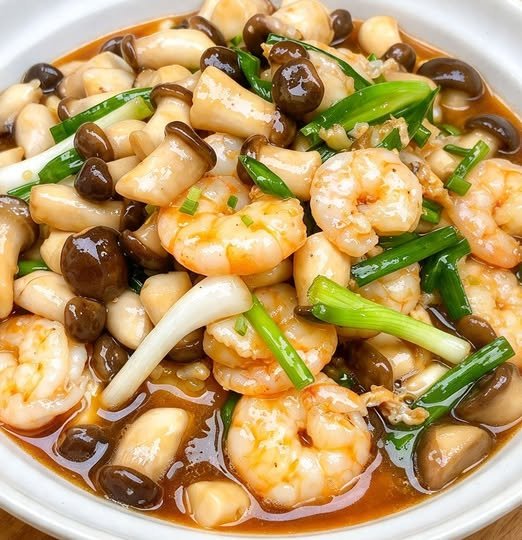
If you love quick Asian-inspired meals packed with savory flavor, this Shrimp & Mushroom Stir-Fry with Oyster Sauce is a recipe you will want to make again and again. It combines juicy shrimp, tender mushrooms, crisp vegetables, and a rich oyster sauce that coats every ingredient with a delicious, glossy finish.
The secret to this dish is its balance of flavors. Oyster sauce brings a deep, savory taste, garlic and ginger add fragrance, and a splash of soy sauce enhances the natural sweetness of the shrimp. The mushrooms soak up the flavorful sauce, while the shrimp cook quickly to remain tender and juicy.
Best of all, this recipe is easy to prepare in one pan and takes approximately 25 minutes from start to finish. It is perfect for busy weeknights, quick lunches, or whenever you want a homemade alternative to restaurant-style stir-fry.
Serve it over steamed jasmine rice, brown rice, or noodles for a satisfying meal that brings together seafood, vegetables, and bold Asian-inspired flavors.
Why You’ll Love This Shrimp & Mushroom Stir-Fry
- Quick and convenient: The ingredients cook quickly, making this an excellent option for busy days.
- Rich, savory flavor: Oyster sauce, garlic, ginger, and soy sauce create a deliciously balanced sauce.
- Tender shrimp: Properly cooked shrimp remain juicy and pair beautifully with the earthy mushrooms.
- Nutritious ingredients: Shrimp provide protein, while mushrooms and vegetables contribute fiber and important micronutrients.
- One-pan cooking: Everything comes together in a wok or large skillet, reducing cleanup.
- Easy to customize: Add broccoli, bell peppers, snap peas, or your favorite vegetables.
Recipe Information
- Preparation time: 10 minutes
- Cooking time: 15 minutes
- Total time: Approximately 25 minutes
- Servings: 4
- Course: Main course
- Cuisine: Asian-inspired
- Difficulty: Easy
- Cooking method: Stir-frying
Ingredients for Shrimp & Mushroom Stir-Fry with Oyster Sauce
For the Stir-Fry
- 500 g (approximately 1.1 pounds) raw shrimp, peeled and deveined
- 300 g (approximately 10.5 ounces) mushrooms, sliced
- 1 tablespoon vegetable oil or canola oil
- 4 garlic cloves, finely minced
- 1 tablespoon freshly grated ginger
- 1 medium onion, thinly sliced
- 1 red bell pepper, thinly sliced
- 2 spring onions, chopped
- 1 teaspoon sesame oil
- 1 tablespoon sesame seeds, optional
- Freshly ground black pepper, to taste
For the Oyster Sauce
- 3 tablespoons oyster sauce
- 1 tablespoon light soy sauce
- 1 teaspoon dark soy sauce, optional, for a deeper color
- 1 teaspoon sugar or honey
- 1/2 cup chicken broth or water
- 1 teaspoon cornstarch
- 2 tablespoons cold water, for the cornstarch slurry
- 1 teaspoon rice vinegar, optional, for a touch of acidity
Ingredient note: Oyster sauce is naturally savory and can be salty, so taste the finished sauce before adding extra salt. For a vegetarian alternative, use a mushroom-based vegetarian oyster-style sauce. Check product labels if you have seafood, soy, or gluten allergies.
How to Make Shrimp & Mushroom Stir-Fry with Oyster Sauce
Step 1: Prepare the Shrimp
If using frozen shrimp, thaw them safely in the refrigerator or under cold running water in a sealed bag.
Peel and devein the shrimp if needed, then pat them dry with paper towels. Removing excess moisture helps them sear properly rather than release too much water into the pan.
Season lightly with black pepper. Avoid adding much salt at this stage because the oyster sauce and soy sauce will provide plenty of seasoning.
Set the shrimp aside while you prepare the remaining ingredients.
Step 2: Slice the Mushrooms and Vegetables
Clean the mushrooms according to their type and slice them evenly. Button mushrooms, cremini mushrooms, and shiitake mushrooms all work well in this recipe.
Slice the onion and red bell pepper into thin strips. Mince the garlic, grate the ginger, and chop the spring onions.
Preparing everything before heating the pan is important because stir-frying happens quickly. Having the ingredients ready helps prevent the garlic from burning while you search for another ingredient.
Step 3: Mix the Oyster Sauce
In a small bowl, combine the oyster sauce, light soy sauce, dark soy sauce if using, sugar or honey, chicken broth or water, and rice vinegar.
Stir until the sugar dissolves.
In a separate small bowl, mix the cornstarch with two tablespoons of cold water until smooth. This slurry will thicken the sauce near the end of cooking.
Keep the sauce mixture and cornstarch slurry close to the stove so they are ready when needed.
Step 4: Sear the Shrimp
Heat a wok or large skillet over medium-high to high heat.
Add half a tablespoon of vegetable oil and allow it to heat until shimmering. Arrange the shrimp in a single layer, working in batches if necessary.
Cook for approximately 1–2 minutes per side, depending on their size, until they turn pink and opaque.
Remove the shrimp from the pan and set them aside. They will finish heating when returned to the stir-fry.
Avoid overcooking the shrimp at this stage because they can become tough and rubbery.
Step 5: Cook the Mushrooms
Add the remaining vegetable oil to the same pan.
Add the sliced mushrooms in a single layer as much as possible. Let them cook for approximately 2 minutes before stirring so they can develop some golden color.
Continue cooking for another 2–3 minutes until the mushrooms soften and release most of their moisture.
Mushrooms absorb the flavors of the sauce beautifully, so allowing them to brown slightly helps develop a deeper, more savory taste.
If the pan becomes crowded, cook the mushrooms in batches rather than steaming them.
Step 6: Add Garlic, Ginger, and Vegetables
Add the onion and red bell pepper to the mushrooms. Stir-fry for approximately 2 minutes until the vegetables begin to soften but still retain some crunch.
Add the minced garlic and grated ginger. Stir continuously for about 30 seconds until fragrant.
Avoid adding the garlic too early because it can burn during the longer mushroom-cooking stage.
Step 7: Add the Oyster Sauce
Pour the prepared oyster sauce mixture into the pan.
Stir well, scraping up any flavorful browned bits from the bottom of the skillet.
Bring the mixture to a gentle simmer for approximately 1–2 minutes so the sauce can coat the vegetables and mushrooms.
Stir the cornstarch slurry again, then add it gradually to the pan while stirring continuously.
Cook for another 1–2 minutes until the sauce thickens and develops a glossy appearance. If it becomes too thick, add a splash of water or broth.
Step 8: Return the Shrimp to the Pan
Add the cooked shrimp back to the skillet.
Toss gently to coat the shrimp with the sauce and cook for another 1–2 minutes, until the shrimp are heated through and fully cooked.
Shrimp should reach an internal temperature of 145°F (63°C). If they were only partially cooked earlier, allow enough time for them to finish cooking safely.
Add the sesame oil and chopped spring onions. Stir briefly to distribute the flavors.
Taste the sauce and adjust with a little black pepper or a small splash of rice vinegar if desired.
Step 9: Garnish and Serve
Remove the pan from the heat.
Transfer the shrimp and mushroom stir-fry to a serving dish. Sprinkle with sesame seeds and additional spring onions if desired.
Serve immediately with steamed rice, noodles, or your favorite side dish.
The glossy oyster sauce, tender mushrooms, and juicy shrimp create a delicious combination that is best enjoyed while hot.
Tips for the Best Shrimp and Mushroom Stir-Fry
Dry the shrimp thoroughly. Excess moisture can prevent proper searing and dilute the sauce.
Use a hot pan. High heat helps develop flavor quickly without overcooking the ingredients.
Avoid overcrowding. Cooking shrimp and mushrooms in batches helps them brown rather than steam.
Cook shrimp briefly. Shrimp cook quickly, so remove them from the pan once they are nearly done and return them toward the end.
Brown the mushrooms first. Allowing them to develop color creates a deeper, more savory flavor.
Prepare the sauce in advance. Stir-frying is fast, and mixing the sauce before cooking makes the process easier.
Add the cornstarch slurry gradually. This gives you better control over the thickness of the sauce.
Taste before adding salt. Oyster sauce and soy sauce already contain sodium, so additional salt may not be necessary.
Serve immediately. The vegetables remain crisper and the shrimp retain a better texture when served straight from the pan.
Delicious Variations to Try
1. Shrimp and Mushroom Stir-Fry with Broccoli
Add 1–2 cups of broccoli florets to the recipe.
For tender-crisp broccoli, blanch it briefly in boiling water before adding it to the skillet. Alternatively, stir-fry the florets with a splash of water and cover the pan briefly to help them soften.
Broccoli adds color, texture, and extra fiber.
2. Spicy Shrimp and Mushroom Stir-Fry
Add one teaspoon of chili garlic sauce or a pinch of red pepper flakes to the oyster sauce mixture.
For more heat, add sliced fresh chilies along with the garlic and ginger.
Start with a small amount and increase gradually until the sauce reaches your preferred spice level.
3. Shrimp and Shiitake Mushroom Stir-Fry
Replace the regular mushrooms with shiitake mushrooms.
Shiitake mushrooms have a deeper, more pronounced savory flavor that works especially well with oyster sauce and ginger.
Remove any tough stems before slicing, and cook the mushrooms until tender.
4. Shrimp and Mushroom Stir-Fry with Snow Peas
Add one cup of snow peas during the final few minutes of stir-frying.
Their crisp texture and mild sweetness complement the savory sauce. Avoid cooking them for too long if you want them to retain their bright green color.
5. Honey Garlic Shrimp and Mushroom Stir-Fry
Replace the teaspoon of sugar with one to two teaspoons of honey and add another minced garlic clove.
The honey creates a slightly sweeter glaze, while the extra garlic gives the sauce a more pronounced savory flavor.
Taste before adding more honey because oyster sauce can vary in sweetness.
6. Vegetarian Mushroom Stir-Fry
Omit the shrimp and use 450–500 g of mixed mushrooms, along with broccoli, bell peppers, or tofu.
Replace regular oyster sauce with a vegetarian mushroom-based oyster-style sauce and use vegetable broth instead of chicken broth.
For extra protein, add firm tofu that has been pressed, cubed, and lightly browned.
7. Shrimp and Mushroom Noodle Stir-Fry
Prepare 200–250 g of noodles according to the package instructions and drain them well.
Add the cooked noodles to the skillet after the sauce has thickened, then toss with the shrimp and vegetables. Add a splash of broth if the noodles absorb too much sauce.
This variation turns the recipe into a complete noodle dish.
What to Serve with Shrimp & Mushroom Stir-Fry
This savory stir-fry pairs well with a variety of simple sides.
- Steamed jasmine rice
- Brown rice
- Egg fried rice
- Stir-fried noodles
- Garlic noodles
- Steamed broccoli
- Bok choy with garlic
- Asian cucumber salad
- Light vegetable soup
For a classic restaurant-inspired meal, serve the shrimp and mushrooms over fluffy jasmine rice. The rice absorbs the oyster sauce and balances its rich, savory flavor.
For a lighter option, serve the stir-fry with steamed vegetables and a smaller portion of rice.
How to Store and Reheat Leftovers
Refrigeration: Transfer leftovers to a clean, shallow, airtight container and refrigerate within two hours of cooking. Keep the refrigerator at 40°F (4°C) or below.
Storage time: For the best quality and conservative seafood handling, eat refrigerated shrimp leftovers within 1–2 days.
Reheating: Warm the stir-fry in a skillet over medium heat with a small splash of water or broth. Stir gently until the shrimp are heated throughout. Avoid prolonged heating, which can make shrimp rubbery.
Microwave reheating: Place a portion in a microwave-safe container, cover loosely, and heat in short intervals, stirring between intervals. Ensure the food is steaming hot throughout.
Freezing: Cooked shrimp can be frozen, but mushrooms may become softer and release additional moisture after thawing. If freezing, use an airtight freezer-safe container and consume within about 2–3 months for best quality.
Avoid repeated reheating: Reheat only the amount you plan to eat and discard leftovers that have been left at room temperature for too long.
Frequently Asked Questions
Can I use frozen shrimp for this recipe?
Yes. Frozen shrimp work very well. Thaw them safely, drain away excess water, and pat them dry before cooking. This helps them brown properly and prevents the sauce from becoming watery.
Which mushrooms are best for oyster sauce stir-fry?
Button mushrooms, cremini mushrooms, and shiitake mushrooms are all good choices. Button mushrooms offer a mild flavor, cremini mushrooms are slightly earthier, and shiitake mushrooms provide a deeper savory taste.
Can I make this recipe without oyster sauce?
Yes. Use a vegetarian mushroom-based oyster-style sauce or a mixture of soy sauce, a little sugar, and mushroom seasoning. The flavor will be different, but it can still produce a delicious stir-fry.
How do I prevent shrimp from becoming rubbery?
Cook shrimp over relatively high heat for a short time. Remove them from the pan once nearly cooked, prepare the sauce and vegetables, then return the shrimp at the end to finish cooking.
Why is my oyster sauce too thick?
The cornstarch may have been added too quickly, or the sauce may have simmered for too long. Add a small splash of water or broth and stir until the sauce returns to a smooth, pourable consistency.
Can I prepare the ingredients ahead of time?
Yes. Peel and devein the shrimp, slice the mushrooms and vegetables, and mix the sauce in advance. Store perishable ingredients separately in the refrigerator and cook shortly before serving.
Is shrimp and mushroom stir-fry healthy?
It can be part of a balanced meal. Shrimp provide protein, mushrooms contribute fiber and micronutrients, and vegetables add color and nutrients. However, oyster sauce and soy sauce can be high in sodium, so choose lower-sodium versions when appropriate and adjust the amount used.
Can I use chicken instead of shrimp?
Yes. Replace the shrimp with 500 g of thinly sliced boneless chicken. Stir-fry until the chicken reaches an internal temperature of 165°F (74°C). Chicken generally takes longer to cook than shrimp, so allow additional time before adding the mushrooms and sauce.
Approximate Nutrition Information
The following estimates are for one serving when the recipe is divided into four portions, excluding rice or noodles.
- Calories: approximately 220–300
- Protein: approximately 27–34 grams
- Carbohydrates: approximately 12–18 grams
- Fat: approximately 7–12 grams
- Fiber: approximately 2–4 grams
- Sodium: varies depending on the oyster sauce, soy sauce, and broth
These values are estimates and will vary according to the size of the shrimp, the type of mushrooms, and the amount of sauce consumed. Serving the stir-fry with rice or noodles will increase the total calories and carbohydrates.
Final Thoughts
Shrimp & Mushroom Stir-Fry with Oyster Sauce is a quick and flavorful dish that combines tender seafood, earthy mushrooms, crisp vegetables, and a glossy savory sauce.
The garlic and ginger add fragrance, while the oyster sauce brings a rich umami flavor that makes every bite satisfying. With just one pan and a few simple ingredients, you can create a homemade meal that feels special without requiring hours in the kitchen.
Serve it over steamed rice or noodles, customize it with your favorite vegetables, and enjoy a delicious seafood dinner whenever you need something easy, comforting, and full of flavor.
SEO Details
SEO Title: Shrimp & Mushroom Stir-Fry with Oyster Sauce Recipe
Focus Keyphrase: Shrimp & Mushroom Stir-Fry with Oyster Sauce
URL Slug: shrimp-mushroom-stir-fry-oyster-sauce
Meta Description: Make Shrimp & Mushroom Stir-Fry with Oyster Sauce featuring juicy shrimp, tender mushrooms, crisp vegetables, garlic, and a rich savory sauce.
Suggested Tags: Shrimp and Mushroom Stir-Fry, Oyster Sauce Shrimp, Shrimp Stir-Fry Recipe, Mushroom Stir-Fry, Easy Seafood Dinner, Asian-Inspired Recipes, Quick Shrimp Recipes, Healthy Stir-Fry