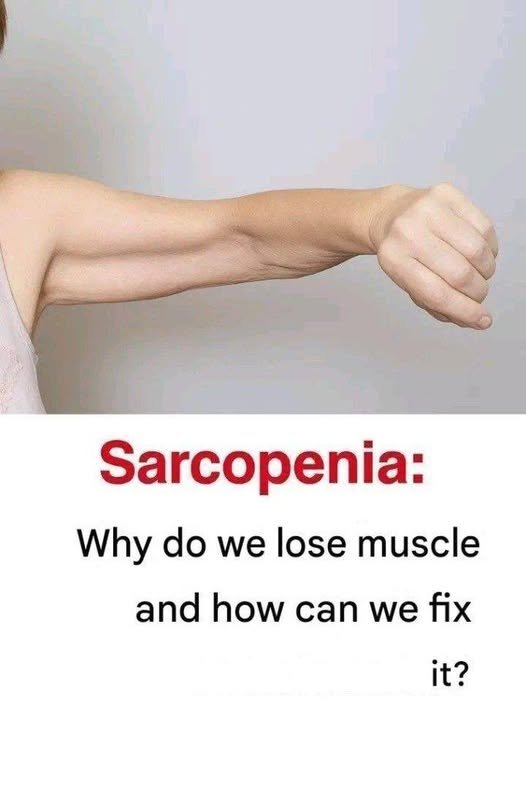
Muscle loss is often treated as a normal part of getting older, but significant age-related loss of muscle mass and strength is more than simply becoming “less muscular.” It can develop gradually and eventually affect balance, mobility, independence, and quality of life.
This condition is known as sarcopenia.
Sarcopenia is characterized primarily by reduced muscle strength, with reduced muscle quantity or quality also playing an important role. It becomes more common with advancing age, but inactivity, inadequate nutrition, illness, and other factors can accelerate muscle loss.
The good news is that muscle loss isn’t necessarily inevitable or irreversible. Regular resistance exercise, adequate nutrition, sufficient protein, and treatment of underlying health problems can help maintain or improve muscle strength.
What Is Sarcopenia?
Sarcopenia is a condition involving a progressive decline in skeletal muscle strength and, often, muscle mass and physical performance.
Muscles naturally change as we age. Beginning in adulthood, people can gradually lose muscle tissue and strength, particularly when they become less physically active.
The process can accelerate later in life.
Importantly, sarcopenia isn’t diagnosed simply by looking at someone’s body size. A person can appear relatively lean while having poor muscle strength, and someone with a larger body can still have significant muscle loss.
Healthcare professionals may evaluate:
- Muscle strength
- Muscle quantity or quality
- Physical performance
- Mobility and functional ability
What Causes Muscle Loss?
Sarcopenia usually develops from a combination of factors rather than one single cause.
1. Aging
As we get older, the body becomes less efficient at building and maintaining muscle.
Muscle fibers can become smaller, and the nervous system may become less effective at activating muscles.
Hormonal and metabolic changes can also contribute.
2. Physical Inactivity
One of the biggest contributors to muscle loss is simply not using your muscles enough.
Long periods of sitting, bed rest, hospitalization, or a sedentary lifestyle can cause strength and muscle mass to decline surprisingly quickly.
This is why regular movement becomes increasingly important with age.
3. Not Eating Enough Protein
Muscles require amino acids from protein to repair and maintain themselves.
Consistently consuming too little protein—especially when combined with inactivity—can make it harder to preserve muscle.
Older adults may also eat less because of reduced appetite, dental problems, difficulty preparing food, or other health issues.
4. Poor Overall Nutrition
Protein isn’t the only nutritional factor that matters.
Insufficient calories, vitamins, minerals, and other nutrients can contribute to weakness and poor muscle health.
Restrictive diets should therefore be approached carefully, particularly in older adults.
5. Chronic Diseases
Several chronic conditions can increase the risk of muscle loss.
Examples include certain heart, lung, kidney, liver, neurological, and inflammatory diseases.
Long periods of illness can lead to reduced activity, poor appetite, inflammation, or increased nutritional requirements.
6. Hormonal Changes
Hormones influence muscle maintenance.
Age-related changes in hormones such as testosterone, estrogen, and growth-related hormones may contribute to changes in muscle mass and strength.
However, taking hormone supplements without medical supervision is not an appropriate treatment for ordinary age-related muscle loss.
7. Inflammation
Chronic inflammation can affect muscle metabolism and contribute to muscle wasting in certain diseases.
This is one reason why treating underlying medical conditions is an important part of protecting muscle health.
8. Extended Bed Rest
Muscles can weaken rapidly when they aren’t being used.
After hospitalization, injury, or prolonged bed rest, a person may notice difficulty standing, walking, climbing stairs, or performing everyday tasks.
Rehabilitation and gradual strengthening can be extremely important during recovery.
Signs You May Be Losing Muscle
Muscle loss isn’t always obvious when looking in the mirror.
Some useful warning signs include:
- Difficulty getting up from a chair
- Trouble climbing stairs
- Reduced walking speed
- Feeling weaker than before
- Difficulty carrying groceries
- Increased difficulty opening jars or gripping objects
- Frequent falls or poor balance
- Reduced ability to perform everyday activities
- Noticeable loss of muscle size
- Taking longer to recover after physical activity
A gradual decline in strength can be more meaningful than simply noticing that your arms or legs look smaller.
How Can You Help Prevent or Reverse Muscle Loss?
The most effective approach is usually a combination of resistance training, adequate protein, sufficient overall nutrition, and regular physical activity.
1. Make Resistance Training a Priority
Strength training is one of the most important tools for maintaining muscle.
Exercises can include:
- Squats or chair stands
- Lunges
- Step-ups
- Resistance-band exercises
- Wall push-ups
- Rows
- Light weightlifting
- Machine-based strength exercises
Beginners should start at an appropriate level and gradually increase resistance.
You don’t need to lift extremely heavy weights to benefit. Consistency and progressive improvement matter more.
If you have significant weakness, balance problems, or a chronic medical condition, professional guidance can help you exercise safely.
2. Eat Enough Protein
Protein provides the building blocks needed for muscle maintenance.
Good sources include:
- Eggs
- Milk and yogurt
- Chicken
- Fish
- Lean meat
- Beans
- Lentils
- Chickpeas
- Soy foods
- Nuts and seeds
Rather than relying on one enormous protein-heavy meal, many people may find it practical to include a quality protein source throughout the day.
People with kidney disease or other conditions that require dietary protein restrictions should follow individualized medical advice rather than increasing protein on their own.
3. Don’t Undereat
Trying to lose weight aggressively can sometimes result in unwanted muscle loss.
If weight reduction is necessary, a sustainable approach that includes adequate protein and resistance training can help preserve lean tissue.
For older adults who are underweight or losing weight unintentionally, the priority may instead be ensuring adequate calories and identifying the cause of weight loss.
4. Stay Physically Active Every Day
Strength training is essential, but everyday movement matters too.
Walking, cycling, swimming, household activities, and other forms of physical activity can help maintain mobility and fitness.
Avoid spending the entire day sitting whenever possible. Short movement breaks throughout the day can add up.
5. Work on Balance and Mobility
Muscle strength isn’t the only component of healthy aging.
Balance exercises and mobility work can help support physical function and may reduce the risk of falls.
Activities such as controlled heel-to-toe walking, appropriate balance exercises, and functional movements can be useful when performed safely.
6. Address Vitamin D and Other Nutritional Problems
Vitamin D plays an important role in bone and muscle health, but taking large doses isn’t automatically beneficial.
If you have a nutritional deficiency or risk factors for deficiency, a healthcare professional can determine whether testing or supplementation is appropriate.
The same principle applies to other vitamins and minerals: supplements should address a genuine need rather than replace a balanced diet.
7. Treat Underlying Medical Conditions
If muscle loss is occurring rapidly or is accompanied by significant fatigue, weight loss, pain, weakness, or other symptoms, don’t simply assume it is aging.
Underlying medical conditions, medications, nutritional deficiencies, and prolonged inactivity may contribute.
Treating the underlying cause can sometimes make a major difference.
Can Sarcopenia Be Reversed?
In many cases, strength and physical function can improve substantially with appropriate exercise and nutrition.
Muscle tissue is responsive to training even later in life.
The goal doesn’t necessarily have to be building large muscles. Improving strength can make everyday activities easier, including getting out of a chair, climbing stairs, carrying objects, and maintaining independence.
Progress may be gradual, particularly after illness or prolonged inactivity, so consistency is more important than trying to make dramatic changes quickly.
When Should You See a Doctor?
Talk with a healthcare professional if you notice:
- Rapid or unexplained muscle loss
- Significant weakness
- Repeated falls
- Difficulty walking
- Unintentional weight loss
- Persistent fatigue
- Difficulty performing normal daily activities
- Muscle loss after a prolonged illness or hospitalization
A healthcare professional can evaluate your strength, nutrition, medications, medical conditions, and physical function and determine whether additional testing or rehabilitation is appropriate.
A Simple Muscle-Preserving Routine
For someone who is generally healthy and new to exercise, a simple starting point could include:
2–3 days per week:
Resistance exercises targeting the major muscle groups.
Most days:
Walking or another comfortable form of aerobic activity.
Regularly:
Balance and mobility exercises appropriate for your ability.
Every day:
Include protein-rich foods and maintain adequate overall nutrition.
The exact program should be adjusted for age, fitness level, injuries, and medical conditions.
Final Takeaway
Sarcopenia is more than simply losing muscle as you get older. Loss of strength can affect mobility, balance, independence, and overall quality of life.
Fortunately, there are practical steps that can help.
Regular resistance training, adequate protein and calories, daily physical activity, good nutrition, and appropriate treatment of underlying health problems can all support muscle health.
You don’t have to wait until you feel weak to start. Building and protecting muscle is a long-term investment in mobility and independence.