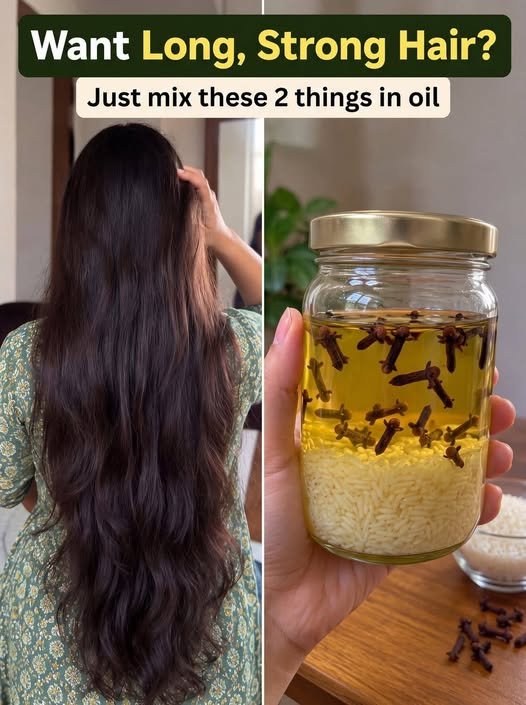
If you’re looking for a simple homemade hair oil, rice and clove hair oil is an interesting combination to try. Rice has long been used in traditional hair-care routines, while cloves are valued for their aromatic oils and antioxidant compounds.
This DIY oil can be used as a scalp and hair treatment to add moisture, reduce the feeling of dryness, and leave the hair feeling soft and conditioned. However, it is important to keep expectations realistic: there is not enough clinical evidence to prove that rice and clove oil makes hair grow faster or reverses hair loss.
Ingredients
- ½ cup uncooked white rice
- 1 tablespoon whole cloves
- 1 cup coconut oil, olive oil, or another lightweight carrier oil
- 1 small clean glass jar or heat-safe container
How to Make Rice & Clove Hair Oil
1. Prepare the Rice
Rinse the rice briefly to remove dust and excess starch. Spread it on a clean towel and allow it to dry completely.
The rice needs to be completely dry before adding it to the oil.
2. Combine the Ingredients
Place the dried rice and whole cloves into a clean, dry heat-safe jar or saucepan.
Add the carrier oil and stir gently.
3. Infuse the Oil
For a gentle method, place the container in a saucepan filled with a few inches of water to create a simple double boiler.
Warm the oil over low heat for about 20–30 minutes. Avoid letting the oil become very hot or allowing it to smoke.
The gentle heat helps infuse the oil with some of the aromatic compounds from the cloves.
4. Cool and Strain
Remove the oil from the heat and allow it to cool completely.
Strain out the rice and cloves using a clean, fine-mesh strainer or cheesecloth.
Transfer the finished oil into a clean, dry, airtight bottle.
How to Use Rice & Clove Hair Oil
Before Shampooing
Part your hair into sections and apply a small amount of oil to the scalp.
Massage gently with your fingertips for several minutes. Don’t scratch or aggressively rub the scalp.
Work the remaining oil through the lengths and ends of your hair, especially if they feel dry.
Leave it on for 20–60 minutes, then wash your hair thoroughly with shampoo.
You can use a small amount on the ends as a pre-shampoo treatment if your scalp becomes oily easily.
Potential Hair-Care Benefits
Helps Condition Dry Hair
The carrier oil provides lubrication that can make dry hair feel softer and smoother.
May Reduce Friction
Applying a small amount of oil to the hair can help reduce friction during handling and styling, which may make hair feel less rough.
Adds Shine
Oil coats the hair surface and can temporarily give it a smoother, shinier appearance.
Cloves Add Aromatic Compounds
Cloves contain compounds such as eugenol and have antioxidant properties. However, evidence that topical clove preparations promote human hair growth is limited, so clove oil should not be described as a proven hair-loss treatment.
Important Safety Precautions
Cloves are highly concentrated in aromatic compounds and can irritate the skin when used excessively.
Always dilute clove-containing preparations in a carrier oil. Do not apply undiluted clove essential oil directly to the scalp.
Before using the mixture on your entire scalp, perform a small patch test. If you experience burning, itching, swelling, redness, or irritation, wash it off and discontinue use.
Avoid getting the oil in your eyes.
If you have a sensitive, damaged, or inflamed scalp, speak with a dermatologist before trying strongly scented or homemade scalp treatments.
How Often Can You Use It?
For most people, once a week is a reasonable starting point.
You don’t need to saturate your scalp with oil. A small amount is usually enough, and frequent heavy oiling can lead to buildup for some hair types.
Can Rice & Clove Oil Make Hair Grow?
This is one of the biggest claims surrounding homemade rice and clove hair treatments, but it should be approached cautiously.
There isn’t strong clinical evidence showing that this DIY oil stimulates significant new hair growth or reverses pattern hair loss.
If you’re experiencing persistent thinning, excessive shedding, bald patches, or a receding hairline, the underlying cause matters. Nutritional deficiencies, hormonal changes, scalp conditions, medications, stress, and hereditary hair loss can all contribute to shedding or thinning.
A dermatologist can help identify the cause and recommend evidence-based treatment.
Storage Tips
Because this recipe contains dried ingredients rather than fresh water-based ingredients, it can keep longer than a homemade hair mask. However, contamination and moisture can still cause problems.
Use a completely dry container and dry utensils, keep the bottle tightly closed, and store it away from heat and direct sunlight.
Discard the oil if it develops an unusual smell, visible mold, cloudiness, or another noticeable change.
Final Thoughts
Rice and clove hair oil can be a simple addition to a traditional hair-care routine. The carrier oil can help condition and lubricate the hair, while cloves provide a distinctive aromatic component.
Just remember that softer, shinier hair is a more realistic expectation than dramatic hair growth. For ongoing or significant hair loss, identifying the underlying cause is much more useful than relying on a homemade oil alone.