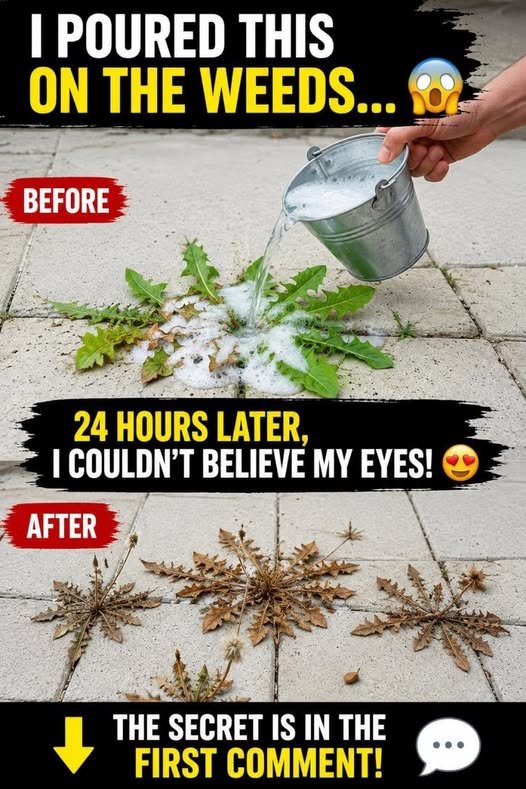
Weeds can quickly take over garden paths, cracks in driveways, patios, and unwanted areas of the yard. If you’re tired of pulling them by hand or reaching for commercial weed killers, there are several simple household methods you can try.
However, “natural” does not automatically mean harmless. Some homemade weed-control mixtures can damage desirable plants, irritate skin, or affect soil and nearby vegetation. The safest approach is to use these methods selectively and avoid spraying anything you want to keep alive.
Here are some practical homemade approaches, along with tips for getting better results.
1. Vinegar Weed Spray
Household white vinegar is one of the most commonly suggested homemade weed-control ingredients.
Vinegar contains acetic acid, which can damage plant tissue when it contacts the leaves. It tends to work best on small, young weeds rather than established perennial weeds with extensive roots.
What You Need
- 1 gallon (about 3.8 liters) white vinegar
- 1–2 teaspoons mild dish soap
How to Use It
- Pour the vinegar into a spray bottle or garden sprayer.
- Add a small amount of dish soap.
- Mix gently.
- Spray directly onto the weed’s leaves on a dry day.
- Avoid spraying desirable plants.
The soap is mainly used to help the liquid spread across the leaf surface; it does not make vinegar a selective herbicide.
Important Limitation
Household vinegar may burn the visible foliage without killing the entire root system. Some perennial weeds can therefore grow back.
2. Boiling Water
Sometimes the simplest method is one of the most useful.
Pouring freshly boiled water directly over a weed can destroy the plant’s above-ground tissue.
Best Places to Use It
Boiling water can be useful for weeds growing in:
- Cracks in sidewalks
- Driveways
- Patio gaps
- Gravel areas
- Other places where you don’t want vegetation
How to Apply It
- Boil water carefully.
- Carry it directly to the target area.
- Slowly pour it over the weed, concentrating around the base.
- Allow the area to cool.
- Repeat if new growth appears.
Safety Warning
Boiling water can cause serious burns. Keep children and pets away while applying it, and be extremely careful when carrying or pouring hot water.
It can also damage nearby desirable plants and grass.
3. Hand Removal Plus Mulch
For garden beds, physical removal followed by mulching is often a more practical long-term strategy than repeatedly spraying weeds.
Pull or dig out existing weeds, making an effort to remove the roots where practical.
Then cover exposed soil with an appropriate layer of organic mulch.
Mulch can reduce the amount of sunlight reaching weed seeds and young seedlings, making it harder for them to establish.
Suitable mulch materials may include:
- Wood chips
- Shredded bark
- Straw
- Compost used appropriately
- Other garden mulches
Avoid piling mulch directly against the stems or trunks of desirable plants.
4. Newspaper or Cardboard for Larger Areas
For an area that is being converted into a garden bed, cardboard or several layers of newspaper can sometimes be used as a temporary weed-suppression layer.
Basic Method
- Remove large existing weeds.
- Lay overlapping sheets of plain cardboard or newspaper over the soil.
- Wet the material so it stays in place.
- Cover it with mulch.
- Plant through the covered area where appropriate.
This approach works primarily by blocking light and suppressing weed growth rather than chemically killing weeds.
Avoid materials containing glossy coatings, excessive colored ink, tape, or plastic.
5. Improve the Soil and Garden Conditions
Weed control isn’t only about killing weeds. Creating conditions that favor the plants you actually want can also reduce weed pressure.
Healthy, densely planted garden beds leave fewer open spaces for weeds to establish.
Depending on your garden, consider:
- Appropriate spacing between plants
- Mulching exposed soil
- Watering plants efficiently
- Removing weeds before they produce seeds
- Maintaining healthy turf
- Avoiding unnecessary soil disturbance
A weed that never gets the opportunity to produce hundreds or thousands of new seeds is much easier to control in the future.
What About Salt?
You may see homemade weed-killer recipes that combine vinegar, salt, and dish soap.
Salt can certainly damage plants, but that is precisely why it deserves caution.
Once substantial amounts of salt enter soil, they can interfere with the ability of plants to take up water and can make the area difficult for desirable vegetation to grow in.
For this reason, salt is generally a poor choice for garden beds, lawns, and areas where you want plants to grow later.
If you’re trying to control weeds in a specific non-planted area, physical removal or other targeted methods may be preferable.
What About Baking Soda?
Baking soda is another popular internet remedy.
It can affect plants when used in sufficiently high concentrations, but it isn’t a dependable replacement for a properly formulated herbicide. Repeatedly adding sodium-containing products to soil can also create problems for desirable plants.
For garden beds, pulling weeds and using mulch is generally a more sensible approach.
What About Vinegar, Salt, and Soap Together?
This is one of the most frequently shared homemade weed-killer recipes online.
Although such a mixture can damage vegetation, it is non-selective. That means it can harm desirable plants just as easily as weeds.
The salt also creates an additional soil concern.
If you decide to use vinegar as a targeted weed treatment, leaving salt out is generally a more soil-conscious approach.
When Homemade Weed Control Works Best
Homemade methods are generally most useful when weeds are:
- Small
- Young
- Growing in cracks
- Growing between paving stones
- Growing in areas without desirable vegetation
They are less reliable against mature perennial weeds that have strong or extensive root systems.
Repeated removal may be necessary.
How to Prevent Weeds From Coming Back
Prevention is often easier than constantly trying to kill established weeds.
Pull Weeds Before They Produce Seeds
This is one of the simplest ways to reduce future weed problems.
Keep Soil Covered
Bare soil provides an opportunity for weed seeds to germinate. Mulch or healthy groundcover can reduce available space.
Avoid Unnecessary Digging
Turning soil can bring buried weed seeds closer to the surface where they may receive enough light to germinate.
Maintain Healthy Lawn Growth
A dense, healthy lawn can leave less room for weeds to establish.
Remove Weeds Regularly
A few minutes of maintenance each week can be easier than dealing with a heavily overgrown area later.
Important Safety Precautions
Even household ingredients deserve careful handling.
Don’t spray on windy days. Spray drift can reach flowers, vegetables, lawns, or neighboring plants.
Protect your skin and eyes. Vinegar and concentrated acidic solutions can cause irritation.
Keep homemade sprays away from children and pets.
Never mix household chemicals at random. In particular, don’t combine homemade weed killers with bleach, ammonia, or other cleaning chemicals.
Label any homemade solution. Don’t store an unidentified liquid in a food or drink container.
Avoid treating edible crops casually. Don’t assume a homemade weed spray is safe to use around food plants simply because its ingredients are found in the kitchen.
The Best Homemade Approach Depends on the Location
There isn’t one homemade weed killer that is perfect for every situation.
For Garden Beds
Hand pulling + mulch is usually the most practical approach.
For Sidewalk Cracks
Boiling water or carefully targeted treatment can be useful.
For Gravel or Unplanted Areas
Targeted vinegar treatment may help with small weeds.
For Large Areas
Consider physical removal, mulching, landscape fabric where appropriate, or a properly labeled commercial herbicide if necessary.
Frequently Asked Questions
Does vinegar kill weeds permanently?
Not necessarily. Vinegar can damage foliage, particularly on young weeds, but established perennial weeds may regrow from their roots.
Will boiling water kill weeds?
It can kill the above-ground parts of many weeds. Persistent weeds may require repeated treatment.
Is salt a good natural weed killer?
Salt can kill vegetation, but it can also damage soil and desirable plants. It should not be casually used in garden beds or areas where you want vegetation to grow.
Can dish soap kill weeds?
Dish soap is not a reliable weed killer by itself. In homemade sprays, it is generally used to help a solution spread over leaf surfaces.
Can I spray vinegar on my lawn?
It is generally a bad idea if you want to keep the grass alive. Vinegar is non-selective and can damage desirable grass and other plants.
What’s the easiest way to keep weeds under control?
Regular removal combined with mulch, healthy plant growth, and preventing weeds from producing seeds can make long-term control much easier.
Final Thoughts
You don’t always need an expensive product to deal with a few weeds.
For small problems, methods such as hand removal, boiling water, targeted vinegar treatment, and mulch can be useful depending on where the weeds are growing.
The most important point is to remember that natural ingredients can still have real effects on plants, soil, people, and pets. Use targeted methods rather than spraying large areas indiscriminately, and avoid salt when you want the soil to remain suitable for healthy plant growth.
For persistent or widespread weed problems, a properly labeled commercial product used exactly according to its directions may ultimately be more predictable and effective than a homemade mixture.
SEO Details
SEO Title: Natural and Powerful Homemade Weed Control Methods
Meta Description: Discover simple homemade weed-control methods using vinegar, boiling water, mulch, and physical removal, plus important safety tips.
Focus Keyword: homemade weed control
Slug: natural-homemade-weed-control
Category: Home & Garden
Tags: homemade weed control, natural weed killer, weed removal, garden tips, gardening hacks, vinegar weed killer, boiling water weeds, weed prevention