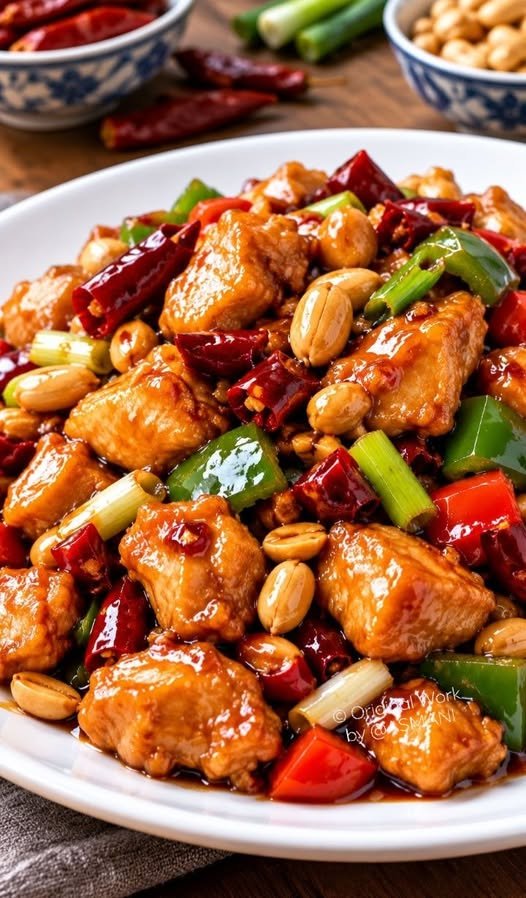
Kung Pao Chicken is a classic Chinese-inspired stir-fry featuring tender pieces of chicken, crunchy peanuts, dried red chilies, and a savory, slightly sweet sauce with a delicious balance of heat and tanginess. Every bite combines juicy chicken with crisp vegetables and a glossy sauce that makes this dish irresistible served over freshly steamed rice.
Popular in Chinese restaurants around the world, Kung Pao Chicken is especially known for its bold flavors and quick cooking method. The chicken is marinated briefly, stir-fried until golden, and tossed with garlic, ginger, soy sauce, vinegar, and a touch of sweetness. Peanuts add a satisfying crunch, while dried chilies provide the signature spicy kick.
The best part is that you can prepare this restaurant-style favorite at home in approximately 30 minutes. You do not need complicated equipment or hard-to-find ingredients to make a delicious version in your own kitchen.
Whether you are planning a quick weeknight dinner or craving homemade Chinese-inspired takeout, this Kung Pao Chicken recipe delivers plenty of flavor with simple preparation.
Why You’ll Love This Kung Pao Chicken Recipe
- Bold, balanced flavors: The sauce combines savory, sweet, tangy, and spicy notes.
- Tender chicken: A quick marinade helps keep the chicken juicy during stir-frying.
- Crunchy peanuts: Roasted peanuts add texture and a nutty flavor.
- Quick preparation: The dish cooks quickly once the ingredients are prepared.
- Easy to customize: Adjust the chili level and vegetables to suit your taste.
- Perfect for meal planning: Serve it with rice, noodles, or steamed vegetables for a complete meal.
What Is Kung Pao Chicken?
Kung Pao Chicken is a Sichuan-style Chinese dish traditionally made with diced chicken, dried chilies, Sichuan peppercorns, peanuts, and a flavorful sauce. It is associated with the Sichuan region of China, where bold seasonings and the distinctive numbing sensation of Sichuan peppercorns are characteristic of many dishes.
Restaurant versions outside China often adapt the traditional recipe to include more vegetables, a sweeter sauce, or ingredients that are easier to find locally.
This homemade version takes inspiration from the classic dish while keeping the ingredients accessible. It delivers a savory, slightly sweet sauce with adjustable heat and plenty of peanut crunch.
Recipe Information
- Preparation time: 15 minutes
- Cooking time: 15 minutes
- Total time: 30 minutes
- Servings: 4
- Cuisine: Chinese-inspired
- Course: Main course
- Cooking method: Stir-frying
- Difficulty: Easy
Ingredients for Kung Pao Chicken
For the Chicken
- 1 pound (450 g) boneless, skinless chicken thighs or chicken breasts, cut into bite-sized cubes
- 1 tablespoon soy sauce
- 1 tablespoon cornstarch
- 1 teaspoon rice vinegar or Shaoxing cooking wine
- 1 teaspoon neutral cooking oil
- ¼ teaspoon black pepper
For the Kung Pao Sauce
- 3 tablespoons soy sauce
- 1½ tablespoons rice vinegar
- 1 tablespoon hoisin sauce
- 1 tablespoon water
- 1 tablespoon brown sugar
- 1 teaspoon sesame oil
- 1 teaspoon cornstarch
- 1 teaspoon chili garlic sauce, optional
For the Stir-Fry
- 2 tablespoons neutral cooking oil
- 3 garlic cloves, finely minced
- 1 tablespoon fresh ginger, finely minced
- 6–10 dried red chilies, adjusted to taste
- 1 small red bell pepper, diced
- 1 small green bell pepper, diced
- ½ cup roasted unsalted peanuts
- 3 spring onions, sliced
- ½ teaspoon Sichuan peppercorns, lightly crushed, optional
Ingredient notes: Chicken thighs are particularly forgiving and tend to remain juicy, while chicken breast provides a leaner option. Sichuan peppercorns add a distinctive citrusy, tingling sensation, but you can omit them if they are unavailable. Dried chilies provide heat, so reduce the quantity if you prefer a milder dish.
How to Make Kung Pao Chicken
Step 1: Prepare and Marinate the Chicken
Cut the chicken into evenly sized pieces so they cook at a similar rate.
Place the chicken in a bowl and add 1 tablespoon soy sauce, 1 tablespoon cornstarch, 1 teaspoon rice vinegar or Shaoxing cooking wine, 1 teaspoon oil, and the black pepper.
Mix thoroughly until the chicken is coated. Let it marinate for 10–15 minutes while you prepare the other ingredients.
The cornstarch helps create a light coating on the chicken and encourages the sauce to cling to the pieces.
Step 2: Mix the Sauce
In a small bowl, combine the soy sauce, rice vinegar, hoisin sauce, water, brown sugar, sesame oil, cornstarch, and chili garlic sauce if using.
Whisk until the sugar dissolves and the cornstarch is evenly distributed.
Set the sauce aside. Stir it again just before adding it to the pan because cornstarch settles at the bottom.
Step 3: Prepare the Aromatics and Vegetables
Mince the garlic and ginger. Dice the bell peppers and slice the spring onions.
If using Sichuan peppercorns, crush them lightly to release their aroma.
Measure out the peanuts and dried chilies before cooking. Stir-frying happens quickly, so preparing everything in advance helps prevent the garlic and spices from burning.
Step 4: Sear the Chicken
Heat 1 tablespoon of cooking oil in a large wok or skillet over medium-high heat.
Add half the chicken in a single layer. Cook for approximately 3–4 minutes, turning occasionally, until the pieces develop light golden color and are nearly cooked through.
Transfer the chicken to a clean plate and repeat with the remaining chicken, adding a little more oil if necessary.
Avoid overcrowding the pan. Cooking in batches helps the chicken brown instead of releasing too much moisture and steaming.
Return the chicken to the pan later to finish cooking in the sauce. For food safety, chicken should reach an internal temperature of 165°F (74°C).
Step 5: Fry the Chilies and Aromatics
Reduce the heat slightly and add the remaining cooking oil if needed.
Add the dried red chilies and crushed Sichuan peppercorns, if using. Stir for approximately 20–30 seconds until fragrant.
Next, add the garlic and ginger. Cook for another 20–30 seconds, stirring constantly.
Be careful not to burn the garlic. If the pan becomes excessively hot, lower the heat before continuing.
Step 6: Add the Bell Peppers
Add the diced red and green bell peppers to the pan.
Stir-fry for approximately 2–3 minutes, keeping them slightly crisp. The peppers should soften a little while retaining enough texture to contrast with the tender chicken.
If you prefer softer vegetables, cook them for another minute or two.
Step 7: Combine the Chicken and Sauce
Return the chicken to the wok and toss it with the vegetables and aromatics.
Give the prepared sauce another stir, then pour it into the pan.
Stir continuously as the sauce heats and thickens. Within approximately 1–2 minutes, it should become glossy and coat the chicken evenly.
If the sauce becomes too thick, add 1 tablespoon of water at a time until you reach your preferred consistency. If it is too thin, allow it to simmer briefly while stirring.
Ensure the chicken is fully cooked before serving.
Step 8: Add the Peanuts and Spring Onions
Add the roasted peanuts and most of the sliced spring onions.
Toss everything together for approximately 30–60 seconds so the peanuts become coated in the sauce without losing too much crunch.
Taste the dish and adjust the flavor if needed. Add a little vinegar for more tanginess, a small amount of sugar for sweetness, or additional chili sauce for more heat.
Step 9: Serve Hot
Transfer the Kung Pao Chicken to a serving dish and garnish with the remaining spring onions.
Serve immediately over steamed white rice, brown rice, or noodles. The savory sauce is especially delicious when it mixes with warm rice.
For an attractive presentation, sprinkle a few extra peanuts over the top and arrange the red and green peppers evenly throughout the dish.
Tips for the Best Kung Pao Chicken
Cut the Chicken into Uniform Pieces
Similar-sized pieces cook more evenly and are easier to eat. Bite-sized cubes also allow the sauce to coat each piece properly.
Prepare Everything Before Heating the Wok
Garlic, ginger, chilies, and sauce can cook quickly. Have all ingredients ready before starting the stir-fry to avoid burning the aromatics.
Use High Heat Carefully
A hot pan helps develop color and flavor. However, the pan should not be so hot that the garlic, dried chilies, or sauce burn.
Cook the Chicken in Batches
Crowding the pan lowers its temperature and causes the chicken to release moisture. Two smaller batches generally produce better browning than one overloaded pan.
Balance the Sauce
A good Kung Pao sauce should taste savory, tangy, lightly sweet, and spicy rather than overwhelmingly salty or sugary. Adjust the vinegar, sugar, and chili gradually.
Add Peanuts Near the End
Adding peanuts at the end helps preserve their crunchy texture. Roasted peanuts are particularly convenient because they already have a developed nutty flavor.
Adjust the Chili Level
For a milder dish, use fewer dried chilies and omit the chili garlic sauce. For extra heat, add a little more chili sauce or crushed dried chili.
Delicious Variations
Kung Pao Chicken with Cashews
Replace the peanuts with roasted cashews for a slightly buttery flavor. Cashews are a delicious alternative, although the result will differ from the classic version.
Kung Pao Chicken with Broccoli
Add 1–2 cups of small broccoli florets. Blanch them briefly or stir-fry them before adding the sauce so they become tender without losing all their texture.
Extra-Spicy Kung Pao Chicken
Increase the dried chilies and add a little chili garlic sauce. If you enjoy the traditional Sichuan flavor, include Sichuan peppercorns for their characteristic tingling sensation.
Honey Kung Pao Chicken
Replace the brown sugar with honey for a slightly different sweetness. Start with a smaller quantity and adjust to taste, as honey can make the sauce sweeter and thicker.
Vegetable Kung Pao Stir-Fry
Replace the chicken with firm tofu or a combination of mushrooms, bell peppers, zucchini, and broccoli. Press the tofu before cooking and sear it until golden for better texture.
Kung Pao Chicken with Noodles
Cook noodles separately, drain them, and toss them with a little of the prepared sauce. Serve the chicken over the noodles or combine everything in the wok for a complete one-pan-style meal.
What to Serve with Kung Pao Chicken
Kung Pao Chicken has a bold sauce, so simple side dishes work particularly well.
- Steamed jasmine rice: A classic pairing that absorbs the savory sauce.
- Brown rice: A whole-grain option with a slightly nutty flavor.
- Egg fried rice: Adds extra flavor for a restaurant-style dinner.
- Stir-fried noodles: A satisfying alternative to rice.
- Steamed broccoli: Provides a fresh vegetable side.
- Cucumber salad: A cool, refreshing contrast to the spicy chicken.
- Steamed bok choy: Adds a mild, tender vegetable component.
For a balanced meal, serve one portion of Kung Pao Chicken with rice and a generous serving of vegetables.
How to Store Leftover Kung Pao Chicken
Refrigeration
Allow leftovers to cool slightly and place them in an airtight container. Refrigerate within two hours of cooking.
Store at 40°F (4°C) or below and consume within 3–4 days. Keep the rice in a separate container if possible, and refrigerate it promptly.
Freezing
Kung Pao Chicken can be frozen in a freezer-safe container for up to 2–3 months for best quality.
The bell peppers may soften after thawing, and the peanuts may lose some crunch. If you are preparing the dish specifically for freezing, consider adding fresh peanuts after reheating.
Thaw frozen leftovers in the refrigerator before reheating when possible.
Reheating on the Stovetop
Place the chicken in a skillet over medium-low heat with 1–2 tablespoons of water. Stir occasionally until hot throughout.
Reheat leftovers to an internal temperature of 165°F (74°C). Add fresh spring onions or peanuts after reheating for a fresher taste and better texture.
Reheating in the Microwave
Transfer a portion to a microwave-safe dish and cover loosely. Heat in short intervals, stirring between each interval, until steaming hot throughout and reaching 165°F (74°C).
Avoid reheating the same portion repeatedly.
Frequently Asked Questions
Is Kung Pao Chicken very spicy?
Traditional Sichuan-style Kung Pao Chicken can be quite spicy, but the heat varies by recipe. This version allows you to control the spice level by adjusting the dried chilies and chili garlic sauce.
Can I make Kung Pao Chicken without peanuts?
Yes. You can omit the peanuts or replace them with roasted cashews if you do not have a peanut allergy. If cooking for someone with a peanut allergy, check all ingredient labels and prevent cross-contact with peanuts and peanut-containing products.
Can I use chicken breast instead of chicken thighs?
Absolutely. Chicken breast works well and is leaner, but it can dry out if overcooked. Cut it into evenly sized pieces, cook it in batches, and return it to the sauce only long enough to finish cooking.
What makes Kung Pao Chicken sauce thick?
Cornstarch thickens the sauce when heated. The sauce should become glossy and cling to the chicken. If it is too thick, add a little water; if it is too thin, let it simmer briefly while stirring.
Can I make Kung Pao Chicken without hoisin sauce?
Yes. Hoisin contributes sweetness and savory depth, but you can omit it and adjust the soy sauce, vinegar, and sugar to taste. The final flavor will be slightly different.
What is the difference between Kung Pao Chicken and General Tso’s Chicken?
Kung Pao Chicken traditionally features diced chicken, chilies, peanuts, and a savory, tangy sauce. General Tso’s Chicken is often battered and fried, then coated in a sweeter, thicker sauce. Recipes vary, particularly outside China.
Can I prepare Kung Pao Chicken ahead of time?
You can chop the vegetables, prepare the sauce, and marinate the chicken in the refrigerator for a short period before cooking. For the best texture, stir-fry the chicken and assemble the dish close to serving time.
Is Kung Pao Chicken healthy?
It can be part of a balanced diet. Chicken provides protein, vegetables supply fiber and micronutrients, and peanuts provide healthy unsaturated fats. Sodium and sugar levels depend on the sauce ingredients and quantities. Using reduced-sodium soy sauce and serving it with vegetables can help adjust the meal to your preferences.
Approximate Nutrition Information
The following estimates are for one serving of Kung Pao Chicken, assuming the recipe makes four servings and does not include rice or noodles.
- Calories: 350–450
- Protein: 30–38 g
- Carbohydrates: 18–25 g
- Fat: 15–23 g
- Saturated fat: 2–4 g
- Fiber: 2–4 g
- Sugar: 7–12 g
- Sodium: 700–1,200 mg
Actual values depend on the chicken cut, oil absorbed during cooking, peanut quantity, and the brands of soy and hoisin sauces used. Serving the dish with rice or noodles will increase the total calories and carbohydrates.
Final Thoughts
Kung Pao Chicken is a flavorful Chinese-inspired stir-fry that brings together tender chicken, crunchy peanuts, crisp bell peppers, dried chilies, and a glossy sauce. Its combination of savory, sweet, tangy, and spicy flavors makes it a satisfying alternative to takeout.
The secret to making it at home is to prepare the ingredients in advance, cook the chicken in batches, avoid burning the garlic and chilies, and add the sauce only when everything is ready to come together.
Serve it over steamed rice or noodles, adjust the heat to your liking, and finish with fresh spring onions and roasted peanuts. With a little preparation and less than half an hour of cooking, you can enjoy a delicious homemade Kung Pao Chicken dinner any day of the week.
SEO Details
SEO Title: Kung Pao Chicken Recipe – Easy Chinese-Style Chicken Stir-Fry
Focus Keyphrase: Kung Pao Chicken
URL Slug: kung-pao-chicken
Meta Description: Make delicious Kung Pao Chicken at home with tender chicken, crunchy peanuts, dried chilies, bell peppers, and a savory, sweet, and spicy sauce.
Suggested Tags: Kung Pao Chicken, Chinese Chicken Recipe, Chicken Stir-Fry, Easy Asian Dinner, Spicy Chicken Recipe, Homemade Takeout, Chicken with Peanuts, Quick Dinner Recipes