Your feet can sometimes reveal changes in your health that are easy to overlook. Numbness, burning, swelling, unusual color changes, slow-healing sores, or persistent pain may have many possible causes — from minor problems and footwear issues to nerve, circulation, or metabolic conditions.
One important example is diabetes. High blood sugar over time can damage nerves and affect blood flow, sometimes causing numbness, tingling, burning sensations, and slow-healing foot wounds. However, foot symptoms alone cannot diagnose diabetes or another disease.
Here are 9 foot symptoms worth paying attention to.
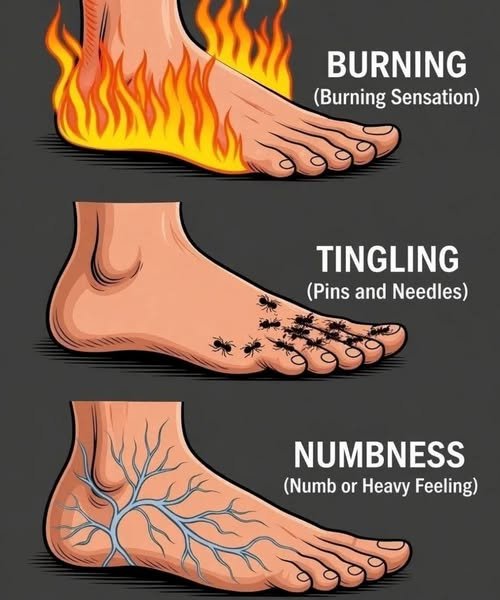
1. Persistent Numbness or Loss of Feeling
If your toes or feet frequently feel numb, unusually insensitive, or as though they are “asleep,” don’t automatically dismiss it.
Peripheral neuropathy can cause reduced sensation in the feet, and diabetes is one of its common causes. Nerve problems can also result from other medical conditions, injuries, infections, toxins, and nutritional problems.
Reduced sensation can be particularly concerning because you may not notice a blister, cut, burn, or other injury.
2. Burning or Tingling Feet
A burning, prickling, or “pins and needles” sensation in the feet can sometimes indicate nerve irritation or damage.
Diabetic peripheral neuropathy commonly produces burning, tingling, sharp pain, or increased sensitivity, often beginning in the feet and sometimes becoming worse at night.
Persistent or worsening symptoms deserve medical evaluation rather than being treated as simply a normal part of aging.
3. Foot Pain Without an Obvious Injury
Occasional foot pain can come from overuse, uncomfortable shoes, exercise, or a minor injury.
But persistent burning, stabbing, throbbing, or unexplained pain can have other causes, including nerve problems. Mayo Clinic recommends medical evaluation when burning pain, numbness, or tingling persists, particularly when it affects much of the bottom of the foot.
4. Swollen Feet or Ankles
Swelling can occur after standing or sitting for long periods, during hot weather, or after certain injuries.
However, persistent or unexplained swelling should not be ignored. It can have many possible causes, including problems involving circulation, the heart, kidneys, liver, veins, medications, or other conditions.
If swelling is severe, sudden, painful, or accompanied by other concerning symptoms, seek medical attention promptly.
5. Cuts or Sores That Heal Slowly
A small cut normally begins improving relatively quickly.
If a foot wound doesn’t seem to heal, especially if you have diabetes, it deserves attention. High blood sugar can impair blood flow and the body’s ability to heal, while nerve damage can make injuries harder to notice.
An infected or non-healing foot wound should be assessed by a healthcare professional.
6. Unusual Changes in Skin Color
Pay attention if your feet suddenly look noticeably different from usual — for example, unusually pale, red, purple, brown, or darker.
Color changes can have several explanations, ranging from temperature and circulation changes to inflammation, infection, injury, or vascular problems.
A new color change accompanied by pain, coldness, swelling, numbness, or weakness should receive prompt medical attention.
7. Cracks, Blisters, or Repeated Skin Problems
Dry, cracked skin, blisters, calluses, or small wounds may seem insignificant.
But if you have reduced sensation, you might continue walking on an injury without realizing how serious it has become. People with diabetes are particularly encouraged to inspect their feet regularly for cuts, blisters, redness, swelling, and other changes.
Keeping feet clean, dry, moisturized, and protected with properly fitting footwear can help reduce preventable problems.
8. Weakness or Difficulty Walking
Foot or leg weakness can sometimes accompany nerve problems.
Peripheral neuropathy may cause muscle weakness, balance difficulties, and reduced coordination.
If weakness develops suddenly, is severe, or affects your ability to walk normally, seek medical care promptly.
9. A Foot That Becomes Red, Warm, and Swollen
A red, warm, swollen foot can sometimes indicate inflammation or infection.
For people with diabetes and nerve damage, certain serious foot and joint problems can occur with surprisingly little pain because sensation may be reduced. One example is Charcot joint, which can cause warmth, redness, swelling, instability, or deformity.
Don’t ignore a foot that suddenly looks significantly different from the other one.
Could These Symptoms Mean Diabetes?
Sometimes — but not necessarily.
Diabetes can cause nerve damage and circulation problems that affect the feet. Possible diabetes-related symptoms include numbness or tingling in the feet, burning pain, slow-healing sores, increased thirst, frequent urination, unusual tiredness, blurred vision, and unexplained weight loss.
But the same foot symptoms can occur for many other reasons.
If you have several of these symptoms or they are persistent, a healthcare professional can determine whether you need tests such as blood glucose or an A1C test and whether your nerves, circulation, skin, or joints need examination.
When Should You Seek Medical Help?
Don’t wait for symptoms to become severe.
Seek prompt medical attention if you have:
- A foot wound that is infected or isn’t healing
- Severe or rapidly increasing swelling
- Significant redness, warmth, or tenderness
- Severe unexplained foot pain
- New weakness or significant loss of sensation
- A major change in foot color or temperature
- Difficulty walking or putting weight on the foot
- A deep wound, pus, or other signs of infection
Mayo Clinic specifically advises people with diabetes to seek medical attention for concerning wounds, including wounds that don’t heal, are deep, swollen, warm, or have significant color changes.
Simple Foot-Care Habits
You don’t need complicated routines to protect your feet.
Check your feet regularly for:
- Cuts and blisters
- Redness or swelling
- Cracked skin
- Changes in color
- New calluses
- Sores
- Ingrown toenails
- Areas of reduced sensation
Wash your feet with lukewarm water, dry them carefully — especially between the toes — and wear comfortable, properly fitting footwear. If you have diabetes or reduced sensation, avoid walking barefoot because small injuries may go unnoticed.
The Bottom Line
Your feet don’t provide a diagnosis, but persistent changes shouldn’t be ignored.
Numbness, burning, tingling, swelling, unusual color changes, slow-healing wounds, persistent pain, weakness, and redness or warmth can sometimes signal an underlying problem. Diabetes is one possibility, but there are many others.
The safest approach is to pay attention to persistent or unusual changes and have them evaluated rather than assuming the worst — or ignoring them completely.
SEO Details
SEO Title: 9 Foot Symptoms You Should Never Ignore: What They May Mean
Meta Description: Discover 9 unusual foot symptoms, including numbness, burning, swelling, color changes, and slow-healing sores, and learn when they may need medical attention.
Focus Keyword: foot symptoms you shouldn’t ignore
Slug: 9-foot-symptoms-you-shouldnt-ignore
Category: Health & Wellness
Tags: foot health, foot symptoms, diabetes symptoms, diabetic neuropathy, numb feet, burning feet, swollen feet, foot pain, healthy feet, health warning signs