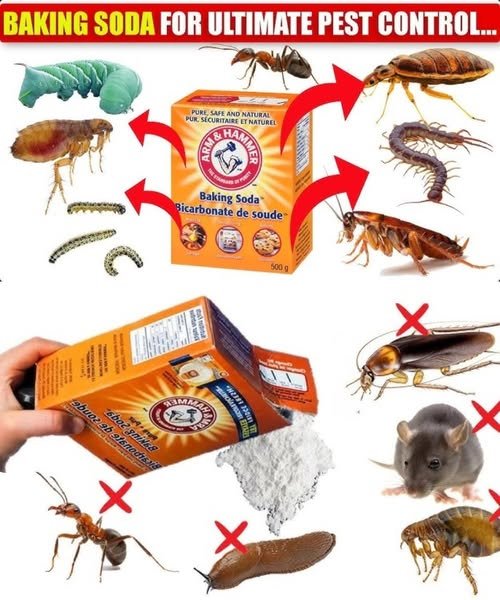
Baking soda is one of the most common ingredients found in household kitchens, and many people also use it for cleaning, deodorizing, and simple home-care tasks. It is sometimes recommended as a natural way to deal with household pests such as cockroaches, fleas, ants, moths, mice, rats, and spiders.
But there is an important distinction: baking soda should not be considered a guaranteed or complete pest-control treatment. Its effectiveness can vary greatly depending on the pest, the environment, and how it is used. For serious infestations, professional pest control and proven pest-management methods are usually more reliable.
That said, baking soda can be useful as part of a broader strategy—especially when combined with cleaning, sealing entry points, removing food sources, and reducing moisture.
Can Baking Soda Really Get Rid of Pests?
Baking soda is often suggested as a pest-control ingredient because it is inexpensive, readily available, and relatively easy to use around the home.
However, evidence for baking soda alone as an effective treatment varies considerably by pest. A homemade baking-soda mixture may not eliminate an established infestation, and some pests are unlikely to be significantly affected by it.
The most important principle is to identify the pest first and then use an appropriate control method.
1. Baking Soda for Cockroaches
Cockroaches are attracted to food crumbs, grease, moisture, and accessible water. Simply placing baking soda around your home is unlikely to solve a significant cockroach infestation.
If you want to use baking soda as part of your cleaning and prevention routine, focus on areas where cockroaches are likely to travel.
How to Use It
- Clean kitchen counters, floors, and cabinets thoroughly.
- Remove food crumbs and grease.
- Fix leaking faucets or pipes.
- Place a small amount of baking soda in dry, inaccessible areas where children and pets cannot reach it.
- Keep food stored in tightly sealed containers.
- Seal cracks and gaps around plumbing, cabinets, and walls.
For an established infestation, commercial cockroach baits and integrated pest management are generally more dependable than baking soda alone.
2. Baking Soda for Fleas
Fleas can be particularly difficult to control because adults may live on pets while immature stages can remain in carpets, bedding, furniture, and other areas of the home.
Baking soda is sometimes sprinkled on carpets as a flea remedy, but it should not be relied upon as a proven flea treatment.
A Better Approach
If fleas are present:
- Treat pets with a veterinarian-recommended flea product.
- Wash pet bedding regularly using hot water when appropriate.
- Vacuum carpets, rugs, upholstery, and cracks frequently.
- Empty the vacuum cleaner or dispose of the vacuum contents appropriately.
- Clean areas where pets regularly sleep.
- Continue treatment as recommended because flea life stages can persist in the environment.
Baking soda can help deodorize carpets, but deodorizing is not the same as eliminating a flea infestation.
3. Baking Soda for Ants
Ants are usually best controlled by finding and eliminating the source rather than simply treating the ants you can see.
Baking soda may be used around certain areas of the home as part of a cleaning routine, but it is not a reliable substitute for ant bait.
What Works Better
Start by:
- Wiping up food and drink spills immediately.
- Keeping sugar, honey, and other sweet foods sealed.
- Cleaning countertops regularly.
- Emptying garbage frequently.
- Sealing cracks around windows and doors.
- Looking for trails leading to entry points.
Ant baits can be more effective because worker ants may carry the bait back to the colony.
4. Baking Soda for Moths
If you are dealing with clothes moths, the first step is identifying and removing the source.
Moth larvae—not adult moths—are responsible for damaging many natural-fiber fabrics.
Protect Your Clothing
- Empty affected closets and drawers.
- Wash or appropriately clean susceptible clothing.
- Vacuum closets, shelves, carpet edges, and cracks.
- Store clean clothes in sealed containers or garment bags.
- Remove heavily infested items when appropriate.
- Consider pheromone traps designed for clothes moth monitoring.
Baking soda can help absorb odors in storage areas, but it should not be considered a reliable moth-killing treatment.
5. Baking Soda for Mice and Rats
This is where homemade baking-soda remedies are especially important to approach cautiously.
You may see online recipes claiming that baking soda can kill mice or rats when mixed with food. Do not rely on such mixtures as a humane or dependable rodent-control method.
Rodents can also pose health risks through droppings, urine, contaminated food, and parasites.
Better Ways to Control Rodents
Focus on prevention:
- Seal holes and gaps around the building.
- Keep food in secure containers.
- Clean food crumbs promptly.
- Keep garbage containers closed.
- Remove clutter where rodents can hide.
- Repair gaps around pipes and utility openings.
- Use appropriate traps or contact a qualified pest-control professional.
If you find rodent droppings, avoid sweeping or vacuuming them dry. Follow appropriate cleaning and disinfection practices to reduce the risk of spreading contaminated dust.
6. Baking Soda for Spiders
Spiders generally enter homes looking for shelter and, in many cases, prey such as insects.
Baking soda is not a dependable spider pesticide.
Instead, make your home less attractive to spiders by reducing the insects they feed on and limiting access points.
Try These Steps
- Remove webs regularly.
- Reduce clutter in garages, basements, and storage areas.
- Seal cracks around windows and doors.
- Install or repair screens.
- Keep outdoor lights from unnecessarily attracting insects near entrances.
- Reduce other household insect problems.
If you regularly find large numbers of spiders, identifying the underlying insect problem can be more useful than treating the spiders themselves.
A Simple Baking Soda Cleaning Spray
Although baking soda is not a universal pesticide, it can be useful for cleaning areas where pests may be attracted to food residue.
Ingredients
- 1 tablespoon baking soda
- 2 cups warm water
- 1 teaspoon mild dish soap
Directions
Combine the ingredients in a spray bottle and shake gently.
Use the solution to clean appropriate washable surfaces such as countertops and other household areas. Always test a small, inconspicuous area first and follow the care instructions for the surface.
This cleaner can help remove food residue and odors that may contribute to pest problems.
Important: Never mix baking soda with bleach, ammonia, or other cleaning chemicals unless the product instructions specifically say the combination is safe.
The Most Important Part of Natural Pest Control
Whether you are dealing with cockroaches, ants, moths, fleas, rodents, or spiders, eliminating the conditions that attract pests is often more important than placing a household ingredient around the room.
Keep Food Sealed
Store flour, cereal, sugar, pet food, snacks, and other food products in tightly sealed containers.
Reduce Moisture
Repair leaking pipes and faucets and avoid leaving standing water around the home.
Clean Regularly
Pay special attention to areas beneath appliances, behind furniture, inside cabinets, and around garbage containers.
Seal Entry Points
Inspect gaps around doors, windows, pipes, vents, and foundations.
Reduce Clutter
Cardboard boxes, piles of fabric, and undisturbed storage areas can provide hiding places for insects and rodents.
Baking Soda vs. Proven Pest-Control Methods
| Pest | Baking Soda | More Reliable Approach |
|---|---|---|
| Cockroaches | Limited/unproven as a standalone treatment | Baits, sanitation, sealing gaps, professional control |
| Fleas | Useful mainly for deodorizing | Pet treatment, vacuuming, laundering, environmental control |
| Ants | Not reliably effective alone | Ant baits, sanitation, sealing entry points |
| Moths | Can help with odors | Cleaning, laundering, sealed storage, monitoring traps |
| Mice/Rats | Not a dependable solution | Exclusion, appropriate traps, professional control |
| Spiders | Not a reliable pesticide | Reduce insects, remove webs, seal entry points |
Safety Tips When Using Baking Soda Around the Home
Baking soda is commonly used in households, but “natural” does not automatically mean risk-free.
Keep homemade mixtures and loose powders away from children and pets.
Do not intentionally feed baking soda to pets or wildlife.
Avoid creating airborne dust that could be inhaled.
Never place homemade pest mixtures in locations where children, pets, or other animals could accidentally consume them.
If you use a commercial pesticide, always read and follow its label instructions.
When Should You Call a Professional?
Consider professional pest control when:
- You repeatedly see cockroaches during the day.
- Ant colonies keep returning despite sanitation and baiting.
- Fleas continue appearing after treating pets and the home.
- You find signs of mice or rats.
- You suspect termites or another structural pest.
- You find a potentially dangerous spider species.
- The infestation is spreading quickly.
- DIY methods have not worked.
Professional pest control can identify the species, locate the source, and recommend a treatment appropriate for the specific pest.
Final Thoughts
Baking soda is inexpensive and useful around the house, but it is important not to treat it as a miracle pest killer. There is no single baking-soda recipe that reliably eliminates cockroaches, fleas, ants, moths, mice, rats, and spiders.
The most effective household strategy is usually a combination of good sanitation, proper food storage, moisture control, sealing entry points, regular cleaning, and pest-specific treatments.
Use baking soda where it genuinely helps—such as cleaning and odor control—and choose proven pest-management methods when you need to eliminate an infestation.
SEO Details
SEO Title: How to Use Baking Soda for Cockroaches, Ants, Fleas & Other Pests
Meta Description: Learn how baking soda can be used safely around the home for cleaning and pest prevention, plus better methods for dealing with cockroaches, fleas, ants, moths, mice, rats, and spiders.
Focus Keyword: baking soda for pests
Secondary Keywords: baking soda for cockroaches, baking soda for ants, baking soda for fleas, baking soda for moths, baking soda for mice, natural pest control, home pest prevention
Suggested URL Slug: baking-soda-for-pests
Excerpt: Baking soda is a popular household remedy for pests, but does it really work? Learn what it can and cannot do for cockroaches, fleas, ants, moths, mice, rats, and spiders—and discover safer, more reliable pest-control strategies.