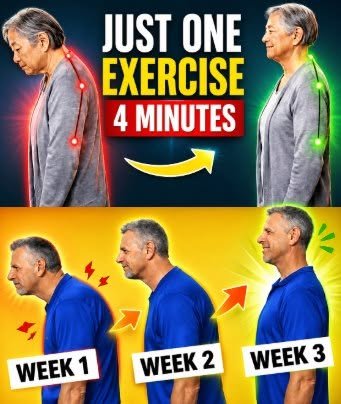
How to Improve Forward Head Posture After 60 With a Gentle 4-Minute Routine
If your head seems to sit farther forward than it used to, you’re not alone. Forward head posture can become more noticeable with age, especially when we spend long periods looking down at phones, reading, watching television, or sitting at a desk.
The good news is that gentle movement and strengthening exercises can help improve postural awareness, neck and upper-back mobility, and muscle endurance.
But there is an important point to remember: you cannot reliably “fix” forward head posture permanently in just four minutes. A short routine can be a useful starting point, but lasting improvement usually comes from practicing good movement habits consistently.
The following gentle routine takes about four minutes and is designed to be easy to incorporate into a daily routine.
Before You Start
If you’re over 60, don’t force your neck into extreme positions.
Move slowly and comfortably. You should feel gentle movement or muscle work, not sharp pain.
Stop if you experience severe pain, dizziness, numbness, weakness, vision changes, or unusual symptoms.
If you have a diagnosed neck or spinal condition, recent injury, osteoporosis, or significant balance problems, speak with a healthcare professional or physical therapist before starting a new exercise routine.
The 4-Minute Gentle Posture Routine
You can perform these exercises while sitting or standing, depending on your balance and comfort.
1. Chin Tucks — 1 Minute
Chin tucks are one of the simplest ways to practice bringing the head back into a more neutral position.
How to Do It
- Sit upright with your shoulders relaxed.
- Look straight ahead.
- Without looking up or down, gently draw your chin backward.
- Imagine you’re making a small “double chin.”
- Hold for about 3–5 seconds.
- Relax.
- Repeat slowly.
Don’t push your head backward aggressively.
The movement should be small and controlled.
Why It Helps
This exercise encourages awareness of head position and gently activates muscles involved in supporting the neck.
The goal isn’t to force your neck into a perfectly straight position. It’s to practice a more comfortable, neutral alignment.
2. Shoulder Blade Squeezes — 1 Minute
Forward head posture often occurs alongside rounded shoulders and a forward upper-body position.
Shoulder blade exercises can help you become more aware of your upper-back position.
How to Do It
- Sit or stand tall.
- Keep your arms relaxed by your sides.
- Gently draw your shoulder blades slightly backward and downward.
- Hold for 3–5 seconds.
- Relax completely.
- Repeat several times.
Avoid shrugging your shoulders toward your ears.
The movement should feel gentle rather than forceful.
3. Gentle Chest Stretch — 1 Minute
Tightness across the chest can contribute to a rounded shoulder position.
How to Do It
- Sit or stand comfortably.
- Place your hands behind your back if this is comfortable.
- Gently draw your shoulders back.
- Lift the chest slightly.
- Hold the stretch for approximately 15–20 seconds.
- Relax.
- Repeat two or three times.
Don’t force your arms backward.
If placing your hands behind your back is uncomfortable, simply place your forearms against a doorway and gently lean forward instead.
4. Wall Posture Reset — 1 Minute
This final exercise combines awareness of the head, shoulders, and upper body.
How to Do It
- Stand with your back against a wall.
- Keep your feet comfortably positioned.
- Let your shoulders relax.
- Gently bring your head toward a neutral position without forcing it against the wall.
- Take slow, comfortable breaths.
- Hold the position for several seconds.
- Relax and repeat.
Not everyone’s head will naturally touch the wall. Don’t force it.
The goal is simply to become familiar with a comfortable upright position.
Why Posture Can Change With Age
Forward head posture isn’t necessarily caused by getting older alone.
Several factors can contribute, including:
- Reduced upper-back strength
- Reduced neck muscle endurance
- Prolonged sitting
- Frequent phone use
- Reading in a hunched position
- Limited physical activity
- Joint stiffness
- Changes in spinal structure
- Previous injuries
- Poor workstation setup
For some people, structural changes in the spine also become more noticeable with age. Exercise can improve strength, mobility, and function, but it cannot necessarily reverse every structural change.
The Most Important Habit May Be Outside the Exercise Routine
Doing four minutes of exercises once a day can be useful, but your posture is influenced by what you do for the rest of the day.
If you spend several hours sitting with your head bent forward, try changing positions regularly.
For example:
- Raise your phone closer to eye level.
- Keep books at a comfortable reading height.
- Take short movement breaks while sitting.
- Adjust your computer monitor so you aren’t constantly looking downward.
- Avoid staying in one position for long periods.
- Walk regularly throughout the day.
Think of the four-minute routine as a reminder to move and strengthen—not as a magic correction.
How Often Should You Do It?
If the exercises feel comfortable, you can practice this short routine once or twice a day.
Consistency matters more than intensity.
You may also benefit from adding general physical activity and strengthening exercises for the upper back, shoulders, and whole body.
For older adults, maintaining strength, balance, mobility, and overall physical activity is important for independence and everyday function.
When Neck Symptoms Need Medical Attention
Forward head posture itself isn’t necessarily dangerous, but neck symptoms shouldn’t automatically be blamed on posture.
Seek medical advice if you develop:
- Persistent or worsening neck pain
- Pain following a fall or injury
- Numbness or tingling in the arms or hands
- Weakness
- Problems with balance or walking
- Severe headaches that are new or unusual
- Dizziness associated with neck movement
- Loss of coordination
- Pain that consistently interferes with daily activities
A physical therapist can also assess your posture, movement patterns, muscle strength, and mobility and develop an individualized program.
The Bottom Line
A four-minute routine cannot magically reverse forward head posture overnight, especially when age-related structural changes are involved.
However, gentle chin tucks, shoulder blade exercises, chest stretching, and posture awareness can be useful parts of a regular movement routine.
If you’re over 60, the goal shouldn’t be to force your head and neck into an artificially “perfect” position. Instead, focus on comfortable movement, better muscle endurance, regular activity, and habits that make good posture easier throughout the day.
Small amounts of movement practiced consistently can be much more valuable than an intense routine performed once and forgotten.