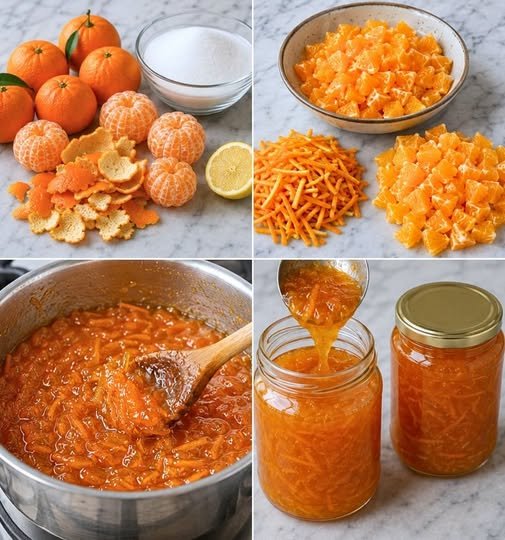
Homemade Mandarin Marmalade
Homemade Mandarin Marmalade is a bright, fragrant, and delicious preserve made with fresh mandarins, sugar, and lemon juice. It has a beautiful golden-orange color, a sweet citrus flavor, and just enough bitterness from the peel to give it that classic marmalade character.
Unlike many store-bought versions, homemade mandarin marmalade lets you control the sweetness and texture. You can make it chunky with visible pieces of peel or smooth and spreadable, depending on your preference.
It’s wonderful on toast, biscuits, pancakes, waffles, scones, and even as a glaze for cakes and roasted meats.
Why You’ll Love This Mandarin Marmalade
- Fresh and naturally citrusy
- Beautiful golden color
- Sweet with a pleasant citrus bitterness
- Easy to prepare
- Uses simple ingredients
- Perfect for breakfast
- Excellent homemade gift
- Great for preserving seasonal mandarins
Ingredients
- 2 pounds fresh mandarins
- 4 cups granulated sugar
- ½ cup freshly squeezed lemon juice
- 1 cup water
- 1 teaspoon finely grated lemon zest, optional
Optional
- 1 teaspoon vanilla extract
- 1 small cinnamon stick
- 2 tablespoons orange liqueur for an adult version
How to Make Homemade Mandarin Marmalade
Step 1: Prepare the Mandarins
Wash the mandarins thoroughly under cool running water.
Dry them completely.
Because the peel is used in marmalade, it’s important to clean the fruit well.
Peel the mandarins and separate the segments.
Remove as many seeds and thick pieces of white pith as possible.
A small amount of pith is fine and actually contributes to the natural bitterness and helps the marmalade set.
Step 2: Prepare the Peel
Take several of the mandarin peels and cut them into very thin strips.
The amount of peel you use depends on how bitter and textured you want the marmalade to be.
For a milder marmalade, use approximately ½ cup finely sliced peel.
For a stronger traditional marmalade flavor, you can use up to 1 cup.
If the peel tastes particularly bitter, place it in a saucepan, cover it with water, and boil for approximately 5 minutes.
Drain and repeat once more.
This helps soften the peel and reduce excessive bitterness.
Step 3: Chop the Mandarin Segments
Place the peeled mandarin segments on a cutting board.
Roughly chop them.
You can leave some larger pieces for a chunky marmalade or chop them more finely for a smoother consistency.
Remove any remaining seeds.
Step 4: Combine the Ingredients
Place the chopped mandarins, sliced peel, water, and lemon juice into a large heavy-bottomed saucepan.
Stir everything together.
Let the mixture sit for approximately 15–20 minutes.
This allows the citrus juices to combine before cooking.
Step 5: Begin Cooking
Place the saucepan over medium heat.
Bring the mixture to a gentle simmer.
Cook for approximately 15–20 minutes, stirring occasionally.
The mandarin pieces and peel should begin softening.
Step 6: Add the Sugar
Gradually add the granulated sugar.
Stir constantly until the sugar has completely dissolved.
Once dissolved, increase the heat slightly and bring the mixture to a steady boil.
Avoid stirring excessively once the marmalade reaches a strong boil.
Step 7: Cook Until the Marmalade Thickens
Continue boiling for approximately 20–30 minutes.
The exact cooking time will vary depending on the amount of natural pectin in your mandarins and the size of your saucepan.
Stir occasionally to prevent the bottom from scorching.
As the water evaporates, the marmalade will become darker, thicker, and more glossy.
Step 8: Check if the Marmalade Is Ready
There are several ways to test the consistency.
Cold Plate Test
Place a small plate in the freezer for several minutes.
Put a teaspoon of hot marmalade onto the chilled plate.
Return it to the freezer for approximately 1 minute.
Push the marmalade with your fingertip.
If it wrinkles slightly and doesn’t immediately run, the marmalade is ready.
If it remains very liquid, continue cooking for several more minutes and test again.
Spoon Test
Place a small amount on a cold spoon.
Allow it to cool briefly.
If it slowly thickens and holds its shape, it’s ready.
Remember that marmalade becomes significantly thicker as it cools.
Step 9: Add Optional Flavoring
If desired, remove the marmalade from the heat and stir in vanilla extract.
You can also add a small cinnamon stick while cooking for a warmer flavor.
If using orange liqueur, add it after removing the saucepan from the heat.
Don’t add too much liquid because it can affect the final consistency.
Step 10: Prepare the Jars
Wash your jars and lids thoroughly with hot, soapy water.
Rinse well.
For longer storage, sterilize the jars using your preferred safe canning method.
Keep the jars warm until you’re ready to fill them.
Warm jars are less likely to crack when hot marmalade is added.
Step 11: Fill the Jars
Carefully ladle the hot marmalade into the warm jars.
Leave approximately ¼ inch of headspace.
Wipe the rims clean.
Place the lids on the jars and tighten them according to the manufacturer’s instructions.
Allow the jars to cool.
For shelf-stable storage, use a tested water-bath canning procedure appropriate for your altitude and jar size rather than relying only on cooling and sealing.
Step 12: Cool and Set
As the marmalade cools, it will continue to thicken.
Don’t worry if it looks slightly loose while hot.
Allow the jars to cool completely before checking the final consistency.
For the best flavor and texture, let the marmalade rest overnight before serving.
Tips for Perfect Mandarin Marmalade
Choose Fresh, Ripe Mandarins
Choose mandarins that are fragrant, juicy, and free from mold or damaged areas.
Very sweet mandarins produce a sweeter marmalade, while more acidic fruit creates a brighter flavor.
Don’t Remove All the Pith
Some pith contains natural pectin, which helps marmalade set.
Removing every bit can make it harder to achieve the right consistency.
Use Fresh Lemon Juice
Lemon juice provides acidity that balances the sweetness and contributes to proper setting.
Freshly squeezed lemon juice gives the best flavor.
Use a Wide Pan
A wide saucepan allows more liquid to evaporate, which can shorten the cooking time and improve the final texture.
Don’t Overcook
Overcooking can make the marmalade excessively thick and give it a dark, caramelized flavor.
Stop cooking as soon as it passes the setting test.
How to Make Smooth Mandarin Marmalade
If you don’t like pieces of peel or fruit, use an immersion blender after cooking.
Blend carefully until you reach your preferred consistency.
Don’t blend too aggressively because some texture gives marmalade its characteristic appeal.
For an exceptionally smooth spread, strain the cooked mixture through a fine sieve before returning it to the pan for final cooking.
How to Make Chunky Mandarin Marmalade
For a chunky version:
- Keep the mandarin segments in larger pieces.
- Slice the peel into slightly thicker strips.
- Avoid blending.
- Stir gently during cooking.
This creates a beautiful rustic texture with visible pieces of citrus throughout.
Mandarin Marmalade Variations
Mandarin Ginger Marmalade
Add 1–2 tablespoons finely grated fresh ginger during cooking.
The spicy warmth of ginger pairs beautifully with mandarin.
Mandarin Vanilla Marmalade
Add 1 teaspoon vanilla extract after cooking.
This creates a softer, dessert-like citrus flavor.
Mandarin Cinnamon Marmalade
Add one cinnamon stick while the marmalade simmers.
Remove it before filling the jars.
Mandarin Orange Marmalade
Combine mandarins with regular oranges for a more complex citrus flavor.
Mandarin Lemon Marmalade
Add extra lemon zest and juice for a brighter, more tangy preserve.
Ways to Use Mandarin Marmalade
Mandarin marmalade isn’t just for toast.
Toast
Spread it over warm buttered toast for an easy breakfast.
Scones
Serve alongside freshly baked scones and cream.
Pancakes
Warm the marmalade slightly and drizzle it over pancakes or waffles.
Yogurt
Swirl a spoonful into plain Greek yogurt.
Cakes
Use it as a filling between cake layers or spread it over a sponge cake.
Cheesecake
A thin layer of mandarin marmalade makes an excellent cheesecake topping.
Glaze
Warm a small amount and brush it over cakes, pastries, or roasted vegetables.
How to Store Mandarin Marmalade
Once opened, keep the marmalade refrigerated.
Use a clean, dry spoon each time you serve it.
Properly prepared and sealed jars can have a much longer shelf life when processed using an appropriate tested canning method.
For homemade preserves, always inspect the jar before eating. If you notice mold, fermentation, an unusual odor, leaking, or a damaged seal, discard the contents rather than tasting them.
Why Didn’t My Marmalade Set?
Don’t panic if your marmalade is too thin.
You can return it to the saucepan and cook it for several more minutes.
Test it again using the cold-plate method.
Remember that hot marmalade always appears thinner than it will once chilled.
If you’ve already filled the jars and discovered the problem after cooling, you can carefully empty the marmalade back into the saucepan and cook it further.
Why Is My Marmalade Too Thick?
If the marmalade has become too thick, gently reheat it.
Add a small amount of water or fresh mandarin juice.
Stir until the desired consistency is reached.
Don’t add too much liquid at once.
Frequently Asked Questions
Can I make marmalade without the peel?
Yes. You can make a mandarin preserve without peel, but it will have a softer, more jam-like character and less of the classic marmalade flavor.
Do mandarins have enough pectin?
Mandarins generally contain some natural pectin, particularly in the peel and membranes, but the amount varies. Lemon juice and proper cooking help achieve a good set.
Can I reduce the sugar?
You can, but sugar plays an important role in preservation and texture. Reducing it substantially may result in a softer preserve and a shorter storage life.
Why does marmalade taste bitter?
The bitterness mainly comes from the peel and white pith. If you prefer a milder flavor, blanch the peel once or twice before cooking and use less of it.
Can I use bottled lemon juice?
Fresh lemon juice is preferred for flavor. If you’re preserving the marmalade for long-term storage, use an acidity level and tested canning recipe appropriate for safe preservation rather than improvising the acid ratio.
Recipe at a Glance
Recipe: Homemade Mandarin Marmalade
Prep Time: 25 minutes
Cook Time: 40–50 minutes
Total Time: Approximately 1 hour 15 minutes
Yield: Approximately 4–5 cups
Course: Breakfast / Preserve
Method: Stovetop
Main Ingredients: Mandarins, sugar, lemon juice