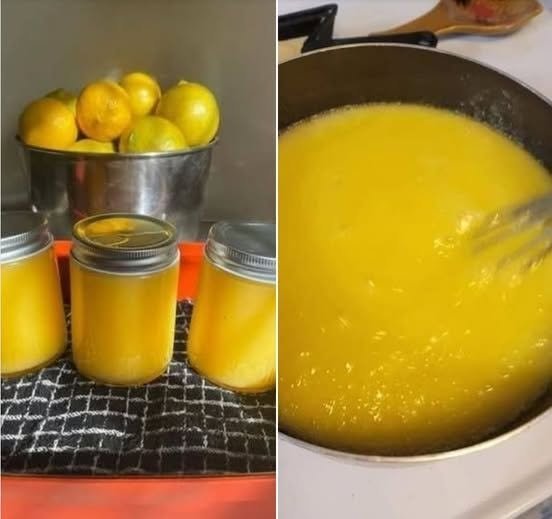
This Homemade Lemon Curd is smooth, creamy, intensely lemony, and surprisingly easy to make. With fresh lemon juice, fragrant lemon zest, eggs, sugar, and butter, it has the perfect balance of sweet and tart flavors.
Lemon curd is one of those versatile recipes that can instantly make simple desserts feel special. Spread it over toast or scones, spoon it into tart shells, layer it into cakes, or swirl it into yogurt and whipped cream.
Once you taste homemade lemon curd, it’s hard to go back to the store-bought version.
Why You’ll Love This Lemon Curd
- Bright, fresh lemon flavor
- Smooth and silky texture
- Rich and creamy without being heavy
- Made with simple ingredients
- Ready in about 15 minutes
- Perfect for desserts and breakfast
- Easy to make ahead
- Keeps well in the refrigerator
Ingredients
- 4 large egg yolks
- 2 large whole eggs
- 1 cup (200 g) granulated sugar
- 3/4 cup (180 ml) freshly squeezed lemon juice
- 1 tablespoon finely grated lemon zest
- 1/2 cup (113 g) unsalted butter, cut into small pieces
- 1/4 teaspoon salt
- 1 teaspoon vanilla extract, optional
For the Best Flavor
Use fresh lemons rather than bottled lemon juice. Fresh juice gives the curd a much brighter and cleaner citrus flavor.
When zesting the lemons, grate only the yellow outer skin and avoid the white pith underneath, which can taste bitter.
How to Make Lemon Curd
Step 1: Prepare the Lemons
Wash and dry the lemons thoroughly.
Finely grate the zest from approximately 2–3 lemons, depending on their size.
Juice enough lemons to produce 3/4 cup of fresh lemon juice.
For a smoother curd, strain the juice through a fine-mesh sieve to remove seeds and excess pulp.
Step 2: Combine the Eggs and Sugar
In a medium saucepan, whisk together the egg yolks, whole eggs, and sugar.
Whisk until the mixture is smooth and slightly lighter in color.
Step 3: Add the Lemon
Add the fresh lemon juice, lemon zest, and salt.
Whisk until everything is thoroughly combined.
Step 4: Cook the Mixture
Place the saucepan over low to medium-low heat.
Cook while stirring constantly with a silicone spatula or wooden spoon.
Make sure to scrape the bottom and corners of the saucepan frequently.
The mixture will gradually thicken.
This usually takes approximately 7–10 minutes.
Do not allow the mixture to boil vigorously, as excessive heat can cause the eggs to scramble.
Step 5: Check for Doneness
The lemon curd is ready when it coats the back of a spoon and leaves a clear line when you run your finger through it.
If using a thermometer, aim for approximately 170–175°F (77–79°C).
The curd will continue to thicken as it cools.
Step 6: Add the Butter
Remove the saucepan from the heat.
Add the butter a few pieces at a time, whisking continuously until each addition melts into the curd.
Continue until all the butter has been incorporated.
Stir in the vanilla extract if using.
Step 7: Strain the Curd
For an exceptionally smooth texture, pour the finished lemon curd through a fine-mesh sieve into a clean bowl.
This removes any tiny pieces of cooked egg and excess zest.
Step 8: Cool
Cover the surface directly with plastic wrap or parchment paper to prevent a skin from forming.
Allow the curd to cool at room temperature for a short time, then refrigerate.
It will become noticeably thicker as it chills.
Tips for Perfect Lemon Curd
Use Fresh Lemon Juice
Freshly squeezed lemon juice provides the best flavor and acidity.
Cook Slowly
Gentle heat gives you better control and reduces the chance of scrambling the eggs.
Keep Stirring
Constant stirring prevents the eggs from sticking or cooking unevenly.
Don’t Worry If It Looks Slightly Thin
Hot lemon curd is naturally thinner than chilled curd.
It thickens considerably as it cools.
Strain for a Silky Texture
Even if you cook the eggs carefully, straining the curd creates an especially smooth, professional texture.
How to Tell When Lemon Curd Is Done
There are several easy ways to check.
Spoon Test
Dip a spoon into the curd. It should coat the back rather than immediately running off.
Finger Test
Run your finger through the coated spoon.
If the line remains clear, the curd is ready.
Temperature Test
A kitchen thermometer should read around 170–175°F (77–79°C).
Avoid bringing it to a full boil.
How to Use Lemon Curd
There are countless ways to enjoy homemade lemon curd.
Breakfast
Spread it on:
- Toast
- English muffins
- Pancakes
- Waffles
- Scones
- Biscuits
Desserts
Use it as a filling or topping for:
- Lemon tarts
- Cheesecake
- Layer cakes
- Cupcakes
- Pavlova
- Meringues
- Crepes
- Trifles
Simple Treats
Swirl lemon curd into Greek yogurt, oatmeal, whipped cream, or vanilla ice cream.
You can also spread it between cookies for an easy lemon sandwich cookie.
Lemon Curd Tart
For an easy dessert, fill a fully baked tart shell with chilled or slightly warm lemon curd.
Refrigerate until set.
Top with whipped cream, fresh berries, or powdered sugar before serving.
Lemon Curd Cake Filling
Lemon curd makes an excellent cake filling.
Spread a thin layer between vanilla, sponge, coconut, or lemon cake layers.
For extra stability, pipe a ring of buttercream around the edge of the cake layer and fill the center with lemon curd.
Lemon Curd Variations
Lime Curd
Replace the lemon juice and zest with fresh lime juice and zest.
Orange Curd
Use fresh orange juice and zest for a sweeter, milder citrus flavor.
Passion Fruit Curd
Replace part of the lemon juice with strained passion fruit pulp for a tropical variation.
Raspberry Lemon Curd
Add a small amount of strained raspberry purée for a beautiful berry-citrus combination.
Meyer Lemon Curd
If Meyer lemons are available, use them for a naturally sweeter and more floral version.
Why Did My Lemon Curd Turn Lumpy?
Lumpy curd usually means the eggs became slightly overcooked.
Don’t worry if this happens.
Immediately strain the curd through a fine-mesh sieve.
If the curd is only mildly lumpy, straining can restore a beautifully smooth texture.
Why Is My Lemon Curd Too Thin?
It may simply need more cooling time.
If it remains too thin after chilling, it may not have been cooked long enough.
Return it to a saucepan and gently cook it over low heat while stirring until it thickens.
Avoid using high heat.
Why Is My Lemon Curd Too Thick?
If the chilled curd is thicker than you prefer, whisk in a small amount of fresh lemon juice or warm water until it reaches the desired consistency.
Add liquid gradually.
How to Store Lemon Curd
Transfer the cooled curd to a clean airtight container.
Refrigerate for up to 1–2 weeks.
Always use a clean spoon when serving to help maintain freshness.
Can You Freeze Lemon Curd?
Yes.
Place cooled lemon curd in a freezer-safe airtight container.
Leave a little room at the top for expansion.
Freeze for up to 3 months for best quality.
Thaw overnight in the refrigerator and whisk until smooth before using.
Frequently Asked Questions
Can I use bottled lemon juice?
Fresh lemon juice is strongly recommended because it provides better flavor. Bottled juice can work in a pinch, but the finished curd may not taste as fresh.
Can I make lemon curd without butter?
Yes, although butter contributes significantly to the smooth, rich texture. A butter-free version will have a sharper and lighter flavor.
Can I use only egg yolks?
Yes. Using additional yolks produces an especially rich and creamy curd. You may need to adjust the amount of lemon juice slightly depending on the recipe.
Does lemon curd need to be refrigerated?
Yes. Because it contains eggs and butter, homemade lemon curd should be refrigerated.
Can I use lemon curd as frosting?
Lemon curd works better as a filling or topping than as a standalone frosting. However, it can be folded into whipped cream, mascarpone, or buttercream for a lemon-flavored frosting.
Can I make lemon curd ahead of time?
Absolutely. Lemon curd is an excellent make-ahead component. Prepare it a day or two before you need it and keep it refrigerated.
Final Thoughts
This Homemade Lemon Curd is one of those recipes worth keeping in your kitchen repertoire. It’s bright, buttery, silky smooth, and packed with fresh lemon flavor.
A jar of homemade curd can transform simple toast, scones, pancakes, cakes, and desserts into something special. Once you master the gentle cooking technique, you’ll have a versatile homemade spread ready whenever you need a burst of citrus flavor.
SEO Details
SEO Title: Homemade Lemon Curd – Easy, Creamy & Perfectly Tangy
Meta Description: Make smooth and creamy homemade lemon curd with fresh lemon juice, eggs, sugar, and butter. Perfect for tarts, cakes, scones, toast, and desserts.
Focus Keyword: homemade lemon curd
Secondary Keywords:
- easy lemon curd recipe
- creamy lemon curd
- fresh lemon curd
- lemon curd recipe
- homemade citrus spread
- lemon dessert filling
- lemon tart filling
- easy lemon dessert
Suggested URL Slug:
homemade-lemon-curd
Excerpt:
This Homemade Lemon Curd is silky, creamy, buttery, and bursting with fresh lemon flavor. It’s easy to make and perfect for spreading on scones, filling tarts, layering into cakes, or spooning over desserts.