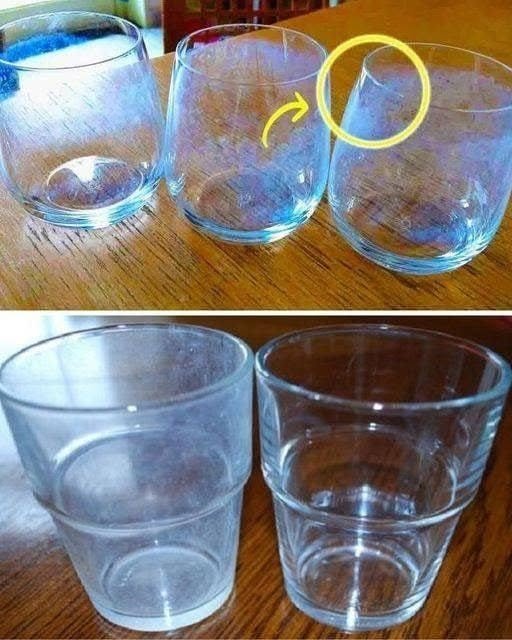
Have your drinking glasses started looking cloudy, dull, or covered with a stubborn white film even though you wash them regularly?
You’re not alone. That hazy appearance is often caused by hard-water mineral deposits, soap residue, or a combination of both. In some cases, repeated exposure to hot water and harsh dishwasher detergents can also cause permanent glass etching, which looks similar but cannot simply be washed away.
Before throwing away your cloudy glasses, try this simple cleaning method. It uses everyday household ingredients to help dissolve mineral buildup and restore a cleaner, brighter appearance.
What You’ll Need
- White vinegar
- Warm water
- Baking soda
- A soft sponge or microfiber cloth
- Dish soap
- A clean towel
Step 1: Rinse the Glasses
Start by rinsing the glasses with warm water to remove loose food particles, grease, and soap residue.
Place the glasses on a clean towel or drying rack.
Step 2: Prepare a Vinegar Solution
Mix equal parts white vinegar and warm water in a bowl or container large enough to accommodate the glasses.
White vinegar contains acetic acid, which can help dissolve mineral deposits left behind by hard water.
For glasses with heavy buildup, you can use undiluted white vinegar for a short soaking period, provided the glass is suitable for this type of cleaning.
Step 3: Soak the Cloudy Glasses
Place the affected glasses in the vinegar solution and let them soak for approximately 15–30 minutes.
For a glass with only a light white film, a shorter soak may be enough.
Avoid leaving delicate or decorative glassware submerged for unnecessarily long periods.
Step 4: Gently Scrub
After soaking, use a soft sponge or microfiber cloth to gently wipe the inside and outside of each glass.
Pay particular attention to the cloudy areas.
You should see mineral residue loosen as you clean.
Avoid steel wool, abrasive scouring pads, or rough brushes because they can scratch glass.
Step 5: Rinse Thoroughly
Rinse each glass thoroughly under clean water to remove the loosened mineral deposits and vinegar residue.
If there is still a stubborn film, repeat the vinegar treatment rather than scrubbing aggressively.
Step 6: Try Baking Soda for Stubborn Residue
For particularly stubborn residue, sprinkle a small amount of baking soda onto a damp soft sponge and gently rub the glass.
Baking soda provides mild physical cleaning action, but don’t use excessive pressure.
Rinse thoroughly afterward.
Never mix baking soda and vinegar together and expect a stronger cleaning effect. When combined, they react and largely neutralize one another. It’s more useful to use the vinegar treatment first and baking soda separately afterward if needed.
Step 7: Dry and Polish
Dry the glasses immediately with a clean, lint-free microfiber cloth.
Polishing while the glass is still slightly damp can help prevent new water spots from forming.
Hold the glass up to the light to check whether the cloudy film has disappeared.
What If the White Film Doesn’t Come Off?
This is an important distinction.
If vinegar doesn’t improve the glass after one or two careful treatments, the problem may not be mineral buildup.
It could be glass etching.
Glass etching occurs when the surface of the glass is chemically or physically damaged. Repeated dishwasher cycles, very hot water, highly alkaline detergents, and soft-water conditions can contribute to this type of damage.
Unlike mineral deposits, etching isn’t simply sitting on top of the glass. The surface itself has been altered.
In that situation, ordinary vinegar and baking soda won’t restore the glass completely.
How to Tell Mineral Deposits from Etching
A simple test can provide a useful clue.
Apply white vinegar to a small cloudy area and let it sit for several minutes before wiping it clean.
If the cloudy appearance noticeably improves, mineral buildup is likely.
If the glass remains cloudy despite careful vinegar treatment, the surface may be etched.
This isn’t a perfect diagnostic test, but it can help distinguish removable deposits from permanent surface damage.
Prevent Glasses from Becoming Cloudy Again
Once your glasses are clean, prevention is easier than repeatedly treating heavy buildup.
Use the Right Amount of Dishwasher Detergent
More detergent doesn’t necessarily mean cleaner glasses. Excess detergent can leave residue and contribute to cloudy surfaces.
Follow the detergent manufacturer’s recommended amount.
Don’t Overload the Dishwasher
Make sure water can circulate freely around the glasses.
Overloading can prevent proper rinsing and leave mineral and detergent residue behind.
Use a Rinse Aid
If your dishwasher and detergent system is compatible with rinse aid, it can help water drain more effectively from glass surfaces and reduce water spots.
Check Your Water Hardness
Hard water contains higher levels of minerals such as calcium and magnesium. These minerals can leave deposits on glassware, faucets, shower doors, and other surfaces.
If hard water is a persistent problem throughout your home, a suitable water-treatment solution may help.
Dry Glasses Promptly
If you’re washing glasses by hand, don’t simply leave them wet to air-dry if your water is particularly hard.
Drying them with a clean microfiber or lint-free towel can reduce the amount of mineral residue left behind as water evaporates.
A Quick Cleaning Routine
For lightly cloudy glasses:
- Rinse with warm water.
- Wipe with diluted white vinegar.
- Let it sit for several minutes.
- Gently scrub with a soft sponge.
- Rinse thoroughly.
- Dry immediately with a microfiber cloth.
For heavier buildup, use a 15–30 minute vinegar soak before gently cleaning.
Important Safety Tips
Never mix vinegar with chlorine bleach or products containing bleach. The combination can release dangerous chlorine gas.
Keep vinegar away from sensitive stone surfaces such as marble and certain natural stones, as acids can damage them.
When cleaning valuable, antique, hand-painted, crystal, or especially delicate glassware, check the manufacturer’s or item’s care instructions first.
Final Thoughts
Cloudy glasses don’t always mean they’re permanently ruined. If the white film is caused by hard-water minerals or residue, a simple white vinegar treatment can often make a noticeable difference.
The trick is to let the vinegar do the work rather than aggressively scrubbing the glass. If the cloudiness doesn’t improve after careful cleaning, however, the glass may be etched rather than dirty—and no household cleaning trick can reliably reverse permanent surface damage.
With regular rinsing, proper dishwasher use, and prompt drying, you can help keep your glasses looking clearer and shinier for longer.