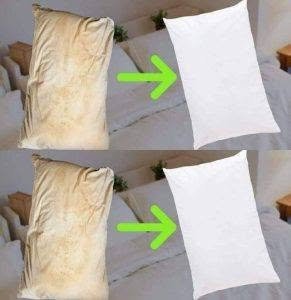
Over time, bed pillows can become surprisingly dirty. Sweat, body oils, dust, skin cells, and everyday use can leave pillows looking yellow, dull, and smelling less than fresh. Even when you regularly wash your pillowcases, the pillows themselves still need occasional cleaning.
The good news is that many washable pillows can be refreshed at home with a simple cleaning routine. With the right method, you can help remove yellowing, freshen unpleasant odors, and restore that clean, fluffy feeling.
The most important step is to check the pillow’s care label before washing it. Not every pillow is designed to be machine-washed.
What You’ll Need
- ½ cup baking soda
- ½ cup white vinegar
- 1–2 tablespoons mild laundry detergent
- Warm water
- A washing machine, if the care label permits
- Clean towels
- Dryer or a well-ventilated place for air-drying
Step 1: Check the Care Label
Before adding anything to your pillow, read the manufacturer’s washing instructions.
Polyester, cotton, and many synthetic-filled pillows are often washable, while memory foam and latex pillows generally should not be put in a washing machine.
For foam pillows, remove and wash the cover according to its instructions and spot-clean the pillow itself rather than soaking it.
Step 2: Remove the Pillowcase and Protector
Take off the pillowcase and any protective cover.
Wash these separately according to their care instructions. If the pillow protector is stained or has absorbed odors, cleaning it regularly can help keep the pillow cleaner for longer.
Step 3: Pre-Treat Visible Stains
Look closely at the pillow for yellow or darker areas caused by sweat and body oils.
Mix a small amount of mild laundry detergent with warm water and gently work it into visible stains using a soft cloth or soft brush.
Avoid aggressively scrubbing the fabric because excessive friction can damage the outer material.
Step 4: Wash the Pillow
If your pillow is machine-washable, place it in the washing machine.
For a balanced load, wash two pillows together when possible. Use a gentle or normal cycle according to the care label and choose warm water if permitted.
Add a small amount of mild detergent. More detergent isn’t necessarily better—it can be difficult to rinse completely from a bulky pillow.
Step 5: Use Vinegar Carefully
For an extra freshening step, you can add ½ cup of white vinegar to the rinse compartment if your washing machine and pillow-care instructions allow it.
White vinegar can help reduce lingering odors and detergent residue.
Important: Never mix vinegar directly with chlorine bleach. The combination can produce dangerous fumes.
Step 6: Rinse Thoroughly
If your machine has an extra-rinse setting, consider using it.
Pillows can hold onto detergent because of their thick filling. Thorough rinsing helps remove leftover soap and prevents the pillow from feeling stiff or smelling strongly of detergent after drying.
Step 7: Dry the Pillow Completely
Drying is one of the most important parts of the process.
If the care label allows machine drying, use a low or moderate heat setting. Add a couple of clean dryer balls or clean tennis balls inside socks to help break up clumps and keep the filling fluffy.
Stop the dryer periodically and check the pillow.
Make sure the inside is completely dry, not just the outer fabric. A damp interior can develop an unpleasant musty smell and may encourage mold growth.
If air-drying, place the pillow somewhere with good airflow and turn it periodically so all sides dry evenly.
What About Baking Soda?
Baking soda is often recommended as a household deodorizer. You can sprinkle a small amount over a dry pillow, leave it for several hours, and then vacuum it away carefully.
However, baking soda isn’t a guaranteed stain remover or whitening treatment. For heavily yellowed pillows, washing according to the manufacturer’s instructions is more important.
How to Deal With Very Yellow Pillows
Yellowing is often caused by accumulated sweat, body oils, and moisture.
If the care label permits it, an oxygen-based laundry whitener may be more appropriate than household bleach. Follow the product’s instructions carefully and test delicate fabrics when appropriate.
Avoid assuming that chlorine bleach is the best solution. It can damage some fabrics and fillings and may actually make certain stains more difficult to remove.
A Simple Pillow-Freshening Routine
You don’t have to wait until your pillows look dirty before caring for them.
Weekly
- Wash pillowcases.
- Air out pillows when practical.
- Check for unusual odors or stains.
Every Few Weeks
Wash pillow protectors according to their care labels.
Every Few Months
Check the pillow’s condition and wash washable pillows according to the manufacturer’s instructions.
Pillows used by people who sweat heavily may need more frequent cleaning.
Don’t Wash These Pillows the Same Way
Some pillows require special care.
Memory Foam
Do not put memory-foam pillows in the washing machine unless the manufacturer specifically says they are washable.
Remove the cover and spot-clean the foam according to its care instructions.
Latex
Latex pillows can be damaged by excessive water and improper drying. Follow the manufacturer’s instructions carefully.
Feather or Down
Many feather and down pillows can be washed, but they require thorough drying to prevent moisture from remaining inside the filling.
Decorative or Specialty Pillows
Always follow the manufacturer’s instructions because fabrics, fillings, and construction can vary considerably.
How to Keep Pillows Cleaner for Longer
Once you’ve cleaned your pillows, prevention makes a big difference.
Use a washable pillow protector underneath your pillowcase. It creates an additional barrier against sweat, oils, dust, and spills.
Wash pillowcases regularly and allow pillows to air out occasionally.
If you shower before bed, keep hair products and heavy skincare products away from the pillow as much as possible. These products can transfer to the fabric and contribute to buildup.
When Should You Replace a Pillow?
Cleaning can refresh a pillow, but it cannot restore one that has permanently lost its shape or support.
Consider replacing a pillow when it:
- Remains lumpy after washing
- Has permanently flattened
- No longer supports your head comfortably
- Has a persistent unpleasant odor after thorough cleaning
- Has damaged or deteriorating filling
- Shows signs of mold or extensive moisture damage
A clean pillow isn’t necessarily a supportive pillow, so comfort and condition matter too.
Final Thoughts
Dirty, yellowed pillows don’t always need to be thrown away. If your pillows are washable, a careful cleaning routine can help remove accumulated sweat, body oils, odors, and everyday grime.
The key is to follow the care label, use mild cleaning products, rinse thoroughly, and dry the pillow completely. With regular pillowcase and protector washing, your pillows can stay fresher and cleaner for much longer.
And remember: there is no need for an elaborate cleaning “hack.” Proper washing, thorough drying, and regular maintenance are the most reliable ways to keep your bed pillows fresh.