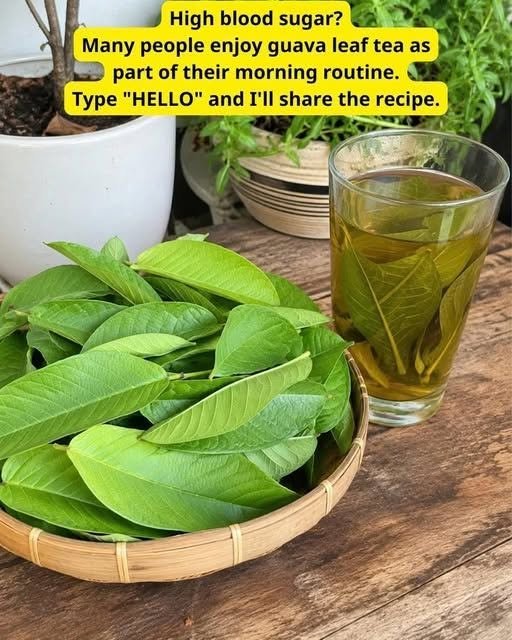
Guava Leaf Tea for High Blood Sugar
Guava leaf tea is traditionally used as a natural remedy for blood-sugar control. Some small human studies suggest that guava leaf extract/tea may reduce the rise in blood glucose after meals, possibly by slowing carbohydrate digestion and absorption. However, the evidence is still limited, and it should not replace diabetes medication, diet, or medical treatment. (PubMed)
How to Make Guava Leaf Tea
Ingredients:
- 5–7 fresh, young guava leaves, thoroughly washed
- 2 cups water
Directions:
- Wash the guava leaves thoroughly.
- Bring 2 cups of water to a boil.
- Add the leaves.
- Reduce the heat and simmer for 10–15 minutes.
- Strain and allow the tea to cool slightly.
- Drink it without sugar or honey.
When to Drink It
Research on guava leaf tea has particularly examined its effect on post-meal blood glucose, including consumption with meals. Some small clinical trials found reductions in post-meal glucose levels. (PubMed Central (PMC))
However, there isn’t enough evidence to establish a universally recommended homemade-tea dose or schedule. If you have diabetes, it’s better to monitor your glucose when trying it rather than assuming it will lower your blood sugar by a predictable amount.
Important Precautions
If you take insulin, gliclazide, glimepiride, glibenclamide, metformin, or other diabetes medicines, talk with your doctor before using guava leaf tea regularly. Although some clinical studies reported no significant hypoglycemia or obvious drug interactions, the studies were relatively small and used specific guava-leaf preparations—not necessarily homemade tea. (PubMed Central (PMC))
Also, don’t use guava leaf tea to treat very high blood sugar instead of prescribed treatment. More recent reviews of plant-based Myrtaceae interventions conclude that evidence for consistent improvements in HbA1c and long-term blood-sugar control remains uncertain. (PubMed)
Bottom line: Guava leaf tea may modestly help with post-meal blood-sugar spikes, but it should be considered an optional dietary drink rather than a treatment for diabetes.