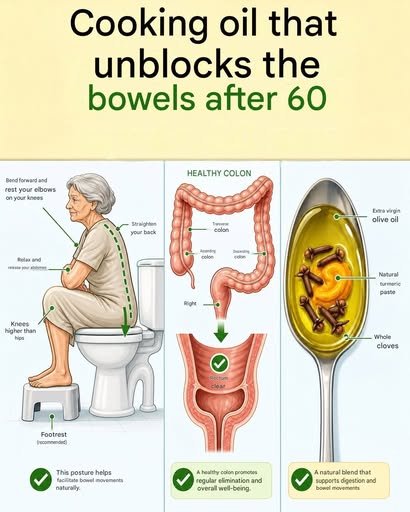
Constipation can become an increasingly frustrating problem with age. You may feel bloated, uncomfortable, sluggish, or like you simply cannot completely empty your bowels.
In fact, constipation symptoms are common among adults over 60. Hard or lumpy stools, fewer bowel movements, painful straining, and feeling that stool has not completely passed are all common signs.
That has led to plenty of home remedies—including the idea that drinking certain cooking oils can “lubricate” the digestive system and provide lasting relief.
But there is an important distinction between a traditional remedy and a medically proven treatment.
No cooking oil has been shown to permanently cure constipation.
Some oils may be useful as part of a balanced diet, and certain oils or oil-based products have specific medical uses as laxatives. However, simply drinking spoonfuls of cooking oil isn’t a substitute for identifying why constipation is happening.
So which oils are worth knowing about—and what should you actually do if constipation keeps coming back?
Why Constipation Can Become More Common After 60
Getting older does not automatically mean you have to become constipated.
However, several factors can make constipation more likely.
These include:
- Eating less fiber
- Drinking too little fluid
- Being less physically active
- Changes in daily routine
- Ignoring the urge to have a bowel movement
- Certain medications
- Some nutritional supplements
- Diabetes
- Thyroid disorders
- Certain digestive conditions
- Problems involving the muscles used for bowel movements
NIDDK notes that older adults are among the groups more likely to experience constipation.
That means persistent constipation shouldn’t automatically be blamed on a lack of oil in the diet.
1. Olive Oil: A Healthy Cooking Choice
Extra-virgin olive oil is one of the most useful oils to include in a healthy eating pattern.
It can be drizzled over vegetables, salads, beans, whole grains, and other fiber-containing foods.
However, claims that drinking olive oil by itself will permanently “clean out” the colon or cure chronic constipation aren’t supported by strong evidence.
The better approach is to use olive oil as part of meals that provide fiber and fluids.
For example:
- Oatmeal with berries and a small amount of nuts
- A bean and vegetable salad with olive-oil dressing
- Whole-grain toast with avocado and olive oil
- Roasted vegetables finished with olive oil
This gives you the benefit of a nutrient-rich eating pattern rather than relying on oil as a laxative.
2. Can Coconut Oil Help Constipation?
Coconut oil is frequently promoted online as a natural constipation remedy.
The theory is usually that its fats somehow stimulate digestion or make stool easier to pass.
But there isn’t strong clinical evidence showing that taking coconut oil regularly can treat chronic constipation or permanently restore normal bowel movements.
That doesn’t mean you have to avoid coconut oil completely.
It simply means you shouldn’t treat it like a proven constipation medication.
Use it according to your overall dietary needs rather than taking large spoonfuls specifically to force a bowel movement.
3. Sesame Oil: Traditional, but Not a Proven Cure
Sesame oil has a long history in South Asian and Ayurvedic traditions.
It is commonly used in cooking and sometimes appears in traditional approaches to digestive health.
However, traditional use isn’t the same as clinical evidence.
There isn’t sufficient evidence to say that drinking sesame oil will permanently resolve chronic constipation.
It can certainly be used as a cooking oil, particularly in meals containing vegetables, legumes, and whole grains—but don’t rely on it as your primary constipation treatment.
4. Can Avocado Oil Help?
Avocado oil is another healthy unsaturated fat that can be used in salads and cooking.
It doesn’t have a proven special laxative effect.
Its advantage is nutritional rather than being a constipation cure.
Use it to prepare meals containing foods that naturally provide fiber, such as:
- Vegetables
- Beans
- Lentils
- Whole grains
- Fruit
- Nuts and seeds
That combination is far more useful for long-term digestive health than simply swallowing oil.
5. Flaxseed Oil Is Different
Flaxseed is often discussed in connection with constipation because ground or whole flaxseed contains fiber.
Flaxseed oil, however, contains very little or no dietary fiber.
That’s an important distinction.
If you’re specifically looking for the bowel benefits associated with fiber, adding ground flaxseed to foods may make more sense than replacing it with flaxseed oil.
Always increase fiber gradually and drink enough fluid so your digestive system can adjust. NIDDK recommends increasing fiber gradually and drinking plenty of liquids to help it work effectively.
6. Mineral Oil Is Not the Same as Cooking Oil
This is one of the most important points.
Mineral oil is a lubricant laxative.
It is sometimes used medically for constipation because it can help stool pass more easily. NIDDK lists lubricants such as mineral oil among over-the-counter constipation treatments.
But mineral oil is not a cooking oil.
You shouldn’t substitute olive oil, coconut oil, or another kitchen oil for a medically indicated laxative and assume they will work the same way.
Mineral oil can also interfere with absorption of certain fat-soluble vitamins when used inappropriately or excessively, so regular use should be discussed with a healthcare professional.
The Biggest Mistake: “Forget Fiber”
Despite the headline, fiber should not be forgotten.
For most adults, fiber remains an important part of preventing and managing constipation.
NIDDK states that adults generally need about 22–34 grams of fiber per day, depending on age and sex. Older adults may struggle to get enough fiber, making intentional food choices especially important.
Excellent sources include:
Fruits
- Pears
- Apples with the skin
- Berries
- Oranges
- Prunes
Vegetables
- Broccoli
- Carrots
- Green peas
- Leafy greens
Legumes
- Lentils
- Chickpeas
- Black beans
- Kidney beans
Whole grains
- Oatmeal
- Whole-grain bread
- Brown rice
- Whole-grain pasta
Nuts and seeds
- Almonds
- Peanuts
- Chia seeds
- Ground flaxseed
Why Water Matters
Fiber needs adequate fluid to work effectively.
If someone suddenly increases fiber while drinking very little, they may experience more bloating or discomfort rather than immediate relief.
NIDDK recommends drinking plenty of liquids when increasing fiber and notes that adequate hydration helps keep stools softer and easier to pass.
Older adults may also be less aware of thirst, so maintaining regular fluid intake can be especially important.
If a doctor has told you to restrict fluids because of a medical condition, follow that individualized advice rather than increasing fluids on your own.
Try This Simple Morning Routine
Instead of relying on a spoonful of oil, create a consistent bowel routine.
Step 1: Have a fiber-rich breakfast
Try:
Oatmeal + berries + ground flaxseed + yogurt
or
Whole-grain toast + avocado + fruit
Step 2: Drink an appropriate amount of fluid
Have water or another suitable beverage according to your individual health needs.
Step 3: Give yourself bathroom time
Eating can stimulate colon movement. NIDDK notes that trying to have a bowel movement about 15–45 minutes after breakfast may help establish regularity.
Step 4: Don’t ignore the urge
Repeatedly delaying a bowel movement can make regular bowel habits more difficult.
Step 5: Move your body
Regular physical activity may help relieve constipation. Even appropriate daily walking can be a useful part of a healthy routine.
What About Prunes?
If you’re looking for a food-based option rather than an oil, prunes are worth considering.
Prunes provide fiber and naturally occurring compounds that may help bowel regularity.
You can add them to:
- Oatmeal
- Yogurt
- Smoothies
- Whole-grain cereal
- Chia pudding
Start with a modest amount and see how your body responds.
Check Your Medications
Sometimes the solution isn’t another food or oil.
Certain medications and supplements can contribute to constipation.
Examples include some:
- Iron supplements
- Calcium-containing antacids
- Certain blood-pressure medications
- Some antidepressants
- Opioid pain medicines
- Certain medications affecting the nervous system
NIDDK lists several medication classes that can contribute to constipation.
Don’t stop a prescribed medication on your own.
Instead, ask your healthcare professional whether constipation could be a side effect and whether another option is appropriate.
When Constipation After 60 Should Not Be Ignored
Occasional constipation is common.
Persistent or newly developing constipation, however, deserves attention—especially if it represents a significant change from your normal bowel habits.
Contact a healthcare professional if constipation doesn’t improve with self-care or keeps returning.
Seek medical attention promptly if constipation occurs with:
- Blood in the stool
- Rectal bleeding
- Persistent or severe abdominal pain
- Vomiting
- Fever
- Inability to pass gas
- Unexplained weight loss
- Significant or worsening symptoms
These symptoms can indicate a problem that needs more than a dietary remedy.
A Better “Oil Strategy” After 60
Rather than drinking oil by the spoonful, think of cooking oils as supporting ingredients in a healthy diet.
A simple approach is:
Choose a healthy oil → add it to a fiber-rich meal → drink adequate fluids → stay active → maintain a regular bathroom routine.
For example, make a large vegetable and chickpea salad with olive oil, lemon, herbs, and whole-grain bread.
That’s a much more useful long-term strategy than trying to force bowel movements with large quantities of oil.
Can You Permanently Cure Constipation With Food?
Usually, the goal isn’t to find one magical food.
Constipation can have many different causes, and the appropriate treatment depends on what’s causing it.
For some people, increasing fiber and fluids is enough.
For others, medication changes, laxatives, treatment of an underlying condition, pelvic-floor therapy, or prescription medication may be necessary. NIDDK lists several medical treatment options for persistent constipation.
So if you’re over 60 and have been struggling with constipation for weeks or months, don’t keep switching between internet remedies.
Find the reason.
That is far more likely to provide lasting relief.
Final Thoughts
Cooking oils can absolutely have a place in a healthy diet, but there is no cooking oil proven to permanently cure constipation after 60.
Olive oil, avocado oil, sesame oil, and other unsaturated oils can be nutritious choices, but they shouldn’t replace the basics of constipation management.
For lasting bowel regularity, focus on the bigger picture:
Fiber.
Fluids.
Movement.
A regular bathroom routine.
Reviewing medications.
And medical evaluation when constipation persists or comes with warning signs.
And if you need a laxative, don’t assume a kitchen oil is interchangeable with a medically formulated product. Some laxatives—including mineral oil—have specific uses and precautions.
The best constipation remedy isn’t necessarily the trendiest one on social media. It’s the approach that addresses why your bowel movements have changed in the first place.
Frequently Asked Questions
Is olive oil a natural laxative?
Olive oil is a healthy dietary fat, but it shouldn’t be presented as a proven treatment for chronic constipation. Using it as part of fiber-rich meals is a more sensible approach.
Can I drink coconut oil for constipation?
There isn’t strong evidence that drinking coconut oil permanently treats constipation. Large amounts can also add substantial calories to the diet.
Does flaxseed oil contain fiber?
No. Flaxseed oil does not provide the dietary fiber found in ground or whole flaxseed.
Is mineral oil the same as olive oil?
No. Mineral oil is a lubricant laxative used medically for constipation. Olive oil is a food oil. They should not be treated as interchangeable.
How much fiber should adults get?
NIDDK states that adults generally need around 22–34 grams of fiber daily, depending on age and sex. Increase fiber gradually and drink enough fluids.
Why is constipation more common after 60?
Older adults are more likely to experience constipation, partly because of changes in diet, fluid intake, physical activity, medications, and other health conditions.
When should constipation be checked by a doctor?
Persistent constipation or constipation accompanied by bleeding, blood in the stool, constant abdominal pain, vomiting, fever, inability to pass gas, or unexplained weight loss warrants medical attention.
SEO Details
SEO Title: Cooking Oils That May Help With Constipation After 60
Meta Description: Can cooking oils really relieve constipation after 60? Learn which oils fit a healthy diet, why fiber and fluids still matter, and when constipation needs medical attention.
Focus Keyword: cooking oils for constipation after 60
Slug: cooking-oils-for-constipation-after-60
Category: Health & Wellness
Tags: constipation after 60, constipation relief, healthy oils, olive oil, digestive health, senior health, fiber, gut health, natural constipation remedies