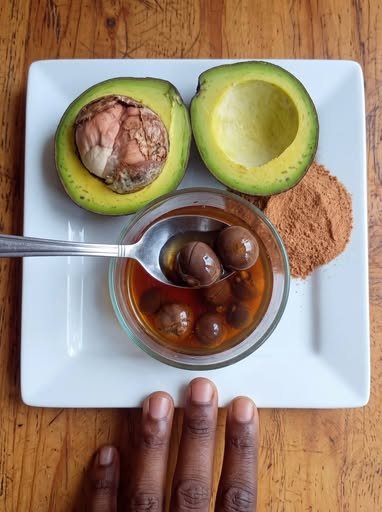
After eating an avocado, most people throw the large seed straight into the trash.
But avocado seeds have become popular in homemade beauty and wellness recipes, especially preparations that involve soaking the seed in oil. The idea is simple: the seed is dried, chopped or grated, and infused into a carrier oil for use on the skin or hair.
Before trying it, though, it is important to separate traditional DIY beauty practices from proven medical benefits.
There is limited scientific evidence that avocado-seed-infused oil provides special benefits for hair, skin, or other health conditions. The avocado fruit itself has much better-established nutritional value.
Still, if you enjoy making simple homemade oil infusions, here’s a gentle way to prepare one for cosmetic use.
Why Do People Soak Avocado Seeds in Oil?
Avocado seeds contain various plant compounds, and researchers have studied avocado by-products for their antioxidant and other properties.
This has inspired homemade recipes using the seed in oil.
The important limitation is that laboratory findings about avocado-seed compounds don’t necessarily mean that a homemade oil infusion will deliver the same effects.
So think of avocado-seed oil as a DIY cosmetic preparation, not a medicine.
How to Make Avocado Seed-Infused Oil
Ingredients
- 1 clean avocado seed
- 1 cup carrier oil, such as coconut, olive, jojoba, or sweet almond oil
- A clean, completely dry glass jar
Directions
1. Clean the seed
Remove any remaining avocado flesh and rinse the seed thoroughly.
2. Dry it completely
Pat it dry and allow it to air-dry until there is no visible moisture on the surface.
This step is important because introducing water into an oil mixture can encourage spoilage or microbial growth.
3. Grate or finely chop the seed
Once completely dry, carefully grate it or chop it into small pieces.
Use caution because avocado seeds can be hard and slippery.
4. Add the oil
Place the prepared seed into a clean, dry glass jar and cover it completely with your chosen carrier oil.
5. Infuse gently
For a simple warm infusion, place the sealed heat-safe jar in a water bath on very low heat for about 1–2 hours. Do not allow the oil to become very hot.
Alternatively, you can make a cold infusion by keeping the jar in a cool, dark place for several days and shaking it gently once a day.
6. Strain
Strain the oil thoroughly through a fine strainer or clean cheesecloth.
Discard all solid seed pieces.
7. Store carefully
Transfer the strained oil to a clean, dry, dark-colored container and store it in a cool place.
Because homemade oil infusions do not contain commercial preservatives, make small batches and discard them if you notice an unusual smell, cloudiness, mold, or other signs of spoilage.
How Can You Use It?
If your skin tolerates the oil, you can use a small amount as a simple moisturizing body oil.
For hair, you can apply a small amount to the lengths and ends before washing.
However, there is not enough clinical evidence to say that avocado-seed-infused oil grows new hair, reverses hair loss, eliminates gray hair, or repairs damaged skin.
Its main practical benefit as a cosmetic oil is that the carrier oil itself can help moisturize dry skin and condition hair.
A Simple Hair Oil Treatment
If you want to try it as a pre-shampoo treatment:
- Apply a small amount to the lengths and ends of dry hair.
- Leave it on for about 20–30 minutes.
- Shampoo thoroughly.
- Rinse well.
Avoid applying large amounts directly to the scalp if you’re prone to irritation or buildup.
What About Eating Avocado Seeds?
This is where extra caution is warranted.
Avocado seeds are not a conventional food ingredient, and there is insufficient evidence to establish that consuming them provides meaningful health benefits or that homemade seed preparations are safe to eat regularly.
For nutrition, you’re better off enjoying the avocado flesh, which provides fiber, monounsaturated fat, potassium, and other nutrients.
Important Safety Tips
Always patch-test a homemade oil on a small area of skin before wider use.
Stop using it if you develop:
- Burning
- Itching
- Redness
- Swelling
- A rash
Don’t put homemade avocado-seed oil into your eyes, on broken skin, or on an infected area.
If you’re experiencing significant hair loss, persistent scalp problems, eczema, or another skin condition, a dermatologist can help determine the cause rather than relying solely on a homemade oil.
Why the Avocado Fruit Is the Real Nutritional Treasure
While the seed gets attention online, the edible avocado is where the strongest nutritional case lies.
Avocado provides:
- Fiber
- Monounsaturated fats
- Potassium
- Folate
- Vitamin K
- Vitamin E
- Various other vitamins and minerals
Adding avocado to a balanced diet is a much better-established way to benefit from the fruit.
Final Thoughts
Don’t feel that you have to throw every avocado seed away—but don’t expect an oil infusion made from the seed to perform miracles either.
Soaking an avocado seed in oil is an interesting traditional DIY beauty project, but strong evidence for special hair or skin benefits is lacking. If you try it, use it cautiously as a cosmetic preparation, patch-test first, and pay attention to signs of irritation or spoilage.
For proven nutritional benefits, the avocado itself remains the part worth eating.