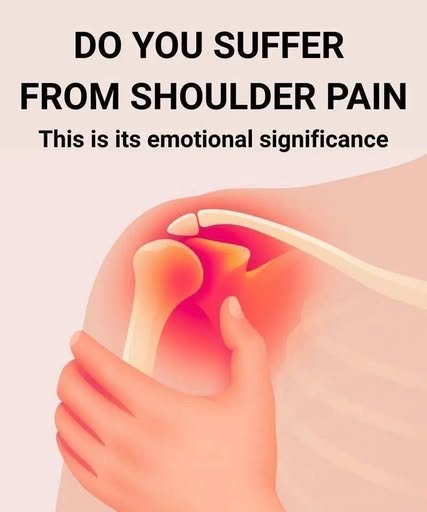
Have you ever noticed your shoulders becoming tight or painful during a stressful period in your life?
It’s common to hear that shoulder pain means you’re carrying too much emotional weight—such as stress, responsibility, worry, or unresolved feelings. While this idea can be meaningful as a metaphor, there is no scientific evidence that pain in a particular shoulder reliably reveals one specific emotion.
What is well established is that stress and emotional tension can affect how we experience physical pain. When you’re stressed, you may unconsciously tighten the muscles in your neck and shoulders, spend more time in a tense posture, sleep poorly, or become more sensitive to discomfort.
So your shoulders may sometimes be telling you that your body needs attention—not necessarily revealing a hidden emotion.
When Stress Can Affect Your Shoulders
Emotional stress can contribute to muscle tension, particularly around the:
- Neck
- Shoulders
- Upper back
- Jaw
You might notice that your shoulders rise toward your ears when you’re anxious or concentrating. If that tension continues for hours or days, the muscles can become uncomfortable, stiff, or sore.
Stress can also make existing pain feel more noticeable.
The Emotional “Meaning” People Often Associate With Shoulder Pain
Although these interpretations are not medical diagnoses, some people use them as a way to reflect on their emotional wellbeing.
Feeling Overwhelmed
Shoulder pain is sometimes described metaphorically as “carrying the weight of the world.”
If you’re dealing with work, family responsibilities, financial concerns, or other pressures, it may be worth asking yourself whether you’re taking on more than you can reasonably manage.
Difficulty Relaxing
Constant muscle tension can accompany a busy or anxious state of mind.
If you notice yourself frequently clenching your shoulders or neck, simple relaxation techniques may help reduce unnecessary tension.
Feeling Responsible for Everyone
Some people associate shoulder tension with constantly feeling responsible for other people’s problems.
Rather than assuming this is the cause of your pain, use it as an opportunity to consider whether you have enough time for rest and your own needs.
Emotional Exhaustion
Poor sleep, prolonged stress, and emotional exhaustion can all affect the way your body feels.
When you’re tired and stressed, ordinary muscle aches may become more noticeable.
Right Shoulder vs. Left Shoulder: Is There a Specific Emotional Meaning?
You may have seen claims that right shoulder pain represents certain emotions while left shoulder pain represents others.
These ideas are common in alternative wellness content, but there isn’t reliable scientific evidence showing that the side of your shoulder pain corresponds to a particular emotion.
The side of the pain can instead be related to things such as:
- Sleeping position
- Repetitive movements
- Exercise or lifting
- Work posture
- Previous injury
- Tendon or joint problems
- Neck problems that refer pain into the shoulder
What Should You Do If Your Shoulder Hurts?
If the pain is mild and you know it followed exercise, prolonged computer use, or another obvious activity, giving the area time to recover may help.
Gentle movement, appropriate rest, good posture, and avoiding activities that clearly aggravate the pain can be useful.
You can also pay attention to your stress levels. Relaxation, regular physical activity, adequate sleep, and breathing exercises may help reduce stress-related muscle tension.
Don’t Assume Every Shoulder Pain Is Emotional
This is especially important.
Shoulder pain can have many physical causes, including muscle strain, tendinitis, bursitis, arthritis, rotator cuff problems, nerve irritation, or an injury.
Some pain that feels like shoulder discomfort can also come from another part of the body.
Seek urgent medical attention if shoulder pain occurs with chest pressure or pain, shortness of breath, sweating, nausea, fainting, or pain spreading into the arm, jaw, neck, or back. These can be warning signs of a serious medical problem.
You should also seek medical advice for severe pain, significant weakness, deformity, persistent swelling, numbness, or pain that does not improve.
A Simple Question to Ask Yourself
Instead of asking, “What emotion does my shoulder pain represent?” try asking:
“What has my body been dealing with lately?”
Are you sleeping enough? Have you been sitting at a desk for long periods? Did you recently lift something heavy? Have you been exercising differently? Are you experiencing unusually high levels of stress?
Looking at both your physical and emotional wellbeing gives you a much more useful picture.
Final Thoughts
Shoulder pain isn’t a secret emotional code that tells you exactly what you’re feeling. However, stress and emotional strain can contribute to muscle tension and can influence how strongly we experience pain.
Your shoulders may not be revealing a specific hidden emotion, but persistent tension can be a good reminder to slow down, move your body, get adequate rest, and pay attention to both physical and emotional wellbeing.
And if the pain is severe, persistent, unexplained, or accompanied by other concerning symptoms, don’t dismiss it as “just stress.” Get it properly evaluated.