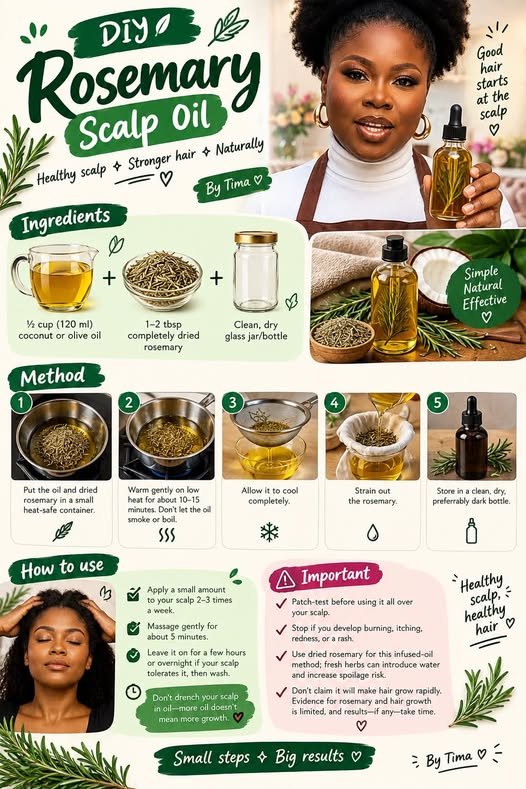
You don’t always need an expensive salon treatment to give your hair a little extra care. Simple ingredients from your kitchen can be used to make gentle DIY hair treatments that help improve the look and feel of dry, rough, or dull hair.
However, it’s important to keep expectations realistic. Homemade treatments can condition the hair, reduce dryness, improve softness, and add temporary shine, but they cannot permanently repair severely damaged hair, reverse genetic hair loss, or reliably restore gray hair to its original color.
Here are several easy DIY hair remedies you can try at home.
1. Coconut Oil Treatment for Dry Hair
Coconut oil is one of the simplest traditional hair-care treatments.
Ingredients
- 1–2 tablespoons coconut oil
How to Use
Warm the oil slightly between your hands or use a small amount at room temperature.
Apply it mainly to the lengths and ends of your hair. If your scalp tolerates oil well, you can gently massage a small amount into the scalp.
Leave it on for 30–60 minutes, then wash thoroughly with shampoo.
Why Try It?
Coconut oil can help reduce dryness and may help protect the hair shaft from some types of damage.
Don’t use excessive amounts—the goal is to condition the hair, not soak it.
2. Banana Hair Mask
A ripe banana can make a simple conditioning mask for dry-looking hair.
Ingredients
- 1 ripe banana
- 1 tablespoon plain yogurt
- 1 teaspoon honey
How to Use
Blend or mash the banana until completely smooth.
Mix in the yogurt and honey.
Apply the mixture to damp hair, concentrating on the lengths and ends.
Leave it on for 15–20 minutes, then rinse thoroughly and shampoo.
Tip
Blend the banana very well. Small pieces of banana can be surprisingly difficult to remove from hair.
3. Aloe Vera Scalp and Hair Treatment
Aloe vera gel can provide a cooling, lightweight feel and may be useful for dry-feeling skin and hair.
Ingredients
- 2 tablespoons pure aloe vera gel
- 1 teaspoon coconut oil, optional
How to Use
Mix the ingredients and apply a thin layer to the scalp or hair lengths.
Leave for about 15–20 minutes, then rinse and shampoo.
Choose a simple aloe product without unnecessary fragrances if you don’t have access to fresh gel.
4. Oatmeal Hair and Scalp Mask
Oatmeal can be soothing for dry-feeling skin and can be used in a gentle scalp treatment.
Ingredients
- 2 tablespoons finely ground plain oatmeal
- 3–4 tablespoons lukewarm water
- 1 teaspoon plain yogurt, optional
How to Use
Mix until you have a smooth paste.
Apply gently to the scalp and leave for 10–15 minutes.
Rinse thoroughly and wash with a mild shampoo.
Avoid vigorous scrubbing, especially if your scalp is sensitive.
5. Egg Hair Mask
Eggs contain protein and other nutrients, but applying egg to hair isn’t a miracle repair treatment. It can simply make the hair feel temporarily conditioned.
Ingredients
- 1 egg
- 1 tablespoon plain yogurt
- 1 teaspoon olive oil
How to Use
Whisk the ingredients together.
Apply to damp hair, concentrating on the lengths.
Leave for about 10–15 minutes.
Rinse with cool or lukewarm water and shampoo.
Avoid hot water, which can cause the egg to cook and become difficult to remove.
6. Honey and Yogurt Moisture Mask
For dry-looking hair, this creamy treatment can provide a soft, conditioned feel.
Ingredients
- 2 tablespoons plain yogurt
- 1 teaspoon honey
- 1 teaspoon olive or coconut oil
How to Use
Mix everything together and apply to damp hair.
Leave for 15–20 minutes, then rinse thoroughly and shampoo.
This treatment is best used occasionally rather than every day.
7. Green Tea Hair Rinse
Green tea can be used as a simple rinse, although evidence that topical green tea significantly improves hair growth is limited.
Ingredients
- 1 green tea bag
- 1 cup hot water
How to Use
Steep the tea for several minutes and allow it to cool completely.
After shampooing, pour the cooled tea over the hair.
Leave for a few minutes and rinse with clean water.
Do not use extremely hot tea on your scalp.
8. Apple Cider Vinegar Rinse
A diluted apple cider vinegar rinse can help remove some product buildup and leave hair feeling clean, but it can also irritate the scalp if it is too concentrated.
Ingredients
- 1 tablespoon apple cider vinegar
- 1 cup water
How to Use
Mix thoroughly and apply sparingly to the hair after shampooing.
Leave for a minute or two, then rinse well.
Never apply undiluted vinegar directly to your scalp.
If you experience burning or irritation, stop using it.
DIY Hair Remedies for Different Hair Concerns
For Dry Hair
Try coconut oil, honey and yogurt, or a simple banana mask.
For Frizzy Hair
Focus on conditioning treatments and avoid excessive heat styling. A small amount of lightweight oil on the ends may also help reduce the appearance of frizz.
For Dull Hair
A gentle cleansing routine, regular conditioning, and avoiding excessive heat can help restore a healthier-looking appearance.
For a Dry-Feeling Scalp
A mild shampoo and gentle scalp care are usually better choices than repeatedly applying strong kitchen ingredients.
For Hair Breakage
Reduce heat styling, tight hairstyles, aggressive brushing, and chemical processing. Conditioning can improve the feel of damaged hair, but severely split or damaged ends eventually need trimming.
What DIY Remedies Cannot Do
It’s easy to find claims that homemade masks can:
- Permanently stop hair loss
- Regrow bald spots
- Turn gray hair permanently black
- Cure dandruff
- Repair split ends permanently
- Make hair grow dramatically faster
These claims aren’t supported simply because an ingredient is natural.
Hair loss can have many causes, including genetics, nutritional deficiencies, hormonal changes, medications, illness, and scalp conditions. Persistent or sudden hair loss deserves proper evaluation rather than relying entirely on homemade remedies.
Important Safety Tips
Always patch-test a new ingredient before applying it extensively.
Avoid applying lemon juice, baking soda, undiluted vinegar, essential oils, or other highly irritating ingredients directly to your scalp.
Don’t use a homemade treatment on broken or inflamed skin.
If you develop burning, swelling, itching, or a rash, wash the product off and discontinue use.
Also remember that fresh food-based masks contain no preservatives. Make them fresh and discard leftovers rather than storing them for several days.
A Simple Weekly Hair-Care Routine
You don’t need to use several DIY treatments at once.
A simple routine can be:
Once a week: Apply a gentle conditioning mask.
Regularly: Shampoo according to your hair and scalp needs and use conditioner on the lengths and ends.
Daily: Avoid excessive heat, harsh brushing, and very tight hairstyles.
Always: Protect your hair from unnecessary chemical and heat damage.
Final Thoughts
DIY hair remedies can be an inexpensive way to add a little extra conditioning to your routine. Ingredients such as coconut oil, yogurt, banana, honey, and oatmeal may help hair feel softer, smoother, and more manageable.
The key is to treat homemade remedies as supportive hair care—not cures. For ongoing hair loss, severe dandruff, scalp inflammation, or sudden changes in hair texture or growth, professional evaluation is more useful than continually trying new kitchen remedies.