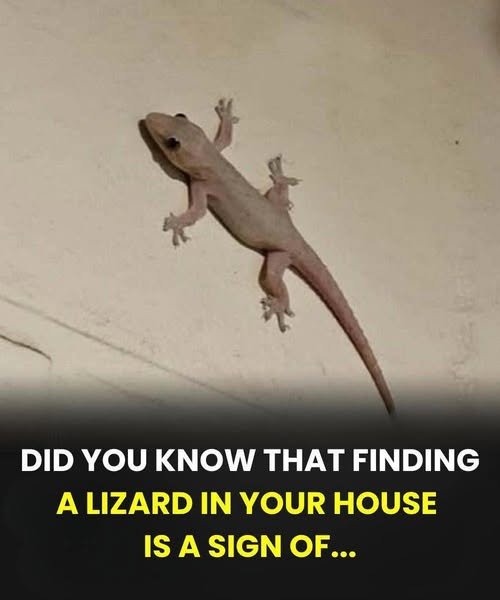
Have you ever walked into a room and suddenly noticed a lizard on the wall?
For some people, seeing a lizard inside the house immediately raises a question: Does it mean something?
Across different cultures, lizards have been associated with everything from good fortune and prosperity to warnings or unexpected changes. These beliefs have been passed down through generations, making a simple house lizard seem much more mysterious than it really is.
But what does it actually mean when a lizard enters your home?
What Does a Lizard Coming Into Your House Really Mean?
From a scientific perspective, a lizard entering your home usually means something much simpler:
Your house provides food, shelter, warmth, or a suitable environment.
Many small household lizards and geckos feed on insects such as mosquitoes, flies, moths, cockroaches, and other small bugs. If your home has plenty of insects, a lizard may see it as an excellent hunting area.
Warm walls, ceilings, lights, cracks, and sheltered spaces can also make houses attractive to lizards.
So while folklore may attach symbolic meanings to a lizard’s visit, its behavior is usually explained by ordinary survival instincts.
Why Do Lizards Enter Homes?
There are several practical reasons.
1. They’re Looking for Food
Outdoor lights can attract insects at night. Lizards may follow their food source and gather around windows, doors, balconies, or lights where insects are plentiful.
If you frequently see lizards indoors, there may simply be an insect problem nearby.
2. Your Home Offers Shelter
Lizards need protection from predators and extreme weather.
Small gaps around windows, doors, roofs, pipes, and walls can provide easy access to a sheltered indoor space.
3. Warmth Can Attract Them
Like many reptiles, lizards rely on their environment to regulate body temperature.
Warm surfaces can make buildings attractive, particularly when outdoor temperatures change.
4. They’re Following Their Normal Habitat
If your home is near gardens, trees, open land, walls, or other areas where lizards naturally live, encountering one indoors isn’t particularly unusual.
What Do Different Traditions Say?
Lizards have symbolic meanings in various cultures.
Some traditional beliefs associate seeing a lizard with good fortune, prosperity, change, or protection. Other traditions interpret the same event differently.
These interpretations are part of folklore and cultural tradition rather than scientific evidence.
It’s therefore important not to treat a particular belief as a prediction of something that will definitely happen.
Does a Lizard Mean Good Luck?
Some people believe that a lizard appearing in the home is a lucky sign.
You may hear claims that it means money is coming, unexpected news will arrive, or something positive is about to happen.
There is no scientific evidence that a lizard’s appearance can predict financial success, visitors, relationships, or future events.
You can certainly enjoy the cultural symbolism, but it shouldn’t be confused with a proven fact.
What If You Keep Seeing Lizards?
Seeing one occasional lizard isn’t necessarily a concern.
However, frequent sightings may indicate that your home provides easy access to food or shelter.
Check for:
- Insects around lights
- Gaps beneath doors
- Cracks around windows
- Open vents
- Holes around pipes
- Unscreened windows
- Food or waste attracting insects
Reducing insects and sealing entry points can make your home less attractive to unwanted visitors.
Are House Lizards Dangerous?
Most small house geckos and common lizards encountered around homes are not aggressive toward people and generally try to avoid human contact.
Nevertheless, you shouldn’t handle wild reptiles unnecessarily.
They can carry microorganisms, and contact with their droppings can contaminate surfaces.
If a lizard is inside your home, encourage it toward an exit rather than trying to catch it with your bare hands.
How to Keep Lizards Out Naturally
If you would rather not have lizards inside your home, prevention is usually more useful than trying to chase them away.
Seal Entry Points
Check doors, windows, vents, and wall openings for gaps. Install appropriate screens where possible.
Reduce Insects
Because insects are a major food source, reducing insect activity can make your home less attractive to lizards.
Keep food covered, dispose of rubbish properly, and avoid leaving standing water around the home.
Keep Outdoor Lights Under Control
Bright lights can attract insects, which in turn can attract lizards. Where practical, reduce unnecessary outdoor lighting or use appropriately positioned lighting.
Keep Areas Clean and Clutter-Free
Remove unnecessary piles of boxes, debris, and materials around entrances and walls where lizards may find shelter.
What You Shouldn’t Do
Avoid using dangerous homemade chemicals or toxic substances simply to get rid of a lizard.
You also don’t need to panic when you see one.
If a lizard is inside, calmly open a nearby exit and give it a clear path out. If necessary, use a container and stiff piece of cardboard to safely guide it outside without direct contact.
The Interesting Truth Behind the Myth
The idea that animals can predict future events is found in many cultures around the world.
People naturally look for meaning in unusual events, especially when those events happen unexpectedly.
A lizard suddenly appearing on the wall can certainly feel significant.
But from a biological perspective, the explanation is usually much less mysterious: the lizard found food, shelter, warmth, or an easy way inside.
Final Thoughts
So, what does it mean when a lizard visits your house?
According to folklore, the answer depends on the culture and tradition you follow. Some people see it as a positive symbol, while others attach different meanings to it.
According to science, however, a lizard entering your home is generally just an animal responding to its environment.
It may have found insects to eat, a warm place to rest, or a convenient opening into your house.
So the next time you see one on your wall, you don’t necessarily need to look for a hidden message.
Sometimes a lizard is simply a lizard looking for dinner.