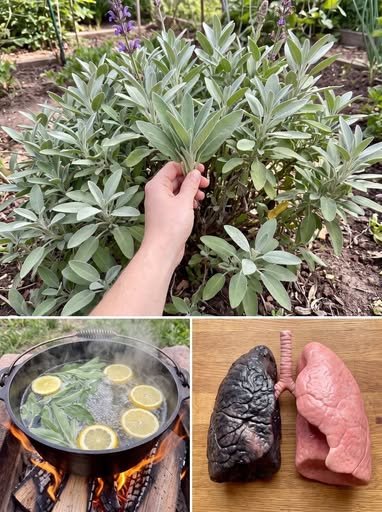
It grows in sunny gardens, survives with surprisingly little fuss, and is often used a pinch at a time in the kitchen. Yet common sage is one of those herbs with a history that reaches far beyond seasoning food.
Known for its soft, silvery-green leaves and strong, earthy aroma, sage has been dried, bundled, brewed, and used in traditional herbal practices for generations. Its leaves also have an impressive shelf life when properly dried, making it a practical herb to keep in the pantry.
Today, sage is still best known as a culinary herb—but researchers have also become interested in its naturally occurring plant compounds and their potential biological effects.
What Is Common Sage?
Common sage, scientifically known as Salvia officinalis, is a perennial herb belonging to the mint family.
It typically forms a compact, bushy plant with:
- Silvery-green, slightly fuzzy leaves
- Woody stems
- A strong, distinctive aroma
- Purple, blue, pink, or white flowers depending on the variety
Sage prefers plenty of sunlight and well-drained soil, making it a popular choice for herb gardens.
Why Has Sage Been Valued for So Long?
Sage has a long history of traditional use in different cultures.
Historically, its leaves were used in teas, infusions, culinary preparations, and other folk practices. Traditional use, however, should not be confused with modern clinical evidence.
A plant can have an interesting history without being proven to treat every condition it has traditionally been used for.
Sage Contains Interesting Plant Compounds
Sage contains naturally occurring compounds such as rosmarinic acid, flavonoids, and volatile oils.
Some of these compounds have antioxidant activity in laboratory research.
Researchers have also studied sage extracts in relation to areas such as memory, cognition, inflammation, and metabolic health.
However, results from laboratory experiments or small human studies do not establish that ordinary sage consumption can prevent or cure a disease.
Sage as a Culinary Herb
One of the simplest and safest ways to enjoy sage is in food.
Its strong flavor means you usually need only a small amount.
Fresh sage pairs particularly well with:
- Roasted chicken
- Turkey
- Pork
- Potatoes
- Pumpkin
- Butternut squash
- Beans
- Stuffing
- Pasta
- Brown butter sauces
- Roasted vegetables
A few finely chopped leaves can add an earthy, savory flavor to an otherwise simple meal.
A Simple Sage Tea
If you enjoy herbal teas, sage can also be prepared as a mild infusion.
Ingredients
- 4–5 fresh sage leaves, or about 1 teaspoon dried sage
- 1 cup hot water
- Lemon, optional
- Honey, optional
Directions
- Place the sage leaves in a cup.
- Pour hot water over them.
- Cover and steep for about 5–10 minutes.
- Strain the leaves.
- Add a little lemon or honey if desired.
- Enjoy warm.
This is a traditional-style herbal beverage, not a medical treatment.
What About Sage and Oral Health?
Sage has traditionally been used in mouth and throat preparations, and its antimicrobial properties have been investigated in laboratory research.
However, homemade sage preparations should not replace dental care or treatment for infections.
If you have persistent tooth pain, swollen gums, bleeding, or a sore throat that does not improve, professional evaluation is more appropriate than relying on an herbal remedy.
Sage and Memory: What Does Research Say?
This is one of the more interesting areas of sage research.
Some small human studies have investigated sage preparations and cognitive performance, while laboratory research has explored several compounds found in the plant.
But the evidence is still not strong enough to conclude that drinking sage tea or eating sage prevents dementia or significantly improves memory in everyone.
More research is needed to determine whether particular sage extracts have meaningful clinical effects.
Growing Sage at Home
Sage is relatively easy to grow if you provide the right conditions.
Choose a sunny location with well-draining soil. Avoid keeping the roots constantly wet, because excessive moisture can contribute to root problems.
Once established, sage can tolerate periods of relatively dry weather.
Regularly harvesting the leaves can also encourage fresh growth.
How to Dry Sage
If you grow more sage than you can use fresh, drying is an easy way to preserve it.
- Harvest healthy leaves and stems.
- Gently remove dirt and allow them to dry completely.
- Tie small bundles together.
- Hang them in a cool, dry, well-ventilated place away from direct sunlight.
- Once the leaves are completely dry and crisp, remove them from the stems.
- Store them in an airtight container away from heat and light.
Properly dried sage can retain its aroma and flavor for months.
Important Safety Considerations
Sage is generally used in relatively small culinary quantities, but concentrated sage preparations are different from ordinary food use.
Sage contains compounds such as thujone, and high amounts or prolonged use of concentrated preparations may be unsafe.
Avoid consuming large quantities of sage essential oil. Essential oils are highly concentrated and should not be treated like culinary herbs.
If you are pregnant or breastfeeding, take regular medication, have a chronic medical condition, or are considering concentrated sage supplements, speak with a healthcare professional before using them regularly.
Don’t Let Traditional Claims Replace Medical Care
You may encounter claims that sage can “clean the blood,” cure infections, reverse chronic diseases, balance hormones, or heal organs.
These claims should be treated cautiously.
Sage can be a useful culinary herb and has an interesting history of traditional use, but there is no single herb that can replace appropriate medical diagnosis and treatment for serious disease.
Final Thoughts
Common sage may look like an ordinary garden herb, but its silvery leaves have a fascinating history.
From traditional herbal practices to modern scientific research, sage continues to attract interest because of its aromatic oils and naturally occurring plant compounds.
Its most straightforward role remains a delicious one: use it in your cooking, grow it in a sunny garden, and preserve the extra leaves for later.
And while research into sage’s potential health effects is interesting, it is best enjoyed with realistic expectations. A small, flavorful herb can be valuable without needing to be called a miracle cure.