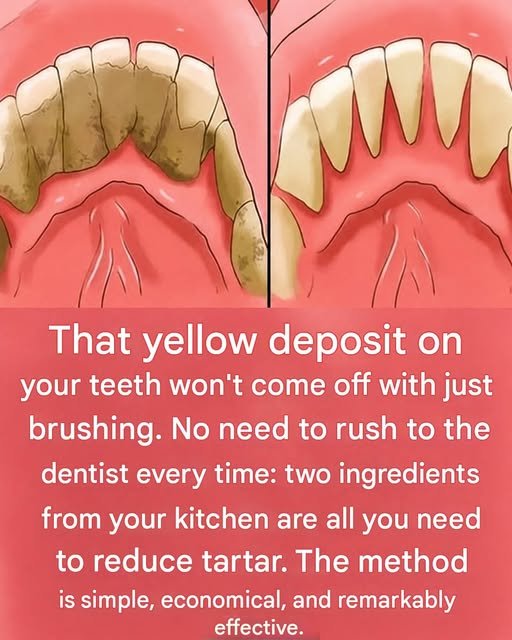
Have you noticed a hard, yellowish or brown buildup along your teeth or near the gumline? You may be dealing with tartar, also called dental calculus.
It’s tempting to search for a quick home remedy that will scrape it away, but there’s an important distinction: plaque can be removed at home, while hardened tartar usually requires professional dental cleaning.
Trying to chip or scrape tartar off yourself can damage the enamel, injure your gums, or push bacteria farther beneath the gumline.
The good news is that simple daily habits can significantly reduce plaque and help prevent new tartar from accumulating.
What Is Tartar?
Plaque is a sticky film of bacteria that constantly forms on your teeth.
When plaque isn’t removed thoroughly through brushing and cleaning between the teeth, it can harden and become tartar.
Unlike soft plaque, tartar is firmly attached to the tooth surface and is much more difficult to remove safely with an ordinary toothbrush.
Tartar can also provide a rough surface where additional plaque can accumulate.
1. Brush Twice a Day
One of the most important things you can do is brush your teeth twice daily for about two minutes.
Use a soft-bristled toothbrush and fluoride toothpaste. Brush gently along the gumline as well as the fronts, backs, and chewing surfaces of your teeth.
Brushing harder doesn’t necessarily clean better. Excessive pressure can irritate the gums and contribute to tooth wear.
2. Clean Between Your Teeth Every Day
A toothbrush cannot effectively reach every area between the teeth.
Use dental floss or another dentist-recommended interdental cleaner once a day to remove plaque and food particles from these areas.
This is particularly important because plaque left between teeth can contribute to gum inflammation and decay.
3. Consider an Electric Toothbrush
An electric toothbrush can make it easier for some people to clean thoroughly and consistently.
Choose a model with a soft brush head and avoid pressing aggressively against the teeth and gums.
The most important factor is still consistent, thorough brushing, regardless of whether you use a manual or electric toothbrush.
4. Use Fluoride Toothpaste
Fluoride toothpaste helps strengthen tooth enamel and protect against cavities.
Look for a toothpaste containing fluoride and brush regularly rather than relying on homemade powders or abrasive mixtures.
5. Don’t Try to Scrape Tartar With Sharp Objects
This is one of the most important warnings.
Avoid using:
- Needles
- Pins
- Knives
- Metal tools
- Razor blades
- Unregulated dental scraping instruments
Even if you manage to break off a small piece of tartar, you could scratch the tooth surface or cut your gums.
Professional dental instruments should be used by trained dental professionals.
6. Be Careful With Abrasive “Natural” Remedies
Baking soda, activated charcoal, lemon juice, vinegar, and other DIY remedies are frequently promoted online as ways to remove tartar or whiten teeth.
Some may be abrasive or acidic enough to irritate the gums or contribute to enamel erosion when used improperly.
In particular, lemon juice and vinegar should not be used as tooth-cleaning treatments because their acidity can damage enamel.
A simple fluoride toothpaste is a much safer everyday option.
7. Drink Water Regularly
Water helps rinse away food particles and can be a useful replacement for sugary drinks.
If you drink something acidic or sugary, drinking water afterward can help reduce prolonged exposure of the teeth to those substances.
8. Limit Frequent Sugary Snacks
The bacteria in dental plaque can use sugars to produce acids that contribute to tooth decay.
Rather than constantly sipping sugary drinks or snacking on sweets throughout the day, keep sugary foods and drinks limited and maintain good brushing and interdental-cleaning habits.
Can You Remove Existing Tartar at Home?
Usually, no—not safely or completely.
Once plaque has hardened into tartar, professional dental cleaning may be necessary to remove it properly.
A dentist or dental hygienist can use appropriate instruments to remove deposits from the tooth surface and, when necessary, areas around or below the gumline.
At home, your goal should be to remove plaque and prevent additional tartar buildup, not to scrape away hardened deposits yourself.
Signs You Should See a Dentist
Make a dental appointment if you notice:
- Persistent bleeding when brushing or flossing
- Swollen or red gums
- Persistent bad breath
- Gum tenderness
- Receding gums
- Loose teeth
- Tooth sensitivity
- Significant tartar buildup
- Toothache or persistent dental pain
These symptoms can be associated with gum disease or other dental problems that require professional evaluation.
A Simple Daily Routine
For better oral hygiene, try this routine:
Morning: Brush for two minutes with fluoride toothpaste.
During the day: Drink water regularly and avoid frequent sugary snacks and drinks.
Evening: Clean between your teeth, then brush thoroughly before bed.
Regularly: Have your teeth professionally examined and cleaned when your dentist recommends it.
Final Thoughts
You can absolutely take control of your daily dental health at home, but that doesn’t mean you should try to become your own dental scaler.
The safest approach is to remove plaque regularly with brushing and interdental cleaning, protect your enamel with fluoride toothpaste, and leave hardened tartar removal to a dental professional.
A few minutes of consistent care every day can go a long way toward keeping your teeth and gums healthier.