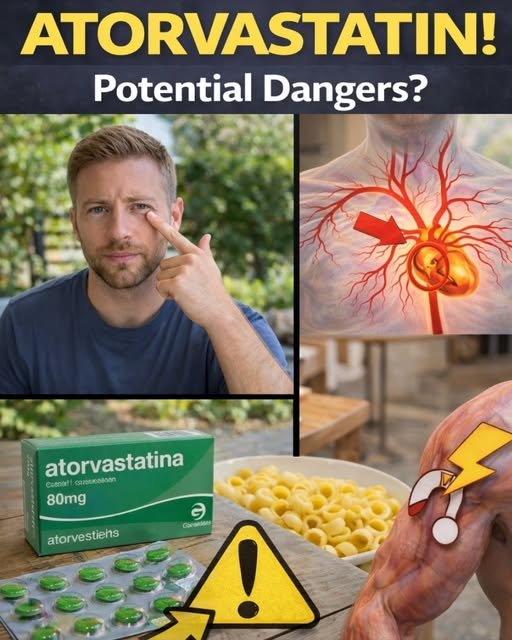
Atorvastatin is one of the most widely prescribed cholesterol-lowering medicines. It belongs to a group of drugs called statins and is used to lower LDL cholesterol and reduce the risk of heart attacks and strokes in people who are at increased cardiovascular risk.
Because atorvastatin is so commonly used, people naturally have questions about its side effects. Some are mild and temporary, while others are uncommon but important to recognize.
However, the phrase “hidden dangers” can be misleading. A symptom appearing while someone takes atorvastatin does not necessarily mean atorvastatin caused it. Large clinical studies have found that many symptoms commonly attributed to statins occur at similar rates with placebo, while genuinely serious statin-related complications are uncommon.
Here are 15 potential concerns worth knowing about.
1. Muscle Aches and Pain
Muscle aches are among the symptoms most commonly associated with statin treatment.
Some people taking atorvastatin report muscle soreness, cramps, tenderness, or weakness. However, not every muscle symptom experienced during treatment is caused by the medication.
The American Heart Association notes that the proportion of muscle symptoms actually attributable to statins is considerably smaller than the number of symptoms reported by people taking them.
If unexplained muscle symptoms appear after starting or increasing atorvastatin, tell your healthcare professional rather than simply stopping the medicine.
2. Rare but Serious Muscle Damage
A much more serious complication is myopathy, and in rare cases rhabdomyolysis, a condition involving severe muscle breakdown.
Warning symptoms can include:
- Severe or unexplained muscle pain
- Significant muscle weakness
- Muscle tenderness
- Fever or feeling unusually unwell
- Dark red or brown urine
The risk is higher with certain medications, higher atorvastatin doses, older age, kidney problems, and uncontrolled hypothyroidism.
Severe symptoms require prompt medical attention.
3. Liver Enzyme Changes
Atorvastatin can cause increases in liver enzymes detected on blood tests.
Most enzyme changes do not mean that severe liver damage has occurred, but persistent or clinically significant abnormalities need medical assessment.
The prescribing information recommends considering liver enzyme testing before treatment and performing additional testing when clinically indicated.
4. Rare Liver Injury
Serious liver injury from atorvastatin is uncommon, but it has been reported.
Possible warning signs include:
- Yellowing of the skin or eyes
- Dark urine
- Unusual fatigue
- Loss of appetite
- Upper abdominal discomfort
- Unexplained nausea
Yellowing of the skin or eyes while taking atorvastatin should be evaluated promptly.
5. Blood Sugar Can Rise
Statins, including atorvastatin, can modestly increase blood glucose and the risk of developing diabetes.
The increase in risk is generally small and tends to be more relevant in people who already have risk factors for diabetes.
Importantly, this potential risk does not mean people who need statin therapy should automatically avoid it. The cardiovascular benefits can outweigh this risk for people at sufficiently high cardiovascular risk.
6. Digestive Problems
Some people experience gastrointestinal symptoms while taking atorvastatin.
Reported problems include:
- Nausea
- Diarrhea
- Constipation
- Indigestion
- Gas
These symptoms are generally not dangerous, but persistent or troublesome symptoms should be discussed with a healthcare professional.
7. Headache or Dizziness
Headache and dizziness can occur during atorvastatin treatment.
If dizziness affects your balance, driving, cycling, or ability to operate machinery, wait until you feel normal before doing those activities.
Persistent or severe dizziness should be assessed because it can have many causes unrelated to atorvastatin.
8. Sleep Problems
Some people report sleep disturbances while taking statins, including atorvastatin.
The NHS lists sleep problems among possible side effects.
However, sleep problems are common in the general population, so their presence does not automatically prove that atorvastatin is responsible.
9. Drug Interactions Can Increase Muscle Risk
One of the most important things people sometimes overlook is that atorvastatin can interact with other medicines.
Certain antibiotics, antifungal medications, antiviral drugs, immunosuppressants, and other medicines can increase atorvastatin exposure and therefore increase the risk of muscle toxicity.
Examples include some macrolide antibiotics, azole antifungals, HIV/HCV medicines, cyclosporine, and certain cardiovascular medicines.
Always tell your doctor or pharmacist about every prescription medicine, over-the-counter product, vitamin, and herbal supplement you take.
10. Grapefruit Can Matter
Grapefruit and grapefruit juice can affect the metabolism of atorvastatin and potentially increase drug levels.
The amount that creates a clinically important problem can vary, so people taking atorvastatin should ask their pharmacist or doctor how much grapefruit, if any, is appropriate for them.
Don’t assume that a food or drink is harmless simply because it is natural.
11. Alcohol and Liver Health
Atorvastatin itself is processed by the liver, and excessive alcohol consumption can increase the risk of liver problems.
This doesn’t mean that everyone taking atorvastatin must completely avoid alcohol, but heavy drinking is an important issue to discuss with a healthcare professional.
12. Rare Autoimmune Muscle Disease
There is an exceptionally uncommon condition called immune-mediated necrotizing myopathy (IMNM) associated with statin exposure.
Unlike ordinary statin-associated muscle symptoms, this condition can cause persistent muscle weakness that may continue even after the medication is stopped.
The FDA prescribing information recognizes rare reports of IMNM and recommends discontinuing atorvastatin when it is suspected.
Persistent or progressive muscle weakness should therefore be medically evaluated.
13. Pancreatitis Has Been Reported
Inflammation of the pancreas, called pancreatitis, is listed among rare serious adverse effects reported with atorvastatin.
Severe, persistent abdominal pain—particularly pain that may extend toward the back—requires urgent medical assessment.
Do not assume severe abdominal pain is simply a normal medication side effect.
14. Allergic Reactions Are Possible
As with many medicines, atorvastatin can rarely cause a serious allergic reaction.
Emergency symptoms can include:
- Swelling of the lips, mouth, tongue, or throat
- Difficulty breathing
- Severe or rapidly spreading rash
- Fainting or severe weakness
These symptoms can indicate anaphylaxis and require emergency medical treatment.
15. Pregnancy Requires Special Attention
Atorvastatin is generally not recommended during pregnancy because cholesterol and related substances are important for fetal development.
Anyone who becomes pregnant while taking atorvastatin should contact their healthcare professional promptly for individualized advice.
People who are planning pregnancy should discuss their cholesterol treatment beforehand.
What About Memory Loss, Hair Loss, Sexual Problems, and Other “Hidden” Effects?
You may see long lists online claiming that statins cause dementia, permanent memory loss, cancer, cataracts, erectile dysfunction, or many other conditions.
The evidence does not support simply assuming that these conditions are caused by atorvastatin.
The American Heart Association’s review found no convincing evidence of a causal relationship between statins and cancer, cataracts, cognitive dysfunction, peripheral neuropathy, erectile dysfunction, or tendonitis.
That doesn’t mean every individual symptom should be dismissed. If something unusual begins after starting a medication, discuss the timing and symptoms with a healthcare professional.
Who May Have a Higher Risk of Muscle Problems?
The risk of serious muscle toxicity can be higher in people with certain characteristics, including:
- Older age
- Kidney impairment
- Uncontrolled hypothyroidism
- Higher atorvastatin doses
- Certain interacting medications
These factors are specifically recognized in atorvastatin prescribing information.
This is one reason medication reviews are important, especially when another medicine is added.
Should You Stop Atorvastatin If You Have Side Effects?
Don’t stop atorvastatin on your own simply because you read about side effects online.
Statins are prescribed because lowering LDL cholesterol can reduce cardiovascular events such as heart attacks and strokes in appropriate patients.
If you develop symptoms, your doctor may determine whether they are likely to be medication-related and may consider options such as adjusting the dose, changing to another statin, or using a different cholesterol-lowering strategy when appropriate.
The right approach depends on your cardiovascular risk, symptoms, other medications, and medical history.
When Should You Seek Urgent Medical Help?
Get prompt medical attention if you develop:
- Severe or unexplained muscle pain or weakness
- Dark or reddish-brown urine together with muscle symptoms
- Yellow skin or eyes
- Severe abdominal pain
- Facial, tongue, or throat swelling
- Difficulty breathing
- A severe allergic reaction
- Persistent or rapidly worsening weakness
These symptoms can sometimes indicate serious complications and should not be ignored.
Final Thoughts
Atorvastatin is a powerful cholesterol-lowering medication with well-established cardiovascular benefits for people who need statin therapy. Like every medicine, it can cause side effects, but the most serious complications are uncommon.
The important message isn’t to fear atorvastatin. It is to know what symptoms deserve attention, understand potential drug interactions, and communicate with your healthcare professional if something changes.
Most importantly, don’t replace a prescribed cholesterol treatment with an internet remedy or stop medication without medical guidance. For people who need statin therapy, the reduction in cardiovascular risk generally outweighs the potential safety concerns.