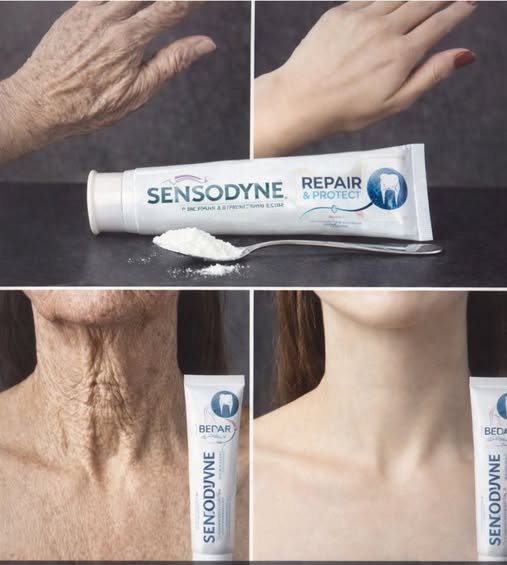
Toothpaste and Baking Soda for Skin: What This Viral Home Treatment Can Really Do
The internet is full of homemade beauty recipes promising dramatic results from ingredients already sitting in your bathroom or kitchen. One particularly popular combination is toothpaste and baking soda, sometimes promoted as a quick way to smooth the skin, reduce blemishes, brighten the complexion, or create a temporary “lifted” appearance.
Some people even claim the mixture makes them look as though they’ve had cosmetic treatment.
But before putting this combination on your face, there’s an important distinction between something that feels effective and something that is actually good for your skin.
Why Do People Use Toothpaste and Baking Soda?
Toothpaste is formulated specifically for cleaning teeth, not treating facial skin. Many toothpastes contain ingredients such as abrasives, detergents, flavoring agents, and other compounds designed for oral hygiene.
Baking soda, meanwhile, is mildly alkaline and has a fine abrasive texture.
Because of these properties, the combination may temporarily make skin feel very clean or smooth. However, that sensation does not mean the mixture is improving the underlying health of the skin.
Does Toothpaste Really Tighten or Lift Skin?
There is no good evidence that applying toothpaste to the face produces a cosmetic lift comparable to a professional procedure.
If the skin temporarily feels tighter after using a drying or irritating product, that sensation can be mistaken for a lifting effect. It doesn’t mean the skin has actually been tightened or that wrinkles have been reversed.
A dramatic “plastic surgery” transformation should therefore be treated as a social-media claim rather than an established effect of this DIY treatment.
What About Baking Soda?
Baking soda can act as a mild abrasive, but facial skin has a protective barrier and a naturally acidic environment.
Using baking soda directly on the face—particularly repeatedly or with vigorous rubbing—can cause irritation and dryness in some people.
Instead of trying to scrub away dullness, a gentler skincare routine is generally a better approach.
Why Toothpaste Can Irritate Your Face
Toothpaste may contain ingredients that are perfectly appropriate inside the mouth but irritating when left on facial skin.
Depending on the formulation and the individual, applying toothpaste to the face may cause:
- Redness
- Burning or stinging
- Dryness
- Peeling
- Irritation
- Increased sensitivity
People with sensitive or eczema-prone skin may be particularly uncomfortable after using irritating DIY treatments.
A Safer Alternative for Smoother-Looking Skin
If your goal is skin that looks brighter, smoother, and more refreshed, you don’t need an aggressive homemade mixture.
A simple routine can be much gentler.
Morning
- Cleanse gently.
- Apply a moisturizer suitable for your skin type.
- Finish with a broad-spectrum sunscreen.
Evening
- Remove makeup and cleanse gently.
- Apply a moisturizer.
- If appropriate for your skin, introduce a proven skincare ingredient such as niacinamide or a retinoid gradually and according to product directions.
These ingredients have considerably more evidence behind them than toothpaste and baking soda for specific skincare concerns.
If You Still Want to Try a DIY Treatment
There is little reason to use toothpaste on your face, particularly when safer skincare products are readily available.
If you’ve already applied the mixture and your skin begins burning, itching, swelling, or becoming significantly red, wash it off gently with lukewarm water and stop using it.
Don’t scrub the irritated area or apply additional harsh ingredients in an attempt to “neutralize” the reaction.
Seek medical advice if you develop severe swelling, blistering, significant pain, or symptoms that don’t settle.
What Can Actually Make Skin Look More Youthful?
A healthy-looking complexion usually comes from consistent skincare rather than one dramatic home remedy.
Helpful habits include:
- Daily sun protection
- Regular moisturizing
- Gentle cleansing
- Avoiding excessive scrubbing
- Not picking at blemishes
- Getting adequate sleep
- Eating a balanced diet
- Staying hydrated
- Using evidence-based skincare products for specific concerns
For deeper wrinkles, acne scars, pigmentation, or significant skin laxity, a dermatologist can discuss treatments that are appropriate for your particular skin.
Final Thoughts
The idea of mixing toothpaste with baking soda for an instant “plastic surgery” effect may be attention-grabbing, but a temporary feeling of tightness or smoothness isn’t the same as actually lifting or rejuvenating the skin.
Toothpaste is designed for teeth, and baking soda can be irritating when used aggressively on facial skin. If your goal is a smoother, brighter complexion, a gentle skincare routine and evidence-based products are a much more sensible place to start.
Sometimes the best beauty “hack” is knowing which viral treatments are better left off your face.