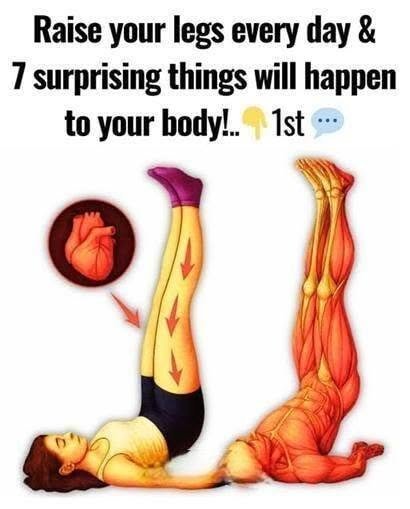
Have you ever come home after a long day and noticed that your feet feel heavy, your ankles look slightly swollen, or your legs seem unusually tired? Spending hours sitting or standing can make your lower body feel uncomfortable, especially when fluid begins accumulating around your ankles and feet.
One simple habit that may help is elevating your legs.
Raising your legs above the level of your heart for a short period can encourage blood and fluid to move back toward your upper body. It is an easy relaxation technique that may offer several benefits, particularly for people who experience mild swelling or tired legs.
However, leg elevation is not a cure for circulation problems, varicose veins, or underlying medical conditions. Its benefits depend on the reason behind your symptoms.
Here are seven things that may happen when you elevate your legs regularly.
1. It May Help Reduce Swelling in Your Feet and Ankles
One of the most noticeable benefits of leg elevation is its potential to reduce mild swelling.
Gravity naturally encourages fluid to collect in the lower parts of your body, particularly when you spend long periods sitting or standing. This can cause your ankles and feet to look puffy by the end of the day.
When you lie down and raise your legs above heart level, gravity can help move excess fluid away from your lower extremities.
This may be particularly helpful for people experiencing occasional swelling after:
-
Standing for several hours
-
Sitting at a desk throughout the day
-
Travelling for extended periods
-
Spending time in hot weather
If swelling is persistent, unexplained, or worsening, it should not automatically be attributed to inactivity.
2. Your Legs May Feel Less Heavy and Tired
Heavy legs are a common complaint among people who spend much of their day on their feet.
You may experience tiredness, pressure, or a feeling that your legs are unusually difficult to move. These sensations can become more noticeable in the evening.
Elevating your legs gives them a period of rest and may reduce fluid accumulation associated with prolonged standing or sitting.
Some people find that their legs feel more comfortable afterward, particularly when elevation is combined with gentle movement throughout the day.
3. It May Support Venous Blood Return
Your veins carry blood from different parts of your body back toward your heart. In your legs, this process depends partly on small valves that help prevent blood from flowing backward.
When you remain in one position for too long, blood can pool in the lower extremities, particularly if your veins are not functioning efficiently.
Elevating your legs above heart level can use gravity to assist venous blood return.
This may temporarily relieve some symptoms associated with venous pooling, such as heaviness and mild swelling.
However, leg elevation does not repair damaged vein valves or cure chronic venous insufficiency.
4. It May Relieve Some Discomfort Associated With Varicose Veins
Varicose veins are enlarged, twisted veins that commonly appear in the legs. They develop when vein valves become weak or damaged, allowing blood to collect.
Common symptoms include:
-
Aching or throbbing legs
-
A feeling of heaviness
-
Swelling around the ankles
-
Itching around affected veins
-
Discomfort after prolonged standing
Elevating your legs may temporarily reduce pressure and improve comfort.
For people with persistent symptoms, a healthcare professional may recommend compression stockings, physical activity, or other treatments depending on the severity of the condition.
5. It May Help You Relax After a Long Day
Leg elevation is not only about circulation. It can also become a relaxing part of your daily routine.
Lying comfortably with your legs supported allows you to rest after hours of walking, standing, or sitting.
Combining this habit with slow breathing and a quiet environment may help you unwind.
Although leg elevation itself has not been proven to treat anxiety or improve sleep disorders, the relaxation period may contribute to a more comfortable evening routine.
6. It May Reduce Temporary Fluid Accumulation During Pregnancy
Pregnancy can increase pressure on the veins in the pelvis and lower body. Hormonal changes also influence how the body handles fluid.
As a result, many pregnant women experience swelling in their feet and ankles, particularly later in pregnancy.
Gentle leg elevation while resting may help reduce mild dependent swelling.
However, pregnancy-related swelling needs attention when it is sudden, severe, or accompanied by symptoms such as:
-
Severe headache
-
Blurred vision or flashing lights
-
Pain below the ribs
-
Sudden swelling of the face or hands
-
Feeling unusually unwell
These can be warning signs of pre-eclampsia and require immediate medical assessment.
Pregnant women should also avoid lying flat on their backs for prolonged periods later in pregnancy. Resting on the side, particularly the left side if comfortable, may be preferable.
7. It May Encourage Healthier Movement Habits
One surprising benefit of making leg elevation part of your routine is that it can remind you to pay attention to your lower-body health.
However, resting with raised legs should not replace movement.
Walking, ankle movements, and regular position changes activate the calf muscles, which help push blood back toward the heart.
A balanced routine can include:
-
Taking short walking breaks during the day
-
Moving your ankles while sitting
-
Avoiding prolonged periods in one position
-
Performing gentle calf stretches
-
Elevating your legs when resting
Combining movement with occasional elevation may be more useful than relying on elevation alone.
How to Raise Your Legs Correctly
You do not need special equipment to try leg elevation at home.
Follow these simple steps:
-
Lie comfortably on your back or in a supported reclining position.
-
Place one or two pillows beneath your calves and ankles.
-
Raise your legs so that your feet are above the level of your heart, if comfortable.
-
Keep your knees slightly relaxed rather than forcing them into a straight position.
-
Rest for approximately 10–15 minutes.
-
Lower your legs slowly and return to normal activity.
How often should you do it?
For occasional tiredness or mild dependent swelling, you may try elevating your legs once or twice a day. There is no universally established duration or frequency that works for everyone.
If you have heart failure, significant peripheral artery disease, or another circulation-related condition, ask your healthcare professional whether this position is appropriate.
Who Should Be Careful With Leg Elevation?
Although leg elevation is generally comfortable for many people, it is not suitable for every situation.
Use caution and seek medical advice if you have:
-
Peripheral artery disease or reduced blood supply to your legs
-
Severe heart failure or difficulty breathing when lying flat
-
Significant leg pain that worsens when the legs are raised
-
A recent leg injury or surgery requiring specific positioning instructions
Important warning: If one leg suddenly becomes swollen, painful, warm, or red, seek urgent medical assessment. These symptoms can indicate a blood clot called deep vein thrombosis (DVT). Do not massage the affected leg or rely on elevation as treatment.
Sudden shortness of breath, chest pain, fainting, or coughing up blood requires emergency medical attention because a clot may have travelled to the lungs.
Frequently Asked Questions
1. Is raising your legs for 15 minutes every day beneficial?
It may help relieve temporary heaviness and mild swelling caused by prolonged sitting or standing. However, results depend on the underlying cause.
2. Should your legs be higher than your heart?
For reducing dependent swelling, raising your legs above heart level can be helpful if comfortable and medically appropriate.
3. Can raising your legs improve circulation?
It can temporarily assist venous blood return toward the heart. It does not necessarily improve arterial blood supply or treat underlying vascular disease.
4. Is it better to raise your legs in the morning or at night?
Either time can be useful. Many people prefer evening elevation because swelling and heaviness may become more noticeable after a day of sitting or standing.
5. Can leg elevation prevent varicose veins?
No. It may relieve some symptoms, but it does not prevent or reverse the underlying vein valve problems responsible for varicose veins.
Final Thoughts
Raising your legs is a simple habit that may help reduce mild swelling, ease tiredness, and temporarily support blood returning from your lower body toward your heart.
It can be especially comfortable after a long day spent sitting or standing.
For the best results, combine occasional leg elevation with regular walking, ankle movements, and healthy daily habits. Most importantly, do not ignore persistent swelling or unexplained leg pain. Sometimes, these symptoms are signs of an underlying condition that needs medical attention.
SEO Details
SEO Title: Raise Your Legs Every Day: 7 Possible Benefits for Your Body
Meta Description: Discover 7 possible benefits of raising your legs daily, from easing tired feet and mild swelling to supporting venous blood return.
Focus Keyword: Benefits of raising your legs
Secondary Keywords: leg elevation benefits, raise legs above heart, swollen feet and ankles, improve venous circulation, tired legs relief, varicose vein discomfort
URL Slug: benefits-of-raising-your-legs-every-day