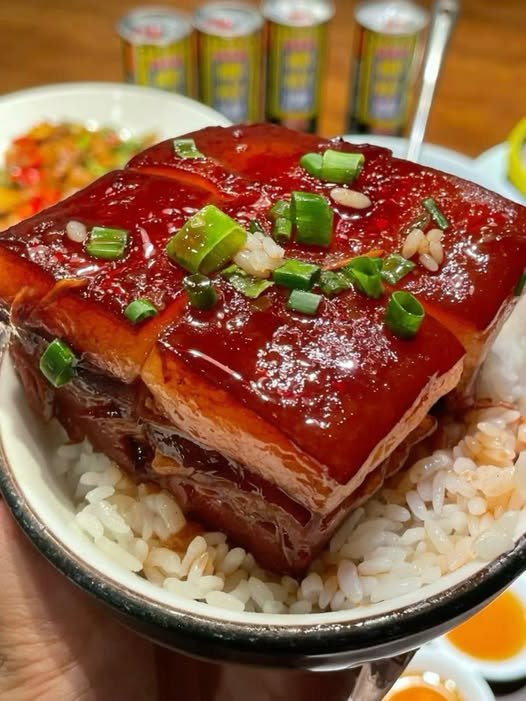
Dongpo Pork, also known as Chinese Braised Pork Belly, is a traditional dish celebrated for its incredibly tender texture, rich flavor, and glossy, caramel-colored sauce. Originating from Hangzhou in China’s Zhejiang province, this famous dish is known for its combination of pork belly, soy sauce, Shaoxing wine, sugar, ginger, and aromatic spices.
The pork is slowly braised until the fat becomes silky and the meat is soft enough to cut with a spoon. During cooking, it absorbs the savory sweetness of the sauce, creating a beautiful balance of salty, sweet, and aromatic flavors.
Although Dongpo Pork is often served in Chinese restaurants, you can recreate this classic dish at home with simple ingredients and a little patience. The secret is slow cooking, which allows the pork belly to become tender while developing its signature glossy glaze.
Recipe Overview
- Preparation Time: 20 minutes
- Cooking Time: 2½–3 hours
- Total Time: Approximately 3 hours 20 minutes
- Servings: 4–5
- Course: Main Course
- Cuisine: Chinese (Hangzhou/Zhejiang)
- Cooking Method: Blanching and slow braising
Ingredients for Dongpo Pork
For the Pork
- 1 kg pork belly, skin-on, cut into large cubes (approximately 4–5 cm)
- 4–5 slices fresh ginger
- 3 spring onions, cut into large pieces
- Water, as needed for blanching and braising
For the Braising Sauce
- ½ cup Shaoxing cooking wine
- ½ cup light soy sauce
- 2 tablespoons dark soy sauce
- 3 tablespoons rock sugar or brown sugar
- 1 cinnamon stick (optional)
- 2 star anise pods
- 2 cloves garlic, lightly crushed (optional)
- 1 cup water, or enough additional liquid to cover the pork partially
For Garnish
- Sliced spring onions
- Steamed bok choy (optional)
- Sesame seeds (optional)
Ingredient Notes: Shaoxing wine gives the dish its traditional aromatic character. If unavailable, a dry cooking wine can be used, although the flavor will differ. Light soy sauce provides saltiness, while dark soy sauce contributes the deep reddish-brown color.
Directions: How to Make Traditional Dongpo Pork
Step 1: Prepare the Pork Belly
Start by rinsing the pork belly under cool running water and patting it dry with paper towels.
Cut it into large, evenly sized cubes. Keeping the pieces relatively large helps them retain their shape during the long braising process.
If the pork has skin, leave it attached. The skin becomes soft and gelatinous during slow cooking, contributing to the dish’s characteristic texture.
Step 2: Blanch the Pork
Place the pork cubes in a large saucepan and cover them with cold water.
Add a few slices of ginger and bring the water to a boil. Allow the pork to simmer for approximately 5–8 minutes.
During this process, foam and impurities may rise to the surface. Skim them away as needed.
Remove the pork and rinse it briefly with warm water. Drain thoroughly and pat the pieces dry.
This step helps create a cleaner braising liquid and improves the final flavor.
Step 3: Prepare the Aromatic Base
Arrange the spring onion pieces and remaining ginger slices across the bottom of a heavy-bottomed pot or Dutch oven.
Place the pork belly cubes on top, arranging them in a single layer where possible.
This aromatic layer helps prevent direct contact between the pork and the bottom of the pot while adding fragrance to the braising liquid.
Step 4: Add the Braising Ingredients
Pour the Shaoxing wine, light soy sauce, and dark soy sauce into the pot.
Add the rock sugar, star anise, cinnamon stick if using, and crushed garlic.
Pour in enough water to partially cover the pork. The liquid does not need to completely submerge every piece because the pork will slowly braise and release some of its own fat and juices.
Bring the mixture to a gentle simmer over medium heat.
Step 5: Slowly Braise the Pork
Once the liquid begins to simmer, reduce the heat to low and cover the pot with a lid.
Allow the pork to braise gently for approximately 2–2½ hours, turning the pieces carefully once or twice during cooking.
Check occasionally to ensure the liquid has not evaporated completely. Add a little hot water if necessary.
The pork is ready when the meat is exceptionally tender, the skin is soft, and the fat has developed a silky texture.
Avoid boiling the mixture aggressively because high heat can make the pork break apart and cause the sauce to reduce too quickly.
Step 6: Thicken the Sauce
Carefully remove the tender pork pieces and transfer them to a serving dish.
Strain the braising liquid if you prefer a smooth sauce. Remove the whole spices and excess aromatics.
Pour the liquid into a saucepan and simmer gently until it becomes slightly thicker and glossy.
Taste before reducing it too much because soy sauce can become increasingly salty as the liquid evaporates.
If the sauce is already thick enough, you can skip this step.
Step 7: Glaze and Serve
Arrange the pork belly pieces in a serving bowl or shallow plate.
Spoon the warm, glossy sauce over the top, making sure each piece is coated evenly.
Garnish with sliced spring onions and serve immediately.
The finished Dongpo Pork should be tender, richly flavored, and covered in a beautiful reddish-brown glaze.
Tips for the Best Dongpo Pork
Choose the right cut: Pork belly with alternating layers of meat and fat produces the traditional rich texture. Pieces that are too lean may become dry during long cooking.
Cut evenly sized cubes: Similar-sized pieces cook more consistently and look attractive when served.
Do not rush the braising: Slow, gentle cooking allows the connective tissue to soften and the flavors to develop.
Control the saltiness: Soy sauce brands vary in salt content. Taste the sauce before reducing it to avoid an overly salty finish.
Use rock sugar if available: Rock sugar is traditionally used in many Chinese braised pork preparations and gives the sauce a pleasant sweetness and shine. Brown sugar is a convenient substitute.
Keep the skin intact: The pork skin contributes to the soft, gelatinous texture that makes this dish distinctive.
Delicious Variations
1. Spicy Dongpo Pork
Add dried red chilies or a small amount of chili oil to the braising liquid for gentle heat.
2. Five-Spice Braised Pork Belly
Add a small pinch of Chinese five-spice powder for a deeper aromatic flavor. Use it sparingly so it does not overpower the pork.
3. Pressure Cooker Dongpo Pork
After blanching the pork and preparing the sauce, transfer everything to a pressure cooker. Cook according to your appliance’s pork-belly instructions, then check that the meat is tender.
Finish the sauce separately on the stovetop to achieve a glossy consistency.
4. Mushroom Braised Pork Belly
Add a few rehydrated shiitake mushrooms during braising. They absorb the sauce and provide an additional savory flavor.
What to Serve With Dongpo Pork
Dongpo Pork is rich and flavorful, so it pairs especially well with simple side dishes that balance its sweetness and fat.
- Steamed jasmine rice.
- Plain steamed rice or brown rice.
- Blanched bok choy with garlic.
- Stir-fried Chinese cabbage.
- Steamed broccoli.
- Pickled vegetables.
- Light cucumber salad.
A serving of steamed greens adds freshness and creates a more balanced meal.
Storage and Reheating
Refrigerator: Allow leftovers to cool and refrigerate them in an airtight container within two hours of cooking. Store for up to 3–4 days.
Freezer: Place cooled pork and sauce in a freezer-safe container. Freeze for approximately 2–3 months for best quality.
Reheating: Reheat gently in a covered saucepan over low heat with a splash of water until steaming hot throughout. Stir carefully to avoid breaking the tender pork pieces.
If frozen, thaw overnight in the refrigerator before reheating.
Frequently Asked Questions
1. What is Dongpo Pork made of?
Traditional Dongpo Pork is made with pork belly, Shaoxing wine, soy sauce, sugar, ginger, and spring onions. It is slowly braised until the meat becomes exceptionally tender.
2. Why is Dongpo Pork so tender?
The slow braising process allows connective tissue to break down into gelatin, creating a soft texture. The fat also becomes tender and silky during cooking.
3. Can I make Dongpo Pork without Shaoxing wine?
Yes. A dry cooking wine can be used as an alternative, although the flavor will not be exactly the same. For an alcohol-free version, use additional water and a small amount of rice vinegar, adjusting the flavor carefully.
4. Can I use pork shoulder instead of pork belly?
Pork shoulder can be used, but the finished dish will be leaner and less rich. Traditional Dongpo Pork relies on pork belly for its characteristic layers of meat and fat.
5. Why is my Dongpo Pork sauce too salty?
Soy sauce becomes more concentrated as the liquid reduces. Add a little water to balance the flavor and avoid reducing the sauce too aggressively.
6. Can Dongpo Pork be prepared ahead of time?
Yes. You can cook it in advance, refrigerate it promptly, and gently reheat it in its braising sauce. The flavors may become even more developed after resting overnight.
7. Is Dongpo Pork the same as ordinary braised pork belly?
They are related, but Dongpo Pork is a specific traditional Hangzhou-style preparation known for its slow braising, aromatic wine and soy sauce mixture, and characteristic tender texture.
Final Thoughts
Dongpo Pork is a classic Chinese dish that transforms simple pork belly into an incredibly tender and flavorful meal. Its combination of soy sauce, Shaoxing wine, ginger, sugar, and aromatic spices creates a rich glaze that makes every bite satisfying.
Although the cooking process takes time, the preparation is straightforward. With gentle heat and patience, you can create restaurant-style braised pork belly in your own kitchen.
Serve it with steamed rice and fresh vegetables for a comforting meal that brings traditional Chinese flavors to your dinner table.
SEO Title: Dongpo Pork Recipe – Traditional Chinese Braised Pork Belly
Meta Description: Make tender Dongpo Pork with this traditional Chinese braised pork belly recipe. Slow-cooked with soy sauce, Shaoxing wine, ginger, and sugar for a rich, glossy finish.
Focus Keyphrase: Dongpo pork recipe
URL Slug: dongpo-pork-braised-pork-belly
Related Keyphrases: Chinese braised pork belly, traditional Dongpo pork, slow-cooked pork belly, Chinese pork belly recipe, tender braised pork belly, Hangzhou Dongpo pork.