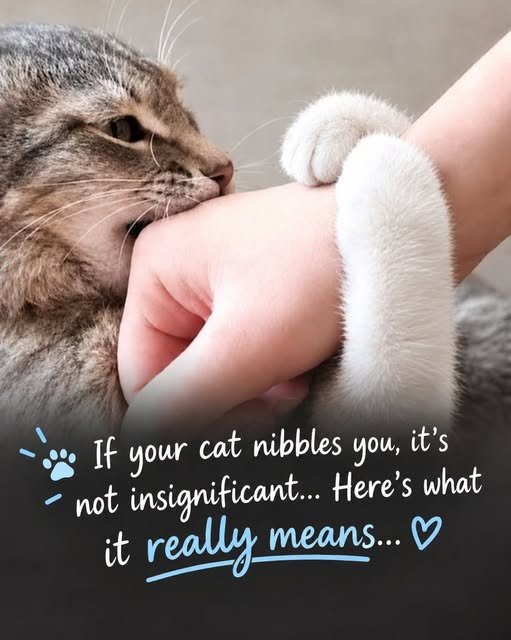
Has your cat ever been sitting peacefully beside you, enjoying your attention, and suddenly bitten your hand? Or perhaps your cat gently nibbles your fingers while playing, grooming, or asking for attention.
Although these moments can seem unpredictable, cats rarely bite without some underlying reason. A bite may be a way to communicate discomfort, express excitement, establish boundaries, or respond to fear. Understanding your cat’s body language can help you recognize what it needs and build a stronger bond with your pet.
Here are seven common reasons cats bite their owners and what you can do about each behavior.
1. Your Cat May Be Telling You to Stop Petting It
One common reason for sudden biting is overstimulation. Some cats enjoy being stroked for a short time but become uncomfortable when the touching continues.
This is sometimes called petting-induced aggression. Your cat may initially enjoy the attention before reaching its tolerance limit.
Watch for these warning signs:
- The tail begins flicking or thumping.
- The ears rotate sideways or flatten backward.
- The skin on the back starts twitching.
- Your cat turns its head toward your hand.
- The body becomes tense or your cat tries to move away.
What to do: Stop petting as soon as you notice these signs. Let your cat decide whether to approach you again. Short, gentle interactions are often better than prolonged stroking.
2. Your Cat May Be Playing With You
Cats, especially kittens and young adults, use biting and pawing during play. Their natural hunting behavior involves stalking, chasing, grabbing, and biting moving objects.
Unfortunately, fingers and toes can become targets if cats learn that human hands are toys.
A playful bite may occur alongside relaxed body movements, chasing, or repeated attempts to engage you. However, body language varies, and a bite should not automatically be assumed to be playful.
What to do: Use wand toys, toy mice, or other suitable cat toys instead of your hands. If your cat bites during play, calmly stop the interaction and redirect it toward a toy.
Never encourage your kitten to attack fingers, even if the bites seem harmless now.
3. Your Cat May Be Feeling Afraid or Threatened
Fear is another reason cats bite. A cat may feel threatened by unfamiliar visitors, loud noises, sudden movements, another animal, or being cornered.
A frightened cat may hide, crouch, hiss, growl, flatten its ears, or attempt to escape. If it cannot get away, biting may become a defensive response.
What to do: Give your cat space and provide access to a quiet hiding place. Avoid picking it up, chasing it, or forcing interaction when it is frightened.
Allow the cat to approach you voluntarily. Building trust through calm, predictable interactions is usually more effective than forcing contact.
4. Your Cat May Be Showing Affection—or Grooming You
Some cats gently nibble their owners during affectionate interactions. They may lick your skin and follow it with a small bite, a behavior sometimes associated with social grooming.
Cats also use gentle mouthing during certain social interactions. However, not every bite is a sign of affection, and the meaning depends on the cat’s posture, intensity, and the surrounding situation.
What to do: If you are comfortable with gentle contact, observe your cat’s behavior without encouraging harder biting. If the nibbling becomes painful, calmly withdraw your hand and redirect the cat to an appropriate toy.
Avoid interpreting a bite as proof that your cat loves you. Look at its overall body language instead.
5. Your Cat May Be Asking for Attention
Cats can learn that certain behaviors produce a response from their owners. If biting reliably makes you talk, move, feed the cat, or begin playing, the behavior may become a way to request interaction.
Your cat might nip your ankle while you walk past, bite your hand near mealtime, or gently mouth you when you are working.
What to do: Establish predictable feeding and play routines. Reward calm attention-seeking behavior with appropriate interaction, and avoid using your hands to wrestle with your cat.
Do not punish or frighten the animal. Instead, teach it that appropriate behavior is the best way to get your attention.
6. Your Cat May Be in Pain or Feeling Unwell
A cat that suddenly begins biting when touched may be experiencing pain or discomfort. Arthritis, dental problems, skin irritation, injuries, and other medical conditions can make normal handling unpleasant.
This possibility is especially important if a previously friendly cat starts biting unexpectedly or reacts aggressively when you touch a particular part of its body.
Other warning signs may include hiding, reduced appetite, unusual vocalization, changes in grooming, limping, or avoiding normal activities.
What to do: Arrange a veterinary examination if the behavior is new, persistent, or associated with other changes in health. Avoid pressing or repeatedly touching the suspected painful area.
Never assume a sudden change in behavior is simply a personality problem.
7. Your Cat May Be Reacting to Something It Cannot Reach
Sometimes cats become highly aroused by something they see or hear but cannot approach, such as another cat outside a window, a bird, or a loud disturbance.
In a situation known as redirected aggression, the cat may turn and bite a nearby person or animal instead of the original trigger.
The reaction can appear to come out of nowhere because the owner may not have noticed what startled the cat.
What to do: Keep your distance if your cat appears highly agitated. Do not attempt to pick it up or physically restrain it. Reduce exposure to the trigger when possible and allow the cat to settle in a safe, quiet area.
If these episodes recur, consult a veterinarian or qualified feline behavior professional.
How to Understand Your Cat’s Body Language
The moments before a bite often provide useful clues. Pay attention to several signals together rather than relying on one movement alone.
| Cat’s behavior | Possible meaning | Your response |
|---|---|---|
| Tail flicking during petting | Overstimulation or irritation | Stop touching |
| Stalking and pouncing on moving hands | Play or hunting behavior | Redirect to a toy |
| Flattened ears and crouching | Fear or distress | Give space |
| Biting when a specific area is touched | Possible pain or sensitivity | Seek veterinary advice |
| Gentle mouthing during social contact | Play or social interaction | Set gentle boundaries |
| Sudden agitation after seeing another cat | Possible redirected aggression | Keep your distance |
These signs are clues, not definitive diagnoses. A veterinarian can help rule out medical causes when biting is unusual or persistent.
What You Should Never Do When Your Cat Bites
Punishment can increase fear and make biting worse. Avoid hitting your cat, shouting at it, spraying water at it, or chasing it after an incident.
Instead:
- Stay as calm as possible.
- Stop the interaction and give the cat room.
- Avoid using hands and feet as play objects.
- Provide toys, scratching posts, hiding places, and opportunities for appropriate play.
- Notice patterns that occur before the biting.
- Seek professional advice if the behavior is escalating or difficult to manage.
Consistency is important. Everyone in the household should follow the same approach.
What Should You Do If Your Cat Breaks Your Skin?
Cat bites can cause serious infections because their narrow teeth can introduce bacteria deep into the skin.
If a bite breaks the skin, wash the wound immediately with soap and running water. Seek prompt medical advice, particularly for puncture wounds, bites to the hands, face, or joints, and any bite that is deep or painful. A clinician can assess whether antibiotics, a tetanus booster, or rabies-related assessment is needed based on the circumstances and local guidance.
Seek urgent medical care if you develop spreading redness, increasing swelling, warmth, pus, fever, or worsening pain.
Frequently Asked Questions
Why does my cat bite me gently and then lick me?
This may occur during social interaction, play, or grooming-like behavior. Observe the cat’s overall body language to understand the context, and stop the interaction if the biting becomes uncomfortable.
Why does my cat bite me when I am not touching it?
The cat may be seeking attention, inviting play, responding to something in its environment, or experiencing discomfort. Look for patterns, and arrange a veterinary examination if the behavior begins suddenly or seems unusual.
Why does my cat bite my feet when I walk?
Moving feet can trigger stalking and chasing behavior, particularly in young cats. Increase interactive play and provide suitable toys rather than allowing your cat to practice attacking your feet.
Should I ignore my cat when it bites?
Briefly ending the interaction can help teach your cat that biting stops play or petting. However, do not ignore signs of fear, pain, or illness. Address the underlying cause and seek veterinary help when appropriate.
Does biting mean my cat dislikes me?
Not necessarily. Biting can communicate many different things, including play, discomfort, fear, or a desire for space. Understanding the context is more useful than assuming your cat dislikes you.
Final Thoughts
When your cat bites you, it may be communicating that it wants to play, needs a break from petting, feels frightened, or is uncomfortable. The behavior is not always a sign of aggression, but it should never be dismissed when it is sudden, severe, or associated with possible pain.
By learning your cat’s body language, respecting its boundaries, using appropriate toys, and seeking veterinary advice when necessary, you can reduce unwanted biting and help your cat feel safer in your home.
A cat cannot explain its needs in words, but its behavior often provides valuable clues. The key is to observe those clues patiently instead of reacting with punishment.
SEO Title: Why Does Your Cat Bite You? 7 Reasons Explained
Meta Description: Does your cat bite you for no reason? Discover seven possible causes, from playful behavior and overstimulation to fear and pain, plus safe ways to respond.
URL Slug: why-does-your-cat-bite-you
Focus Keyphrase: why does your cat bite you
Related Keyphrases: cat biting behavior, why cats bite their owners, cat body language, how to stop a cat from biting, signs of aggression in cats