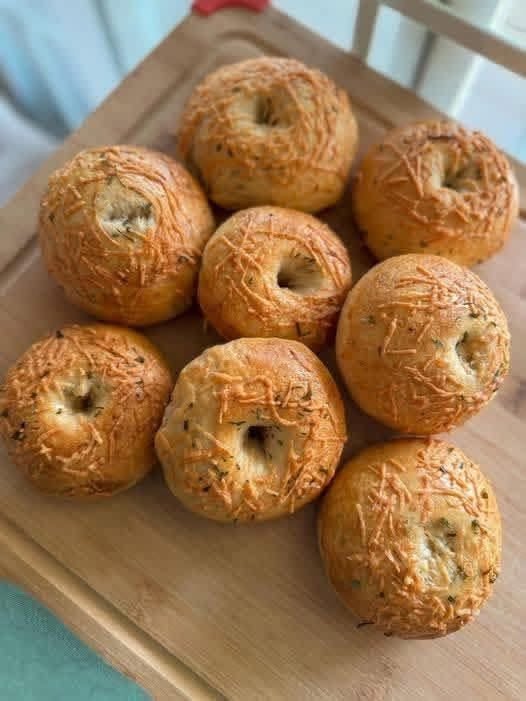
If you love the irresistible combination of roasted garlic, melted Parmesan cheese, and freshly baked bread, these Garlic Parmesan Bagels are about to become a favorite in your kitchen. With a golden, lightly crisp exterior, a soft and chewy center, and a delicious garlic-butter aroma, these homemade bagels are perfect for breakfast, lunch, or a savory snack.
Unlike plain bagels, this version combines the rich, nutty flavor of Parmesan with aromatic garlic and a touch of herbs. The result is a bakery-style treat that tastes wonderful straight from the oven and pairs beautifully with cream cheese, eggs, soups, or your favorite sandwich fillings.
Making bagels at home may seem intimidating, but the process is easier than you might expect. With a simple yeast dough, a short boiling step, and a flavorful garlic-Parmesan topping, you can create delicious bagels without needing special baking equipment.
Whether you serve them warm with butter or use them to prepare hearty sandwiches, these Garlic Parmesan Bagels deliver plenty of savory flavor in every bite.
Why You’ll Love These Garlic Parmesan Bagels
- Rich garlic flavor: Fresh garlic and melted butter create an irresistible savory aroma.
- Cheesy goodness: Parmesan adds a salty, nutty flavor and a delicious golden topping.
- Perfect chewy texture: The traditional boiling step helps create the characteristic bagel crust.
- Versatile serving options: Enjoy them with breakfast eggs, cream cheese, soup, or sandwich fillings.
- Homemade freshness: Freshly baked bagels taste wonderful and can be customized to your preferences.
- Freezer-friendly: Make an extra batch and freeze the bagels for convenient meals later.
Ingredients You’ll Need
This recipe makes approximately 8 medium-sized bagels.
For the Bagel Dough
- 4 cups bread flour, approximately 500 g
- 1½ teaspoons instant yeast
- 1 tablespoon granulated sugar
- 1½ teaspoons salt
- 1¼ cups warm water, approximately 300 ml, plus a little extra if needed
- 1 tablespoon olive oil
For the Garlic Parmesan Topping
- 3 tablespoons unsalted butter, melted
- 3–4 garlic cloves, finely minced
- ¾ cup finely grated Parmesan cheese
- 1 tablespoon chopped fresh parsley, optional
- ½ teaspoon Italian seasoning, optional
- ¼ teaspoon black pepper, optional
For Boiling the Bagels
- 2 litres water
- 1 tablespoon honey or brown sugar, optional
The optional honey or brown sugar helps with browning. You do not need to add it if you prefer to keep the boiling water unsweetened.
How to Make Garlic Parmesan Bagels
Step 1: Prepare the Yeast Mixture
Pour the warm water into a large mixing bowl. The water should feel comfortably warm rather than hot.
Add the instant yeast and granulated sugar, then stir briefly. Allow the mixture to stand for a few minutes while you measure the remaining ingredients.
Instant yeast can generally be mixed directly into the flour, so this resting step is optional. If your yeast is old or you are unsure whether it is active, checking that it becomes foamy can help identify a problem, although not every instant yeast mixture produces obvious foam.
Step 2: Mix the Dough
Add the bread flour and salt to the bowl. Pour in the olive oil and mix until a rough dough forms.
Transfer the dough to a clean work surface. Knead by hand for approximately 8–10 minutes, or use a stand mixer with a dough hook for about 5–7 minutes.
The dough should become smooth, firm, and elastic. Bagel dough is naturally stiffer than ordinary sandwich bread dough, so avoid adding too much extra water. If it is extremely dry and difficult to bring together, add water a teaspoon at a time.
A firm dough helps the bagels hold their shape and develop their signature chewy texture.
Step 3: Let the Dough Rise
Place the dough in a lightly oiled bowl and turn it once to coat the surface.
Cover the bowl with a clean kitchen towel or plastic wrap. Leave it in a warm, draft-free place for approximately 60–90 minutes, or until the dough has noticeably expanded.
Bagel dough does not always double as dramatically as softer bread dough, so focus on the overall increase in volume rather than waiting for an exact size.
Step 4: Divide and Shape the Bagels
Transfer the risen dough to a clean work surface and gently press out excess air.
Divide it into 8 equal portions. Shape each portion into a smooth ball.
To form the bagels, poke your thumb through the center of each ball and gently stretch the opening until it is approximately 1½–2 inches wide. Alternatively, roll each portion into a rope and join the ends securely to form a ring.
Place the shaped bagels on a parchment-lined baking tray, leaving space between them.
Cover loosely and let them rest for another 15–20 minutes while you prepare the water for boiling.
Step 5: Boil the Bagels
Preheat your oven to 425°F (220°C).
Bring approximately 2 litres of water to a gentle boil in a wide saucepan. Add the optional honey or brown sugar and stir to dissolve.
Carefully lower 2–3 bagels into the water at a time, depending on the size of your saucepan. Boil each bagel for approximately 30–45 seconds per side.
Use a slotted spoon to remove the bagels and allow excess water to drain. Place them back on the prepared baking tray.
The boiling step is important because it helps set the exterior, giving bagels their distinctive chewy crust. A longer boiling time generally creates a thicker crust, while a shorter time produces a slightly lighter exterior.
Step 6: Prepare the Garlic Butter
While the bagels drain, combine the melted butter and minced garlic in a small bowl.
Stir in the Italian seasoning and black pepper if using.
For a milder garlic flavor, gently warm the garlic in the butter for about 30–60 seconds without allowing it to brown. This softens its sharpness and releases its aroma.
If you prefer a stronger, fresher garlic flavor, use the garlic raw in the butter mixture.
Step 7: Add the Parmesan Topping
Brush the tops of the boiled bagels with the garlic butter.
Sprinkle the grated Parmesan generously over each bagel, pressing lightly so that the cheese adheres.
Add the chopped parsley if desired. For a more pronounced cheese crust, reserve a little Parmesan to sprinkle over the bagels during the final few minutes of baking.
Finely grated Parmesan works particularly well because it spreads evenly over the surface.
Step 8: Bake Until Golden
Place the tray in the preheated oven and bake for approximately 18–24 minutes, or until the bagels are golden brown and the Parmesan topping has melted and developed lightly browned edges.
Oven temperatures can vary, so begin checking the bagels after about 16–18 minutes.
If the cheese starts browning too quickly before the bagels are fully baked, loosely cover the tray with foil for the remaining cooking time.
Remove the bagels from the oven and let them cool on a wire rack for at least 10 minutes before slicing.
The inside will continue to settle as the bagels cool, helping preserve their chewy texture.
Tips for Perfect Garlic Parmesan Bagels
Use bread flour when possible. Bread flour contains more protein than many all-purpose flours, which helps create a chewy bagel texture. All-purpose flour can work, but the finished bagels may be slightly softer.
Measure the flour carefully. Too much flour can produce dense, dry bagels. Weighing the flour is the most reliable method.
Keep the dough firm. Bagel dough should be more substantial than ordinary bread dough. Add extra water only if necessary.
Do not skip boiling. Boiling helps create the traditional bagel exterior. Simply baking the shaped dough will produce something closer to a bread roll.
Grate Parmesan finely. Finely grated cheese sticks better to the surface and distributes more evenly than large chunks.
Watch the garlic carefully. Garlic can become bitter if it burns. If warming it in butter, use gentle heat and avoid browning it.
Allow the bagels to cool slightly. Cutting into them immediately can compress the soft interior and release excess steam.
Delicious Variations
1. Roasted Garlic Parmesan Bagels
Replace the fresh garlic with 3–4 roasted garlic cloves mashed into the melted butter.
Roasted garlic has a softer, sweeter flavor and creates a more mellow topping. This variation is especially good when served with cream cheese or tomato soup.
2. Cheesy Garlic Bagels
Combine Parmesan with a little shredded mozzarella or cheddar. Sprinkle the mixture over the bagels before baking.
Mozzarella provides a stretchy, melted texture, while cheddar adds a sharper flavor. Avoid adding too much cheese, as a very heavy topping may slide off during baking.
3. Spicy Garlic Parmesan Bagels
Add a pinch of red pepper flakes or cayenne pepper to the garlic butter.
The gentle heat complements the savory cheese and makes these bagels especially delicious for sandwiches.
4. Herb and Garlic Bagels
Mix dried oregano, basil, parsley, or Italian seasoning into the garlic butter.
Fresh herbs can also be used, but add delicate herbs in moderation to prevent them from becoming too dark in the oven.
5. Garlic Parmesan Bagel Bites
Divide the dough into smaller portions and shape them into mini bagels. Reduce the baking time and begin checking them early.
Mini bagels are useful for parties, lunchboxes, or serving alongside dips.
6. Whole-Wheat Garlic Parmesan Bagels
Replace part of the bread flour with whole-wheat flour. Start by substituting about 1 cup and adjust the water slightly if necessary.
Whole-wheat flour absorbs more liquid and produces a denser texture, so using it for only part of the flour helps maintain the bagels’ chewiness.
What to Serve with Garlic Parmesan Bagels
These savory bagels work with a wide range of breakfast and lunch dishes.
- Cream cheese: Spread plain or herb-flavored cream cheese over a warm, sliced bagel.
- Scrambled eggs: Add fluffy scrambled eggs for a satisfying breakfast.
- Turkey or chicken sandwiches: Use the bagels as a base for sliced chicken, lettuce, tomatoes, and your preferred sauce.
- Tomato soup: The garlic and Parmesan flavors pair beautifully with a warm bowl of tomato soup.
- Grilled vegetables: Fill a sliced bagel with roasted peppers, zucchini, and a little cheese.
- Fresh salad: Serve alongside a green salad with a light vinaigrette for a simple lunch.
- Marinara sauce: Use warm bagel halves as a savory bread for dipping.
For a quick breakfast, toast a sliced bagel lightly and add cream cheese or a fried egg.
How to Store Garlic Parmesan Bagels
At Room Temperature
Once completely cooled, place the bagels in an airtight container or a resealable bag. Store them at room temperature for up to 2 days for the best texture.
Avoid sealing them while they are still warm, as trapped steam can make the crust soft and encourage spoilage.
In the Refrigerator
Refrigeration can make bread go stale more quickly, so it is generally not the best option for short-term storage. If the weather is very hot or humid, freezing is often a better way to preserve bagels.
In the Freezer
Allow the bagels to cool completely, then wrap them individually or place them in a freezer-safe bag. Freeze for up to 2–3 months for best quality.
For convenience, slice the bagels before freezing so you can toast individual portions without thawing the entire bag.
How to Reheat
For a crisp exterior, place a thawed bagel in a preheated oven at 350°F (175°C) for approximately 5–8 minutes.
You can also toast sliced bagels until lightly crisp. If the topping seems dry, add a very small amount of butter after reheating.
Common Mistakes to Avoid
Making the Dough Too Soft
Excess water can make the bagels difficult to shape and cause them to lose their ring shape during boiling. Keep the dough firm and elastic.
Using Water That Is Too Hot
Very hot water can damage yeast and interfere with rising. Use comfortably warm water and follow the instructions on your yeast package.
Skipping the Second Rest
A short rest after shaping helps the dough relax and can improve the final texture. Do not leave the shaped bagels uncovered for too long, or their surfaces may dry out.
Boiling Too Many Bagels at Once
Crowding the saucepan lowers the water temperature and makes handling more difficult. Boil the bagels in manageable batches.
Adding Too Much Garlic Butter
A generous topping is delicious, but excessive butter can make the bagels greasy and cause the Parmesan to slide off. Brush on a thin, even layer.
Baking at the Wrong Temperature
An oven that is too cool may produce pale, dry bagels, while excessive heat can burn the cheese before the dough is properly baked. Preheat the oven and monitor the color as the bagels cook.
Frequently Asked Questions
1. Can I make Garlic Parmesan Bagels without boiling them?
Yes, but the texture will be different. Unboiled dough will produce a softer bread roll rather than a traditional chewy bagel. For the characteristic bagel crust, boiling is strongly recommended.
2. Can I use all-purpose flour?
Yes. All-purpose flour can be used if bread flour is unavailable. The bagels may have a slightly softer texture, but they can still be delicious.
3. Can I prepare the dough the night before?
Yes. After kneading, place the dough in a covered bowl and refrigerate it for an overnight rise. The next day, allow it to warm slightly, divide and shape it, and continue with the recipe. Cold dough may need additional time to relax and rise.
4. Which Parmesan cheese is best?
Freshly grated Parmesan generally provides excellent flavor and melts well over the garlic butter. Finely grated cheese is particularly convenient because it adheres to the bagel surface.
5. Can I use garlic powder instead of fresh garlic?
Yes. Replace the fresh garlic with approximately ½–1 teaspoon of garlic powder, adjusting to taste. Mix it into the melted butter before brushing it over the bagels.
6. Why are my bagels dense?
Bagels are naturally chewy, but they should not be hard or unpleasantly dense. Common causes include too much flour, insufficient kneading, inactive yeast, or inadequate rising time. Measure the ingredients carefully and give the dough enough time to expand.
7. Can I make these bagels without dairy?
Yes. Use a suitable dairy-free butter alternative and replace the Parmesan with a dairy-free cheese that melts well. The flavor and browning may differ from the original recipe.
8. Are Garlic Parmesan Bagels suitable for meal prep?
Absolutely. Bake a batch, let the bagels cool completely, and freeze them individually. Reheat or toast them when needed for a quick breakfast or sandwich.
Final Thoughts
Garlic Parmesan Bagels combine the satisfying chewiness of homemade bagels with the rich flavor of garlic butter and savory Parmesan cheese. Their golden crust, soft interior, and aromatic topping make them a delicious choice for breakfast, lunch, or a homemade snack.
Although the dough requires some preparation and a boiling step, the process is straightforward once you understand the basic technique. You can also customize the recipe with roasted garlic, herbs, chili flakes, or different cheeses to suit your taste.
Serve them fresh from the oven with cream cheese, pair them with a bowl of soup, or use them to make hearty sandwiches. Once you try these homemade Garlic Parmesan Bagels, they may become a regular addition to your baking routine.
SEO Details
SEO Title: Garlic Parmesan Bagels Recipe – Cheesy and Homemade
Meta Description: Make homemade Garlic Parmesan Bagels with a chewy center, golden crust, fresh garlic butter, and savory Parmesan cheese. Perfect for breakfast or sandwiches.
Focus Keyword: Garlic Parmesan Bagels
URL Slug: garlic-parmesan-bagels
Related Keywords: homemade garlic bagels, Parmesan cheese bagels, cheesy bagel recipe, garlic butter bagels, easy homemade bagels, savory breakfast bagels, garlic bread bagels, homemade bread recipe