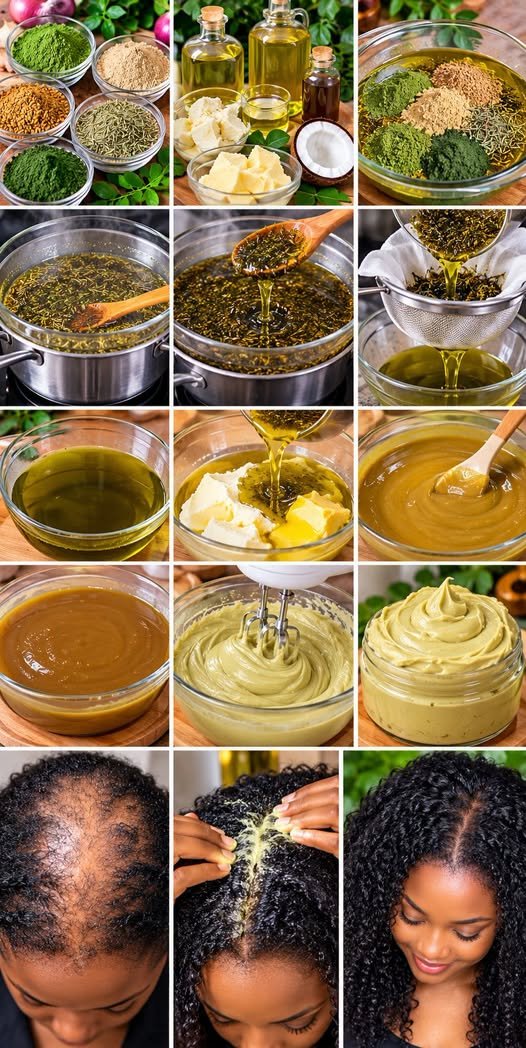
Dry, rough, frizzy hair often needs more than a quick rinse-out conditioner. A rich hair butter can help coat the hair shaft, reduce the feeling of dryness, improve softness, and make hair easier to manage.
This Herbal Hair Repair Whipped Butter combines olive oil, castor oil, coconut oil, shea butter, and mango butter with powdered herbs including moringa, onion, fenugreek, rosemary, and neem.
The herbs are traditionally used in hair-care routines, while the oils and butters provide the rich, moisturizing base that gives this treatment its creamy texture.
It is important to keep expectations realistic. This butter can help condition and protect the feel of dry hair, but it cannot permanently repair split ends or guarantee new hair growth. Hair that has already been structurally damaged cannot be restored to its original condition; damaged ends generally need trimming.
Ingredients
Herbal Powders
- 10 g moringa powder
- 5 g onion powder
- 10 g fenugreek powder
- 10 g rosemary powder
- 5 g neem powder
Oils & Butters
- 100 ml olive oil
- 40 ml castor oil
- 20 ml coconut oil
- 40 g shea butter
- 40 g mango butter
Why These Ingredients Are Used
Moringa Powder
Moringa is commonly included in traditional hair-care preparations because it contains plant compounds and nutrients.
In this recipe, it primarily contributes to the herbal infusion.
Onion Powder
Onion is a popular ingredient in traditional scalp and hair-care recipes.
However, evidence for onion-based treatments is limited and should not be interpreted as proof that onion powder can reliably regrow hair.
Fenugreek Powder
Fenugreek seeds are traditionally used in hair masks and scalp treatments.
The powder can add a conditioning feel to homemade preparations, although strong clinical evidence for treating hair loss is lacking.
Rosemary
Rosemary is one of the more researched herbs in this recipe.
A small randomized clinical trial compared rosemary oil with 2% minoxidil in people with androgenetic alopecia. Hair counts increased after six months in both groups, but there was no significant improvement at three months. Importantly, this research involved rosemary oil, not this homemade rosemary-powder infusion.
Neem Powder
Neem is traditionally used in various personal-care preparations. It contributes botanical compounds to the infusion, but it should not be presented as a proven treatment for hair loss or scalp disease.
Olive Oil
Olive oil provides emollient properties and helps create a smooth, spreadable oil phase.
Castor Oil
Castor oil is thick and rich, making it useful in hair-butter formulations. It can help give the finished product a heavier, coating texture.
Coconut Oil
Coconut oil is commonly used in hair care and can help give the hair a smoother, conditioned feel.
Shea Butter
Shea butter provides the rich, creamy consistency needed for a whipped hair butter.
Mango Butter
Mango butter adds firmness and helps create a lighter, creamy texture when combined with shea butter.
How to Make Herbal Hair Repair Whipped Butter
Step 1: Combine the Oils
Add the olive oil, castor oil, and coconut oil to a heat-safe container.
Stir them together thoroughly.
Step 2: Add the Herbal Powders
Add the moringa, onion, fenugreek, rosemary, and neem powders.
Stir carefully until the powders are evenly dispersed throughout the oil.
Step 3: Infuse the Herbs
Place the container over a double boiler.
Heat gently on low for approximately 1–2 hours.
The mixture should be warm enough to encourage infusion but should not be aggressively boiling or frying.
Stir occasionally.
Avoid allowing water from the double boiler to enter the oil mixture.
Step 4: Strain Very Thoroughly
After the infusion is complete, allow it to cool slightly.
Strain the herbal oil through a fine filter or several layers of clean cheesecloth.
This step is extremely important.
Press the herbs gently to recover the infused oil, but make sure you remove as much solid plant material as possible.
For a smoother final product, strain it a second time through a finer filter.
Step 5: Melt the Butters
Place the shea butter and mango butter in a clean heat-safe container.
Melt them gently over a double boiler.
Do not overheat them.
Once completely melted, remove them from the heat.
Step 6: Combine the Oil and Butters
Slowly add the strained herbal oil to the melted shea and mango butter.
Stir continuously until the mixture is completely uniform.
Step 7: Cool the Mixture
Allow the mixture to cool at room temperature until it becomes thicker and semi-solid.
For a faster cooling process, you can place it in the refrigerator briefly, but avoid leaving it there long enough for it to become completely hard.
Step 8: Whip the Butter
Once the mixture has cooled sufficiently, use a hand mixer or electric whisk.
Whip for several minutes until the mixture becomes lighter, fluffy, and creamy.
Scrape the sides of the bowl occasionally so everything is evenly whipped.
Step 9: Transfer to a Container
Spoon the finished whipped butter into a clean, completely dry container.
Close the lid tightly.
Store it away from direct sunlight and excessive heat.
How to Use Herbal Hair Butter
Start with a small amount.
Rub a pea-sized portion between your palms until it softens.
For Dry Hair
Apply a small amount to the mid-lengths and ends of the hair.
Concentrate on areas that feel particularly dry or rough.
For Protective Styling
A small amount can be used to reduce the dry feeling of the hair before braiding or other protective styles.
Avoid applying excessive amounts because the combination of castor oil and butters can make hair feel heavy or greasy.
For the Scalp
If you want to use it on your scalp, start with a very small amount and observe how your skin responds.
People with oily, acne-prone, sensitive, or easily irritated scalps may find a heavy butter uncomfortable.
How Often Should You Use It?
For dry or coarse hair, once or twice a week may be sufficient.
If your hair becomes greasy, weighed down, or difficult to wash, reduce the amount or frequency.
You don’t need to coat your hair heavily for the product to work as a conditioning treatment.
Important: Patch Test First
Natural ingredients can still cause irritation or allergic reactions.
Before applying the butter generously to your scalp or hairline, apply a small amount to a limited area of skin and monitor for irritation.
Stop using it if you develop significant itching, redness, swelling, burning, or a rash.
Avoid applying it to broken or inflamed skin.
Can It Repair Damaged Hair?
The word “repair” can be misleading when talking about hair.
Hair fibers are not living tissue, so a cosmetic treatment cannot permanently reverse structural damage to an already split or severely damaged strand.
However, oils and butters can coat the hair and improve its softness, smoothness, shine, and manageability.
That can make damaged or dry hair look and feel healthier.
Can It Grow New Hair?
There isn’t enough evidence to say that this particular herbal butter causes new hair growth.
Rosemary has been studied in a randomized trial involving androgenetic alopecia, but the study used rosemary oil and evaluated results over six months rather than days or weeks.
If you’re experiencing significant or persistent hair loss, a dermatologist can help determine the underlying cause and discuss treatments with stronger evidence.
Storage and Hygiene
Because this recipe contains oils, butters, and dried powders but no intentionally added water, its microbial risk is different from a water-based cream. Nevertheless, contamination can occur during preparation and repeated use.
Keep the container dry and clean, use clean hands or a clean spatula, and avoid introducing water into the jar.
Cosmetic safety guidance emphasizes that contamination can occur through ingredients, equipment, handling, storage, and consumer use.
For a homemade preparation, it is difficult to establish an exact safe shelf life without appropriate stability and microbial testing. Rather than assigning an arbitrary expiration date, make relatively small batches, monitor for changes in smell, color, texture, or visible contamination, and discard the product if anything appears abnormal.
Tips for a Better Whipped Texture
Strain extremely well: Fine plant particles can make the finished butter gritty.
Don’t overheat the oils: Gentle infusion is preferable to high heat.
Cool before whipping: If the mixture is still warm and liquid, it will not whip properly.
Don’t add water: Water changes the formulation and increases preservation requirements.
Use dry equipment: Even small amounts of water can affect a homemade anhydrous product.
Start with a small amount: This butter is concentrated and rich, especially because of the castor oil and solid butters.
Who May Prefer This Hair Butter?
This type of rich treatment may be particularly appealing to people with:
- Dry hair
- Coarse hair
- Frizzy hair
- Very textured hair
- Hair that feels rough after washing
- Dry-looking ends
- Hair exposed frequently to heat or environmental dryness
People with fine or naturally oily hair may prefer using a much smaller amount.
Final Thoughts
Herbal Hair Repair Whipped Butter is a rich homemade conditioning treatment made from herbal-infused oils, shea butter, mango butter, and several traditional botanical ingredients.
Its most realistic benefits are improved softness, shine, manageability, and protection against the dry feeling that can make hair look rough.
Although rosemary has some encouraging research in hair-loss treatment, this specific homemade formula has not been clinically tested, and it should not be marketed as a guaranteed hair-growth or hair-repair treatment.
Use it as part of a gentle hair-care routine, patch-test before use, keep the formulation dry and clean, and seek professional advice if you’re experiencing unexplained or substantial hair loss.
SEO Details
SEO Title: Herbal Hair Repair Whipped Butter Recipe for Dry & Frizzy Hair
Meta Description: Make a rich herbal hair butter with rosemary, moringa, fenugreek, neem, shea butter, mango butter, and nourishing oils for softer, more manageable hair.
Focus Keyword: herbal hair repair whipped butter
Slug: herbal-hair-repair-whipped-butter
Category: Hair Care
Tags: herbal hair butter, whipped hair butter, natural hair care, rosemary hair care, fenugreek hair care, moringa hair care, shea butter hair treatment, dry hair treatment, homemade hair butter