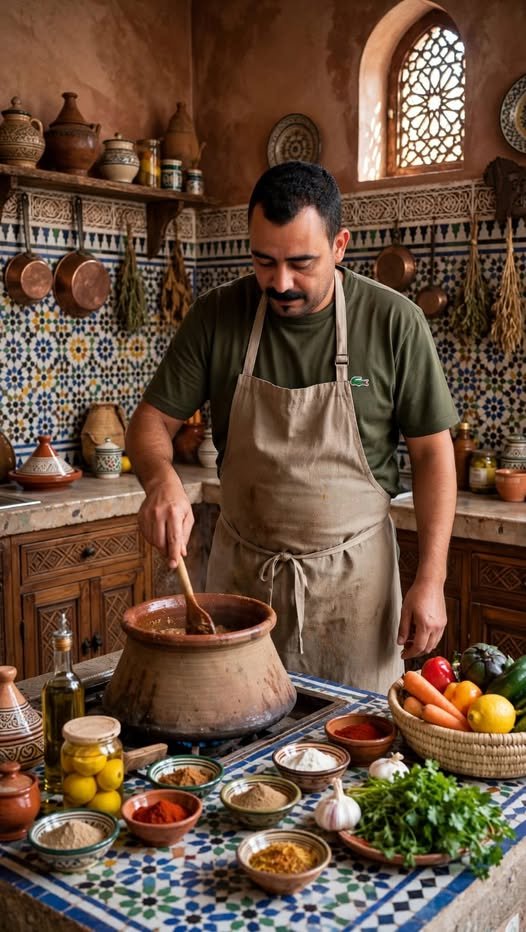
Marrakech Tanjia is one of Morocco’s most distinctive slow-cooked meat dishes. Traditionally associated with Marrakech, it is prepared in a special clay vessel called a tanjia, where meat is cooked slowly for hours until it becomes exceptionally tender.
Unlike a typical Moroccan tagine, tanjia is not heavily loaded with vegetables or a thick sauce. The beauty of the dish comes from a relatively simple combination of meat, preserved lemon, garlic, spices, olive oil, and slow cooking.
This home-friendly version recreates the same slow-cooked character using a heavy Dutch oven or oven-safe covered pot.
Ingredients
- 2½–3 lb (1.1–1.4 kg) beef chuck, cut into large chunks
- 6–8 cloves garlic, lightly crushed
- 1 preserved lemon, rinsed and quartered
- 2 teaspoons ground cumin
- 1 teaspoon ground ginger
- 1 teaspoon salt, or to taste
- ½ teaspoon black pepper
- ½ teaspoon saffron threads, optional
- 3 tablespoons olive oil
- 2 tablespoons smen (Moroccan preserved butter), optional
- ½ cup water
- 1 tablespoon fresh lemon juice, optional
- 1 small handful fresh parsley or cilantro, for serving
Optional Traditional-Style Additions
Depending on the preparation, some cooks add a small amount of:
- Ground turmeric
- Extra preserved lemon
- Moroccan smen
- A few saffron threads
The goal is to keep the seasoning relatively simple so the slow-cooked meat remains the star.
How to Make Authentic-Style Marrakech Tanjia
1. Prepare the Beef
Cut the beef into large pieces rather than small cubes.
Large chunks work especially well for an extended cooking time because they remain juicy and become wonderfully tender as they slowly braise.
Place the beef in a large bowl.
Add the cumin, ginger, salt, black pepper, saffron if using, olive oil, and smen.
Massage the seasonings into the meat until every piece is well coated.
2. Add the Garlic and Preserved Lemon
Add the crushed garlic and preserved lemon pieces.
Gently toss everything together.
The preserved lemon provides a distinctive salty, citrusy flavor that balances the richness of the beef.
3. Transfer to Your Cooking Vessel
Traditional tanjia is cooked in a dedicated clay vessel.
For a home oven, use a heavy Dutch oven or another oven-safe pot with a secure lid.
Place the seasoned beef into the pot.
Pour in about ½ cup of water.
The dish does not need to be submerged in liquid. The meat will release juices as it cooks, creating a concentrated, flavorful cooking liquid.
4. Seal the Pot
Cover the Dutch oven tightly with its lid.
For an especially slow cooking environment, you can place a sheet of parchment paper under the lid before closing it.
The idea is to retain moisture during the long cooking process.
5. Cook Slowly for 8 Hours
Preheat your oven to 250°F (120°C).
Place the covered pot in the oven and cook for approximately 8 hours.
Avoid opening the pot repeatedly. Every time the lid is removed, heat and moisture escape.
After several hours, the beef should become extremely tender and should easily separate with a fork.
If the meat still feels firm, continue cooking until it reaches the desired tenderness.
6. Finish the Tanjia
Carefully remove the pot from the oven.
Check the seasoning and adjust with a little salt or lemon juice if needed.
The finished dish should have very tender beef surrounded by a small amount of intensely flavored cooking juices rather than a large quantity of sauce.
Spoon the juices over the meat before serving.
How Traditional Tanjia Gets Its Flavor
The magic of tanjia isn’t a complicated ingredient list. It’s the combination of time, low heat, a tightly covered cooking vessel, and flavorful ingredients.
The long cooking process gradually breaks down connective tissue in the beef, resulting in exceptionally tender meat.
Preserved lemon adds brightness, while cumin, garlic, olive oil, and optional smen give the dish its characteristic savory Moroccan flavor.
What to Serve With Marrakech Tanjia
Tanjia is delicious served with simple accompaniments that allow the meat to remain the focus.
Try serving it with:
- Moroccan bread
- Khobz
- Couscous
- Simple green salad
- Olives
- Roasted vegetables
- Fresh herbs
- Preserved lemon
Moroccan bread is particularly useful for soaking up the flavorful cooking juices.
Tips for the Best Tanjia
Use a Tough, Well-Marbled Cut
Beef chuck is a good choice for an extended braise because it contains connective tissue that becomes tender during slow cooking.
Don’t Add Too Much Water
Tanjia is not meant to be a watery stew. Start with a modest amount of liquid and allow the meat’s own juices to develop during cooking.
Keep the Lid Closed
The long cooking time depends on maintaining a moist environment. Resist the temptation to check the meat every hour.
Don’t Cut the Meat Too Small
Large chunks are better suited to the long cooking process and help prevent the meat from drying out.
Let It Rest
Allow the finished tanjia to rest for about 10–15 minutes before serving. This gives the juices a chance to settle.
Can You Make Tanjia With Lamb?
Absolutely.
Lamb is traditionally associated with many Moroccan meat preparations and works beautifully with the tanjia cooking method.
Use approximately 2½–3 lb of lamb shoulder or another suitable braising cut and follow the same slow-cooking method.
Cooking time may vary depending on the size and cut of the meat.
Can You Make It in a Slow Cooker?
Yes.
Place all the ingredients in the slow cooker and cook on LOW for approximately 8 hours, or until the meat is fork-tender.
Because slow cookers retain moisture very efficiently, you may need considerably less added water than you would in an oven.
Can You Make It in a Pressure Cooker?
Yes, although pressure cooking produces a different texture and cooking experience.
Use the pressure cooker according to the manufacturer’s instructions for braising beef, then reduce the remaining cooking juices if necessary.
For the closest traditional character, however, slow cooking is preferable.
Food Safety Note
For beef, the USDA recommends a minimum internal temperature of 145°F (63°C) followed by a three-minute rest for whole cuts, but a long braise such as this is normally cooked well beyond that point so the connective tissue breaks down and the meat becomes tender.
Use a food thermometer when checking doneness, particularly when adapting cooking times or quantities.
Frequently Asked Questions
What does Tanjia taste like?
Tanjia has a rich, savory flavor with warm spices, garlic, olive oil, and a distinctive salty-citrusy note from preserved lemon. It is generally much simpler in seasoning than many Moroccan tagines.
Why does Tanjia cook for so long?
The extended low-temperature cooking gradually breaks down connective tissue in tougher cuts of meat. This produces the exceptionally tender texture associated with the dish.
Do I need a traditional clay Tanjia?
No. A heavy Dutch oven with a tight-fitting lid is a practical home substitute.
Can I prepare it the night before?
Yes. Tanjia reheats very well and can actually develop an even deeper flavor after resting overnight in the refrigerator.
How should leftovers be stored?
Refrigerate leftovers in a covered container within two hours of cooking. They can generally be kept refrigerated for 3–4 days and reheated thoroughly before serving.
Final Thoughts
Authentic Marrakech Tanjia is a wonderful example of how simple ingredients can become something extraordinary through slow cooking. Tender beef, garlic, preserved lemon, cumin, olive oil, and time come together to create a deeply satisfying Moroccan dish.
The traditional preparation may use a clay tanjia and a communal oven, but you can capture the spirit of the dish at home with a heavy covered pot and a patient 8-hour slow cook.
SEO Details
SEO Title: Authentic Marrakech Tanjia – 8-Hour Moroccan Slow-Cooked Beef
Meta Description: Make tender Marrakech-style Tanjia with beef, garlic, preserved lemon, cumin, and olive oil. Slow-cooked for 8 hours for rich Moroccan flavor.
Focus Keyword: Marrakech Tanjia
Slug: authentic-marrakech-tanjia
Category: Moroccan Recipes
Tags: Marrakech Tanjia, Moroccan Tanjia, Moroccan beef recipe, Moroccan food, slow cooked beef, preserved lemon, Moroccan recipes