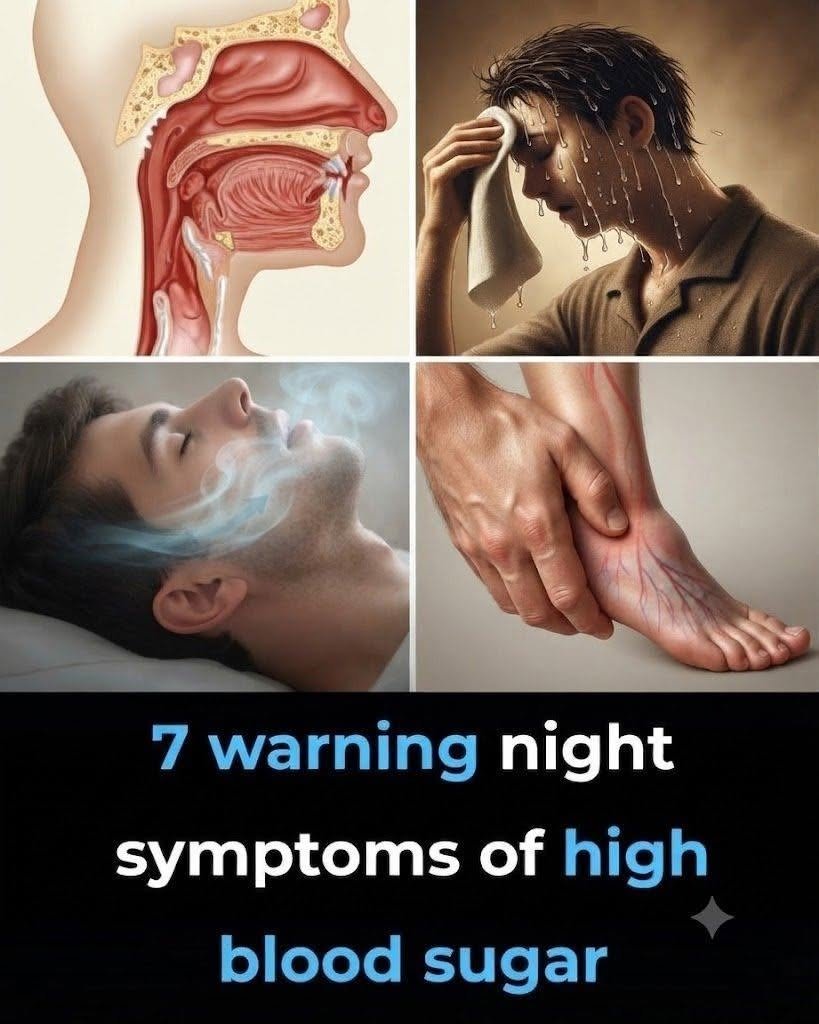
High blood sugar, or hyperglycemia, doesn’t necessarily stop being a problem when you go to bed. Some symptoms can become particularly noticeable during the night, while others may disturb your sleep or leave you feeling unwell the next morning.
Importantly, these symptoms do not prove that your blood sugar is high. Several other conditions can cause similar problems. The most reliable way to know your glucose level is to measure it with a blood glucose meter or continuous glucose monitor. (CDC)
1. Waking Up Frequently to Urinate
One of the classic symptoms associated with high blood sugar is frequent urination.
When glucose levels become too high, the kidneys may remove excess glucose through urine. This can increase urination and may lead to repeated nighttime trips to the bathroom. (CDC)
If you suddenly find yourself waking several times each night to urinate, particularly when this is accompanied by unusual thirst, it’s worth discussing with a healthcare professional.
2. Intense Thirst at Night
Excessive thirst can accompany frequent urination.
You might wake up with a very dry mouth or feel an unusually strong need to drink water during the night. Increased thirst is a recognized symptom of diabetes and high blood sugar. (CDC)
Occasional thirst isn’t necessarily concerning, but persistent excessive thirst deserves attention.
3. Dry Mouth
A persistently dry mouth can occur alongside increased thirst and fluid loss.
However, dry mouth has many other possible causes, including dehydration, certain medications, mouth breathing, and other medical conditions. So it shouldn’t be used by itself to determine whether blood sugar is elevated.
4. Restless or Poor-Quality Sleep
Blood sugar problems can interfere with sleep indirectly. For example, waking repeatedly to urinate or drink water can make it difficult to get uninterrupted rest.
Poor sleep can also make blood sugar management more difficult. The CDC notes that insufficient sleep can make the body use insulin less effectively. (CDC)
5. Nighttime Blurry Vision
High blood sugar can be associated with blurred vision. If you notice intermittent changes in your vision, particularly together with thirst, frequent urination, or fatigue, consider having your blood glucose checked. (CDC)
Sudden or severe vision loss, however, requires urgent medical attention rather than simply assuming it’s related to blood sugar.
6. Unusual Tiredness the Next Morning
Persistent high blood sugar can be associated with fatigue or weakness.
If you’re getting enough sleep but repeatedly wake feeling unusually exhausted—especially when other symptoms such as increased thirst or urination are present—it may be worth discussing your glucose levels with your healthcare provider. (CDC)
7. Headache, Weakness, or Feeling Unwell
Headache and weakness can occur with significant blood sugar abnormalities, but they are nonspecific symptoms. They can also result from dehydration, poor sleep, illness, medication effects, stress, or many other causes.
That’s why symptoms alone aren’t enough to diagnose high blood sugar.
Don’t Ignore Very High Blood Sugar
Very high glucose can sometimes become dangerous, particularly when there isn’t enough insulin available. Diabetic ketoacidosis (DKA) is a medical emergency.
Warning signs can include:
- Extreme thirst
- Frequent urination
- Nausea or vomiting
- Stomach pain
- Very tired or weak feeling
- Fruity-smelling breath
- Fast, deep breathing
- Confusion or difficulty staying awake (CDC)
If someone has these symptoms, particularly vomiting, breathing difficulty, confusion, or very high glucose, they need urgent medical evaluation.
What to Do If You Notice These Signs
If you’re experiencing several of these symptoms repeatedly, don’t try to diagnose yourself based on symptoms alone.
A healthcare professional can check your blood glucose and, when appropriate, tests such as A1C to determine whether diabetes or another condition may be involved.
If you already have diabetes, monitor your glucose according to your treatment plan and discuss persistent nighttime patterns with your healthcare team. The CDC notes that some people may be advised to check glucose at bedtime or at other specific times depending on their diabetes and medications. (CDC)
Final Takeaway
Nighttime thirst, repeated urination, dry mouth, disrupted sleep, blurry vision, fatigue, and feeling unwell can occur when blood sugar is poorly controlled—but none of these symptoms alone proves that you have high blood sugar.
If the symptoms are persistent or occurring together, getting your blood sugar checked is much more useful than guessing from symptoms.