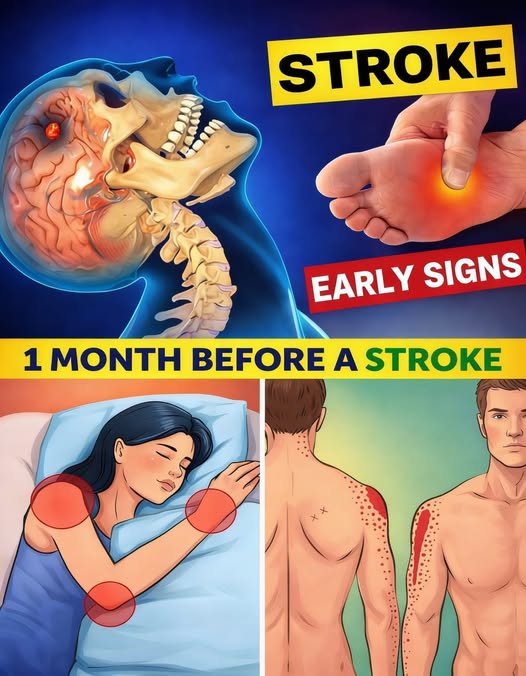
The claim that a stroke always gives eight warning signs exactly one month beforehand is misleading. Most strokes happen suddenly, and there is no reliable countdown of symptoms that predicts a stroke 30 days in advance.
However, some people experience a transient ischemic attack (TIA) or other neurological symptoms before a major stroke. A TIA can produce stroke-like symptoms that disappear, but it is still a medical emergency and should never be ignored.
8 Warning Signs That Need Attention
These symptoms can occur during a stroke or TIA. They should not be interpreted as symptoms that necessarily appear one month before a stroke.
1. Sudden Numbness or Weakness
Sudden weakness or numbness, particularly affecting the face, arm, or leg on one side of the body, is a classic warning sign.
2. Sudden Trouble Speaking
A person may suddenly have slurred speech, difficulty finding words, or trouble understanding what others are saying.
3. Sudden Vision Changes
Sudden blurred or lost vision in one or both eyes can be associated with stroke or TIA.
4. Sudden Dizziness or Loss of Balance
Unexpected dizziness, difficulty walking, loss of coordination, or problems with balance can be signs of a neurological emergency.
5. Sudden Severe Headache
A sudden, unusually severe headache without an obvious cause can be a stroke warning sign, particularly when accompanied by other neurological symptoms.
6. Facial Drooping
Ask the person to smile. If one side of the face suddenly droops or feels numb, seek emergency help.
7. Sudden Confusion
Sudden difficulty understanding speech, confusion, or an inability to communicate normally should be taken seriously.
8. Symptoms That Disappear
One of the most dangerous misconceptions is that symptoms are no longer important once they disappear. Temporary stroke-like symptoms may indicate a TIA, which requires prompt medical assessment.
Remember B.E. F.A.S.T.
A simple way to remember major stroke symptoms is B.E. F.A.S.T.
- B — Balance: Sudden loss of balance or coordination
- E — Eyes: Sudden vision changes
- F — Face: One side of the face droops
- A — Arms: One arm becomes weak or drifts downward
- S — Speech: Speech becomes slurred or difficult to understand
- T — Time: Call emergency services immediately
Do not wait to see whether symptoms improve. Fast treatment can reduce brain damage.
9 Ways to Help Reduce Stroke Risk
There is no guaranteed way to prevent every stroke, but many important risk factors can be addressed.
1. Keep Blood Pressure Under Control
High blood pressure is a major stroke risk factor and often has no obvious symptoms, so regular blood-pressure checks are important.
2. Don’t Smoke
Smoking damages blood vessels and significantly increases stroke risk. Quitting can lower that risk.
3. Stay Physically Active
Aim for around 150 minutes of moderate-intensity activity per week, such as brisk walking, unless your healthcare professional has advised otherwise.
4. Eat a Heart-Healthy Diet
Emphasize vegetables, fruits, whole grains, beans, lean proteins, and other minimally processed foods. Limiting excess sodium, saturated fat, and highly processed foods can help support cardiovascular health.
5. Maintain a Healthy Weight
Overweight and obesity are associated with several conditions that increase stroke risk, including high blood pressure and diabetes.
6. Manage Diabetes
If you have diabetes, work with your healthcare team to keep blood glucose under control. Diabetes can damage blood vessels and increase stroke risk.
7. Check Your Cholesterol
High cholesterol can contribute to plaque buildup in blood vessels. Regular testing and appropriate treatment can help reduce cardiovascular risk.
8. Limit Alcohol
Excessive alcohol consumption can raise blood pressure and contribute to stroke risk.
9. Take Prescribed Medication Correctly
If you’re prescribed medication for blood pressure, cholesterol, diabetes, heart disease, or another stroke risk factor, take it as directed. Don’t stop prescription medication without speaking with your doctor or pharmacist.
The Most Important Takeaway
Don’t wait for a supposed “one month before stroke” warning period. Stroke symptoms can appear suddenly, and every minute matters.
If you or someone around you develops sudden weakness, facial drooping, speech difficulty, vision problems, severe unexplained headache, dizziness, or loss of balance, seek emergency medical care immediately—even if the symptoms disappear.
This article is for general education and does not replace an evaluation by a healthcare professional.